Manufacturer: Glencoe
Scale: 1/126
Additional parts: none
Model build: Jan 2016
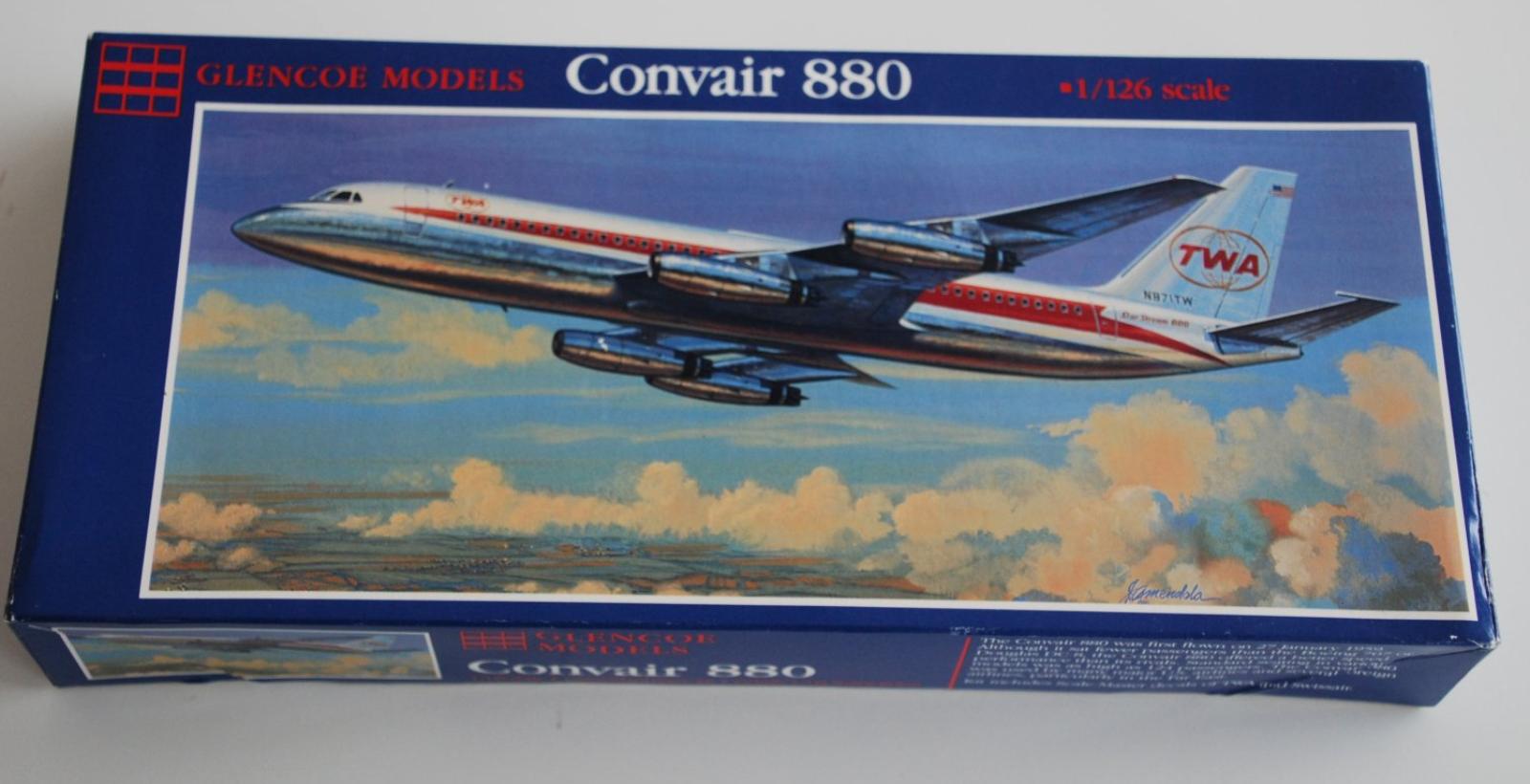
Manufacturer: Glencoe
Scale: 1/126
Additional parts: none
Model build: Jan 2016
The February wind whipped around the Cologne Bonn Airport, a stark contrast to the warmth radiating from the bustling terminal. Inside, a young couple, Clara and Franz, stood nervously by the gate, their passage clutched tightly in Franz's clammy hand. Their destination: Lisbon. A honeymoon, a stolen moment of joy in a world dominated by the Reich's ever-watchful gaze.
Their flight, Lufthansa Express 714, would be a Dornier Do-880, the jewel of the German airline. Clara had read about it in a confiscated travel brochure – a marvel of engineering that promised unparalleled speed. A small rebellion, she thought, a way to defy the ever-present reality with a touch of luxury.
Franz, an engineer with the Ministry of Transportation, knew better. The Do-880's exorbitant fuel consumption was an open secret, a whisper among colleagues. The glorious long-range jetliner was a white elephant, its wings clipped by the Reich's insatiable hunger for resources. But for their honeymoon, Franz was willing to turn a blind eye.
As they boarded, the plush interior and the attentive stewardesses momentarily banished their anxieties. The engines, powerful BMW 007s, roared to life, a sound that both terrified and exhilarated. The Do-880 taxied down the runway, a sleek chrome leviathan against the grey February sky.
Then, with a surge of power, they were airborne. The Cologne sprawl receded, replaced by a patchwork of farmland and the meandering Rhine. Clara pressed her face against the window, a silent prayer escaping her lips. They were hurtling westward, towards a sliver of freedom.
The flight was smooth, the touted speed of the Do-880 undeniable. Yet, a disquieting silence hung over the cabin. No jovial chatter, no clinking of glasses. The passengers, a mix of Reich officials and curious tourists, seemed oddly subdued. Perhaps it was the weight of the world they carried, the unspoken knowledge of the reality they were trying to outrun for a few precious hours.
As the sun began to dip, casting long shadows across the horizon, the announcement came. "Due to unforeseen technical difficulties," the stewardess' voice strained, "we will be making an unscheduled landing in Paris."
A collective groan rippled through the cabin. Lisbon, their dream, was slipping away. Franz, his engineer's mind whirring, knew the truth. The Do-880's legendary fuel guzzling must have finally caught up with them. Their stolen moment of freedom grounded by the Reich's insatiable machine.
The Dornier Do-880, a symbol of German ingenuity, landed silently in Paris. As they disembarked, the weight of reality settled back upon Clara and Franz. Their honeymoon would have to wait. But in their hearts, a flicker of defiance remained. For even in the belly of the beast, they had dared to dream of escape, if only for a fleeting moment, aboard the fastest jetliner in the Reich's sky.

Based on the book "Fatherland", which plays in the 1960s of a hypothetical world where Germany won WW2.
Dornier Do 880 – The Jetliner of the Reich’s Skies
(Excerpt from “Chronicle of German Aviation, 1964 Edition” – Reich Ministry of Transport Archives, Berlin)
When the Dornier Do 880 made its maiden flight on January 17, 1958, it symbolized the technological confidence of a Reich entering the Jet Age. Developed in close cooperation between Dornier Flugzeugwerke, BMW Triebwerksbau, and the Luftfahrtministerium, the sleek twin-engine aircraft became the backbone of Lufthansa’s expanding mid-range fleet during the 1960s.
Originally envisioned as a long-range jetliner capable of connecting Berlin, London, and Moscow without refueling, the Do 880’s operational range fell short of expectations. Its two BMW 007 axial-flow turbojets, while powerful, proved thirsty and inefficient at cruising altitudes. The aircraft’s practical range was limited to approximately 3,000 kilometers, forcing Lufthansa to assign it to routes across Europe, North Africa, and the western territories of the Reich rather than the trans-Atlantic services initially planned.
Despite its range limitations, the Do 880 was immensely popular among passengers and pilots alike. Its streamlined fuselage, swept-wing design, and cruising speed of 890 km/h made it the fastest airliner in service within the Greater Germanic Reich. Its pressurized cabin and luxurious seating — available in both Reichsklasse and Europa-klasse — embodied the comfort and precision of postwar German engineering.
Between 1960 and 1965, a total of 108 aircraft were produced at Dornier’s Friedrichshafen and Prague plants. Lufthansa operated 65 Do 880s, establishing regular jet services between Berlin, Oslo, Rome, Madrid, and the neutral states of Sweden and Switzerland. Another 43 aircraft were sold to friendly or neutral airlines, including Scandinavian Air Service, Aero Iberia, and Aeroflot Europa under special trade agreements.
The Luftwaffe employed eight Do 880s as VIP and staff transports, designated Do 880A, fitted with secure communication suites and reinforced avionics. These aircraft frequently carried high-ranking government officials and visiting dignitaries between Berlin and occupied capitals such as Paris, Warsaw, and Kiev.
By 1964, the Do 880 had begun to show its age against the new generation of Reich-designed jetliners, particularly the Messerschmitt Me 870 “Adler” and the Heinkel He 750 Interkontinental, both offering greater efficiency and range. Nonetheless, the Dornier Do 880 remains an enduring symbol of the early jet era — a machine that united the continent under the silver wings of the Reich’s postwar prosperity.
“Fast, confident, and unmistakably German,” as one 1961 Lufthansa brochure proclaimed, “the Do 880 carries the pride of the New Europe through the skies.”
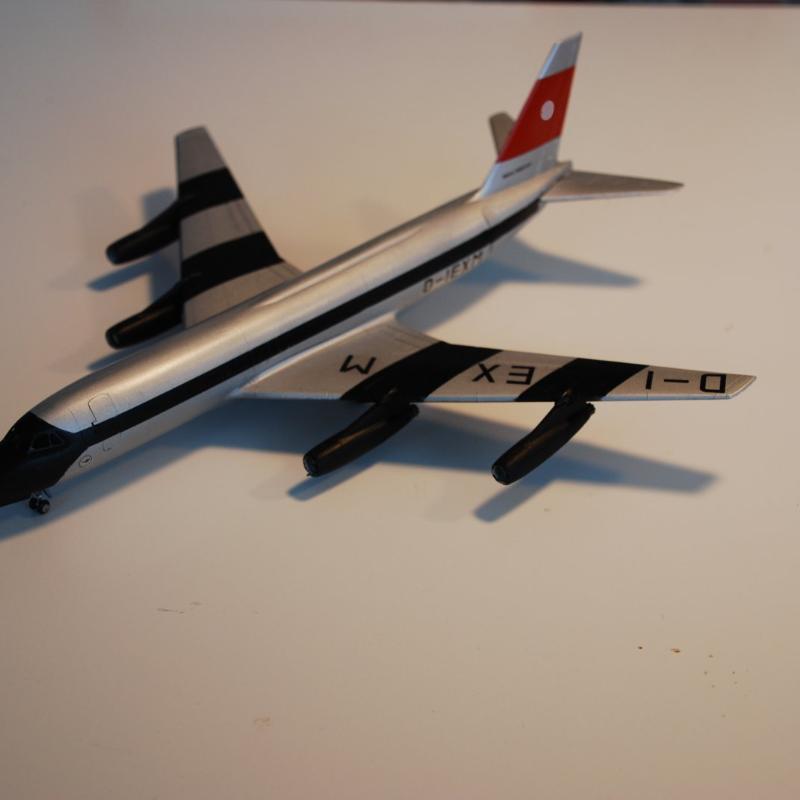
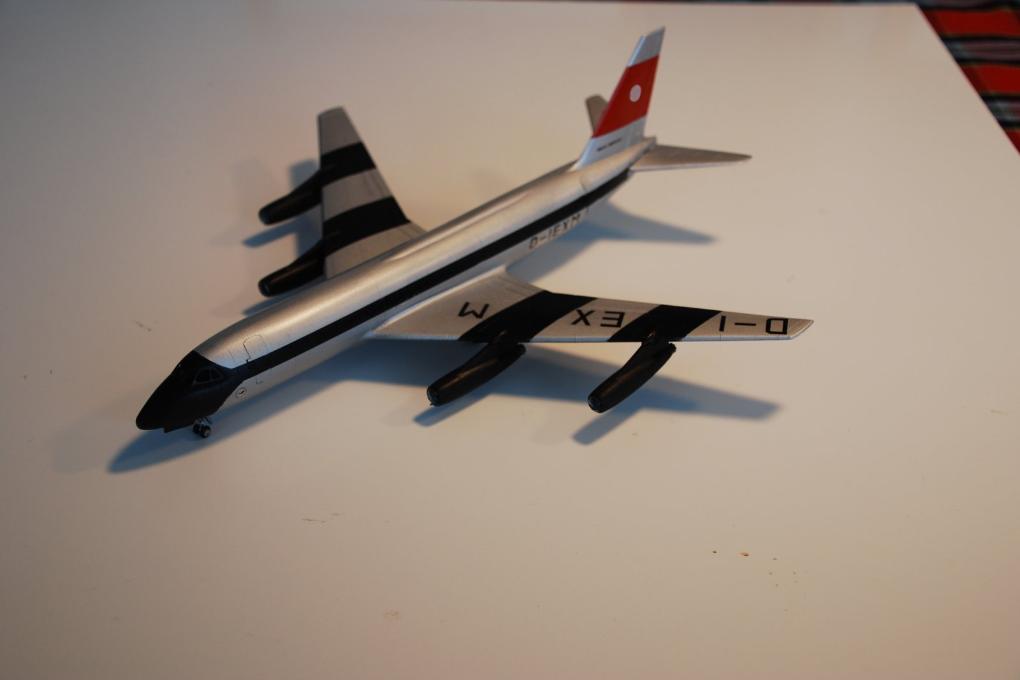
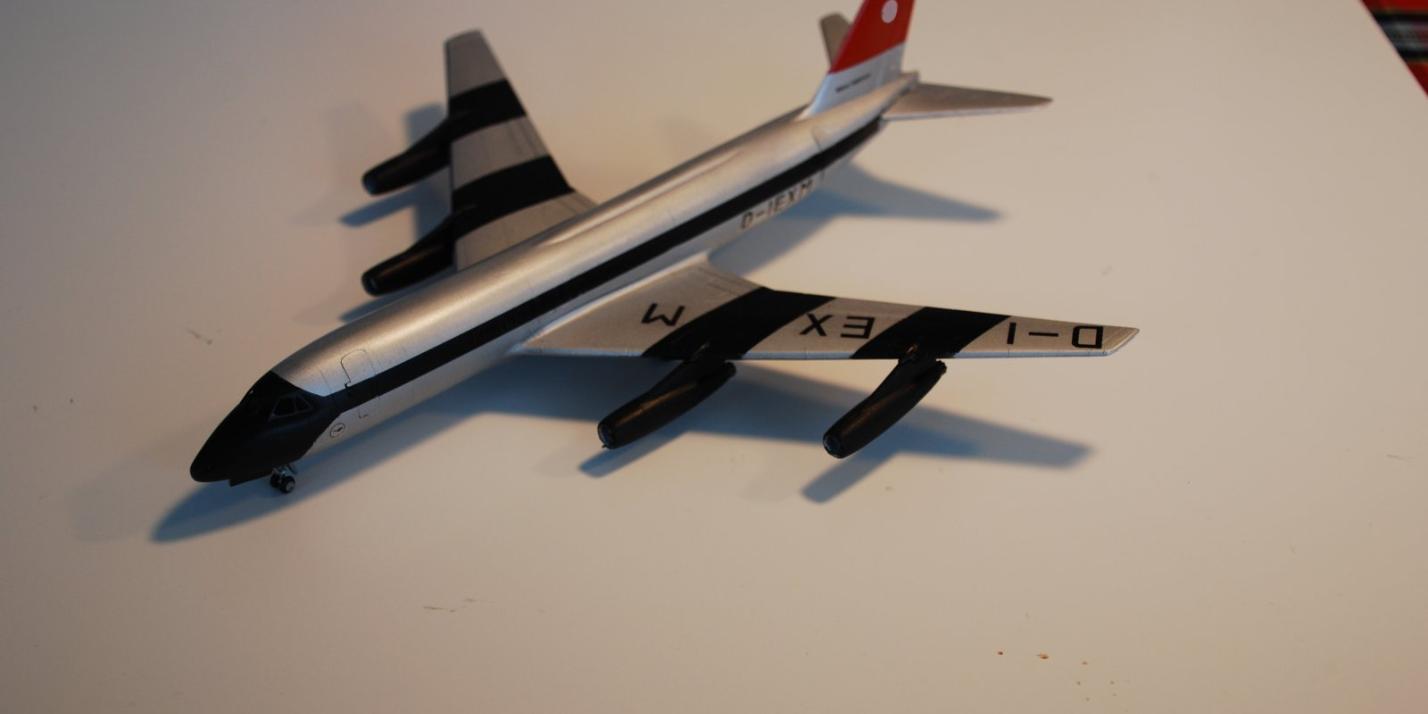
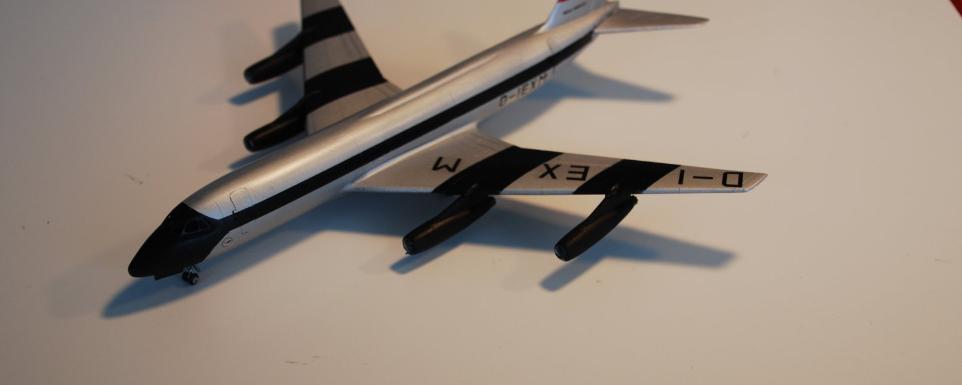
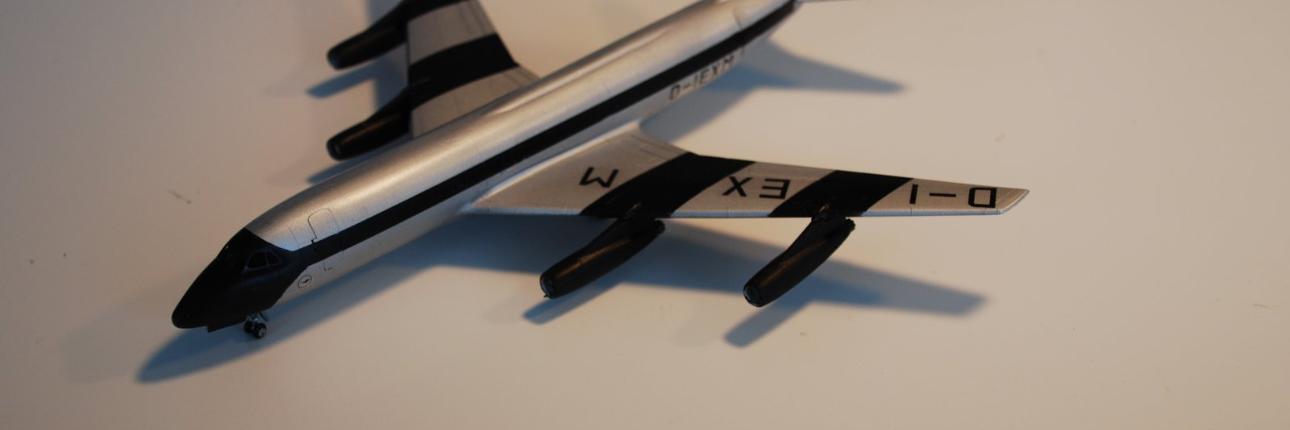
The model shows a Lufthansa Do-880 in February 1963.
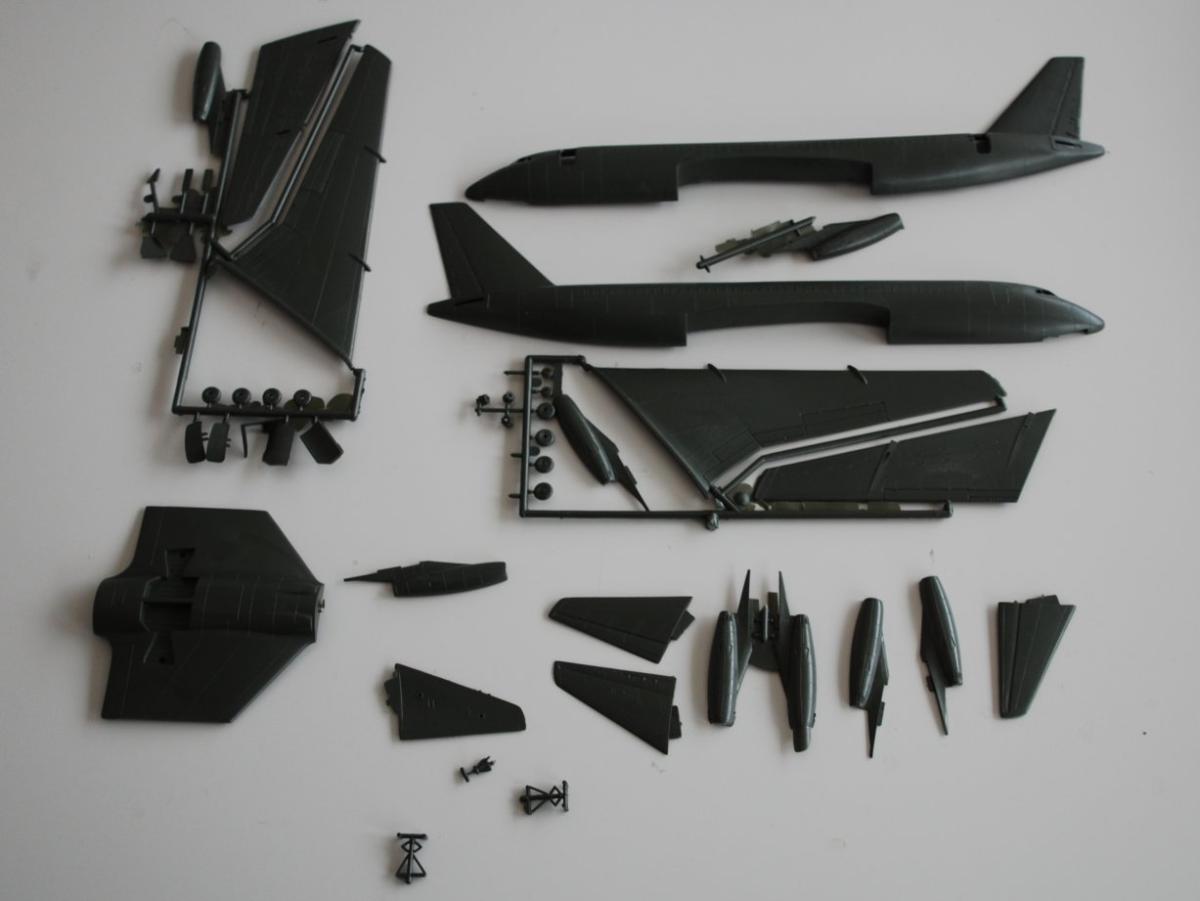
The model was made from a 1/126 Glencoe kit which dates back to the 1960s. Quite easy to build, it did not contain any cockpit windows. It was made OOB and painted with Revell Aqua Color and Vallejo. Decals were used from various other kits. Its mainly used as a test for another project to see if the color scheme works on a jetliner.