Manufacturer: Matchbox/Revell
Scale: 1/72
Additional parts: none
Model build: Nov - Dec 2013
Manufacturer: Matchbox/Revell
Scale: 1/72
Additional parts: none
Model build: Nov - Dec 2013
The salty tang of the North Atlantic whipped around Lieutenant Peter Hartmann's helmet as he surveyed the imposing form of the Graf Zeppelin. Today wasn't about mock dogfights or simulated bombing runs. Today was about a different kind of challenge: the infamous "Trapeze Trap" - a grueling series of landings and takeoffs designed to push both pilot and machine to their limits.
Peter climbed into the familiar cockpit of his F9F Panther. The sleek jet, a marvel of American engineering, was a far cry from the propeller planes he'd trained on. He loved the raw power, the exhilarating rush of speed, but today, respect for the Panther was laced with a healthy dose of apprehension.
The klaxon wailed, a piercing shriek that shattered the pre-dawn calm. Peter took a deep breath, his fingers flying across the pre-flight checks. With a roar that seemed to split the ocean in two, he taxied into position on the heaving deck. The crew chief gave him a thumbs up, a silent encouragement.
The catapult officer's voice crackled through the headset, calm amidst the growing tension. "Ready, Panther One?"
"Ready," Peter replied, his voice betraying none of the nervous butterflies fluttering in his stomach.
A jolt, a sickening lurch, and then the world blurred into a rush of wind and noise. Peter was pressed back into his seat as the catapult flung him towards the unforgiving sky. Seconds later, he was airborne, the vastness of the Atlantic stretching out before him.
The first part of the Trapeze Trap was a series of touch-and-go landings. Peter skimmed the deck, the arresting hook snagging the cable with a satisfying thud that jolted him forward. But before he could celebrate, the throttle was already roaring, pulling him skyward again. Each landing and takeoff was a delicate dance between power and control, the unforgiving sea a constant reminder of the consequences of a mistake.
The second part - a series of night traps - was a different beast entirely. The once-familiar deck became a menacing black maw, the arresting wires invisible threads of danger. Peter relied solely on the instruments and the faint glow of the landing lights, his senses on high alert. Each successful landing was a minor victory, each missed hook a near miss that sent a jolt of adrenaline through him.
By the time Peter completed the final trap, the eastern sky was beginning to blush with the promise of dawn. He taxied wearily to the designated spot, his arms aching, his mind buzzing. As the crew chief secured the Panther, Peter climbed out, feeling a wave of exhaustion mixed with exhilaration. He had tamed the Trapeze Trap, pushed himself and his machine to the limit.
Walking back to the ready room, Peter saw the other pilots emerging from their jets, faces etched with a mixture of relief and pride. They had all survived the ordeal, their bond with their Panthers forged anew. Today wasn't about enemy aircraft or simulated battles. It was about a different kind of combat - a battle against the unforgiving sea, against the limitations of man and machine. And in that battle, they had all emerged victorious.

After the Second World War, the aircraft carrier Graf Zeppelin was among the few major German warships to survive intact. With the onset of Cold War tensions in Europe and the rearmament of West Germany beginning in 1948, the carrier was recommissioned into the newly established Bundesmarine, forming the centerpiece of its naval aviation branch.
The ship was returned to service with only minor modifications—most notably the removal of its heavy 15 cm gun batteries—allowing it to focus on aviation operations. Initially, the Bundesmarine continued to operate surviving F4U Corsairs and modified Fw 190T aircraft. However, these piston-driven types were quickly recognized as obsolete in the jet age. Although earlier wartime experiments had tested the feasibility of carrier-capable Me 262T jet fighters, these had proven unsuitable for sustained naval operations.
As a modern replacement, the Bundesmarine procured 24 Grumman F9F Panther fighters from the United States, delivered between March and autumn 1950 under an early NATO equipment agreement. The Panther became the Graf Zeppelin’s first operational jet aircraft, taking over both the air-superiority and fighter-bomber roles. Up to twelve Panthers could be embarked aboard the carrier at any given time, supported by a small number of trainers and liaison aircraft.
From 1951 onwards, the Panthers were intensively employed in fleet defense exercises in the North Sea and Baltic, often working alongside Royal Navy carriers during NATO maneuvers. They provided close air cover for Bundesmarine task groups and simulated strike operations against Warsaw Pact naval units in the Baltic approaches. Training proved hazardous, and two aircraft were lost in carrier-related accidents by 1955.
Despite these setbacks, the Panthers gave the Bundesmarine valuable experience in operating jet aircraft at sea. Their armament of four 20 mm cannons and capacity to deliver rockets and light bombs allowed them to serve in both interception and strike roles, though their limited range constrained operations. By the mid-1950s, rapid advances in jet technology rendered the Panther increasingly outdated.
In 1957, Graf Zeppelin was withdrawn for a planned modernization that included angled flight decks and improved arrestor gear, but budgetary constraints and changing NATO doctrine delayed these efforts. The Panthers were flown ashore to Flensburg, where they continued in service until 1960. At that point, the surviving 22 aircraft were retired, marking the end of the Panther era in German naval aviation.
The Panther’s short service nevertheless represented a formative period for the Bundesmarine, bridging the gap between wartime propeller-driven aircraft and the more capable carrier jets of the 1960s.
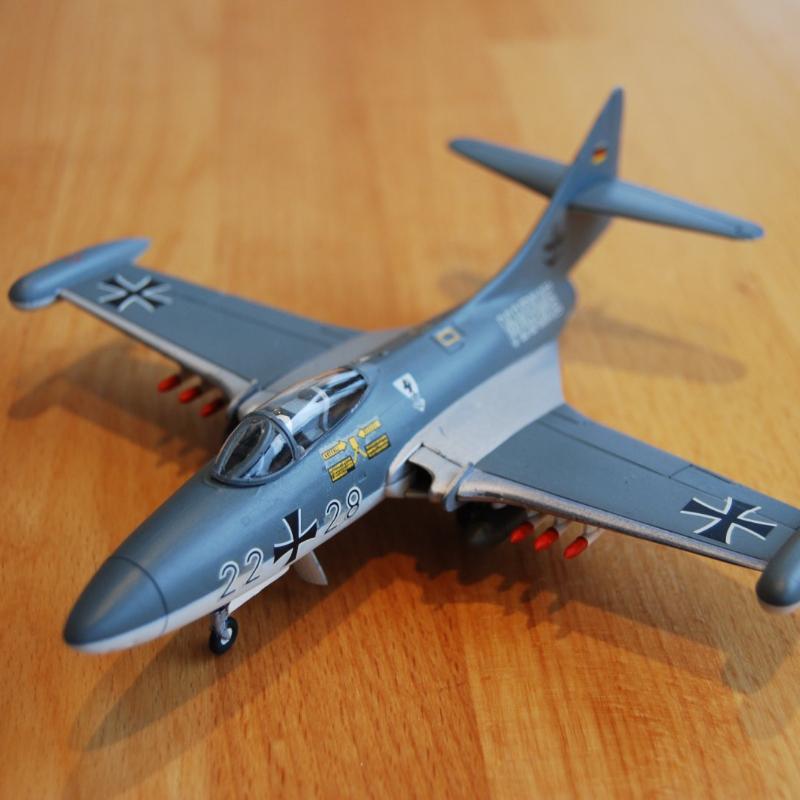
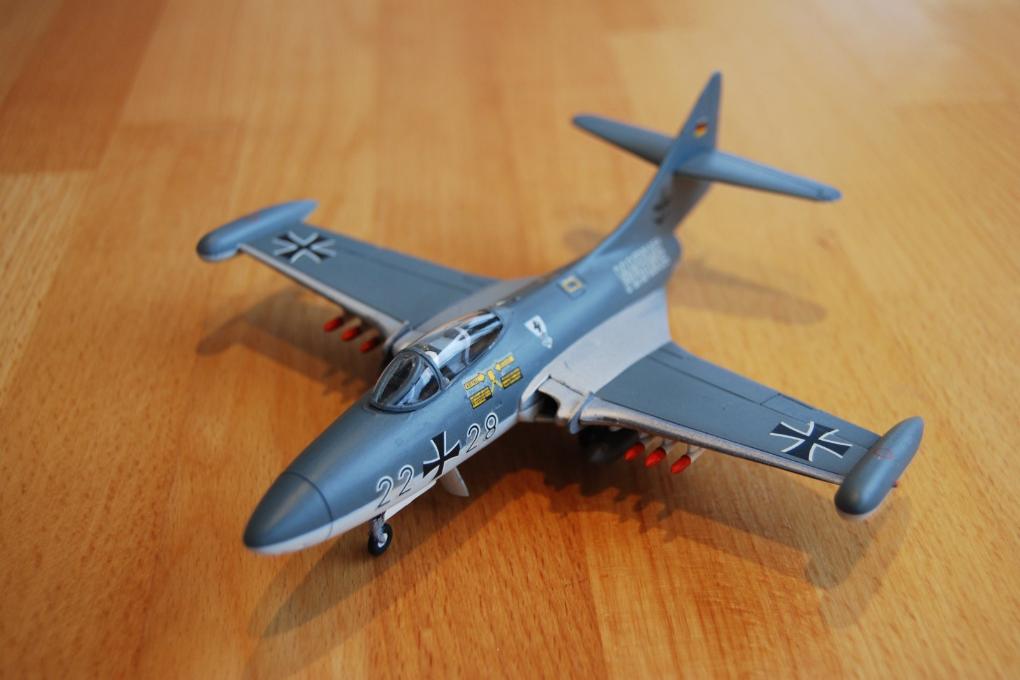
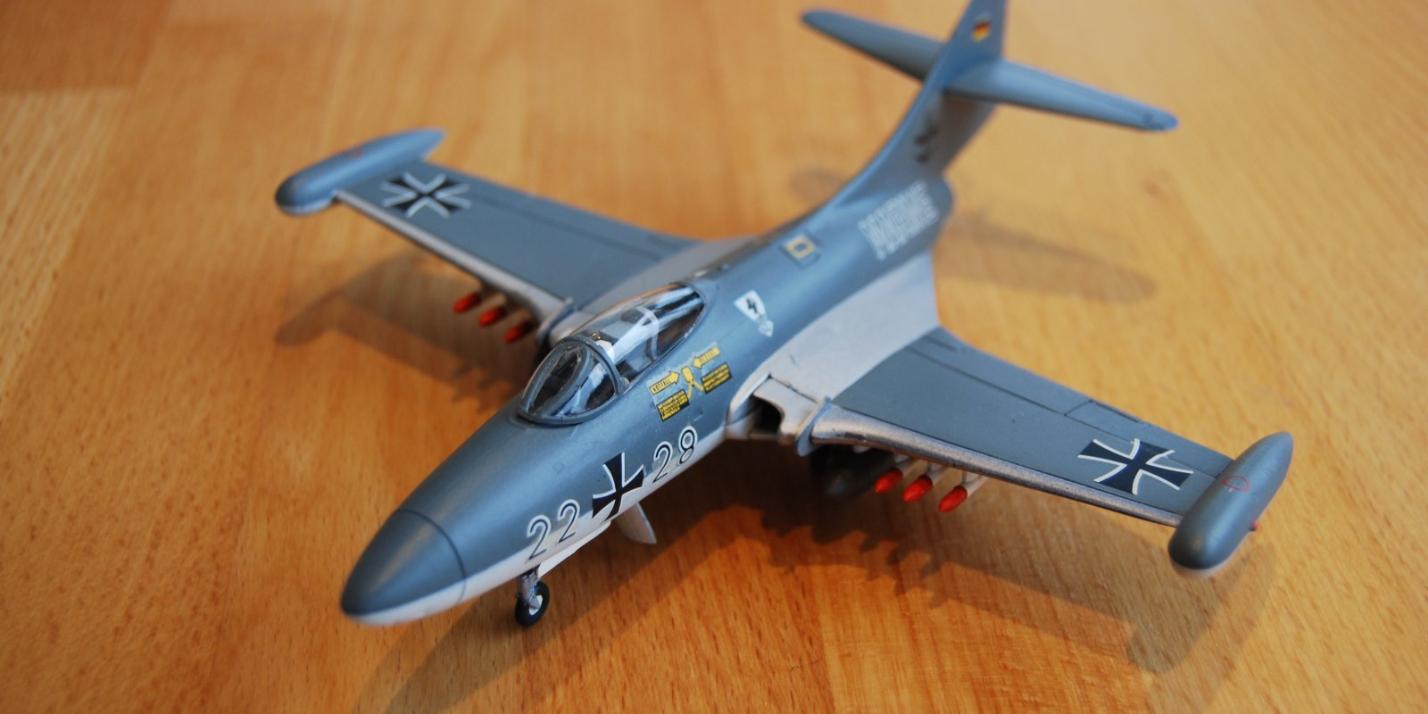
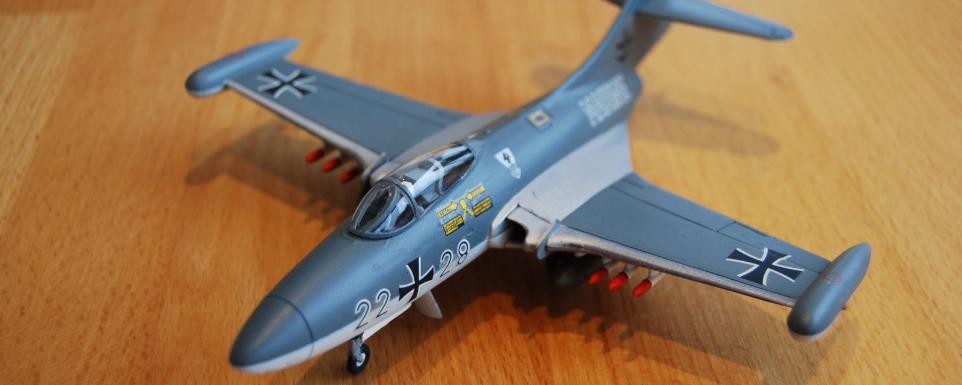
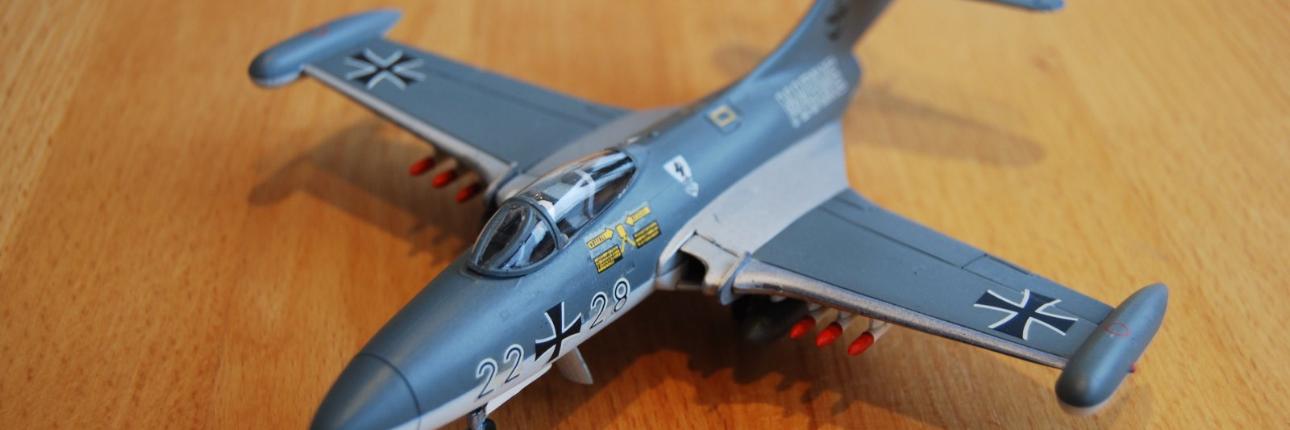
The model shows a F9F on the Graf Zeppelin in June 1956 during the NATO excercise "Iron Response" in the mid-Atlantic near the Azores.
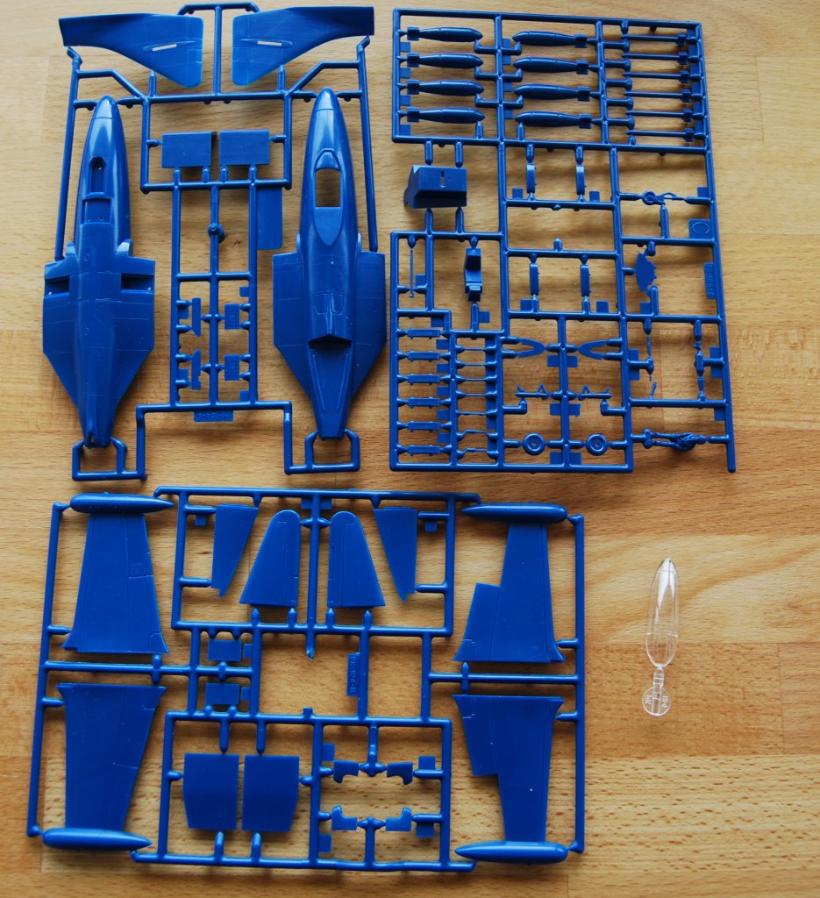
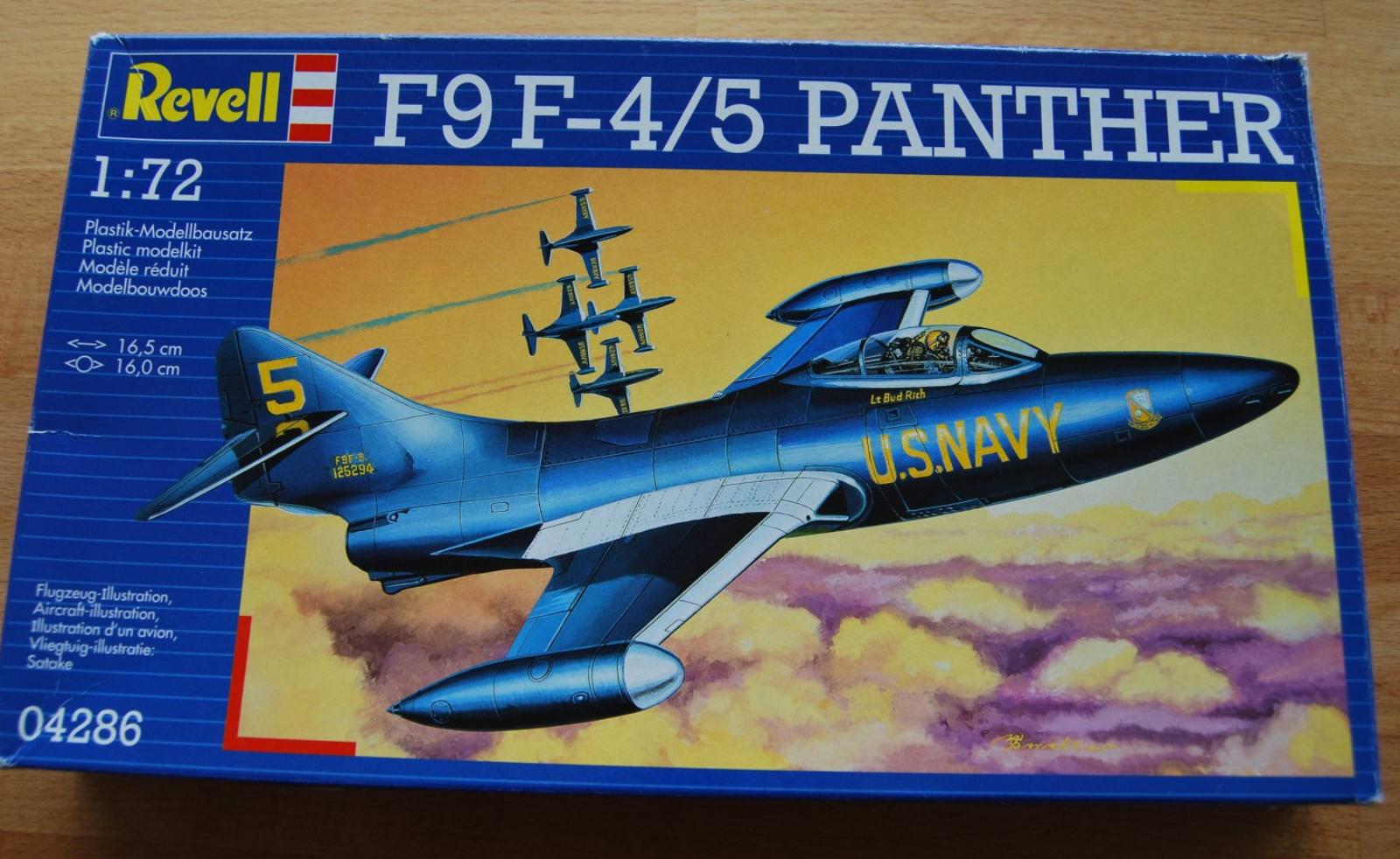
It is a Revell 1/72 kit (which is originally a former Matchbox model). Build OOB, the model was typical for the Matchbox kits which fittd quite good for their age. I rmember that I have build the same model over 30 years ago, unpinated that that time.
The only variation is the color scheme, which is like the typical German Marineflieger paint. Decals are form the spare parts box.