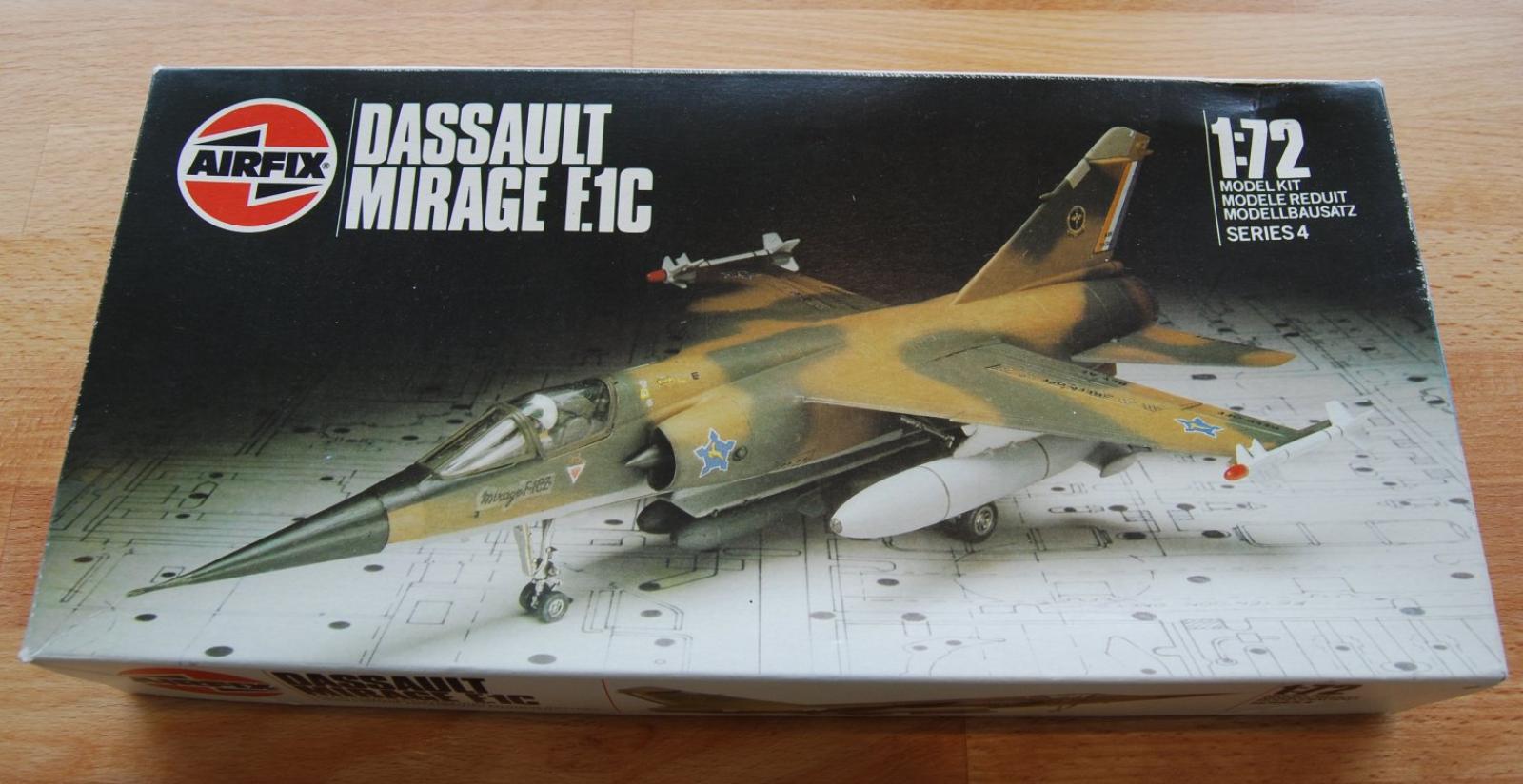
Manufacturer: Airfix
Scale: 1/72
Additional parts: none
Model build: My 2013
Manufacturer: Airfix
Scale: 1/72
Additional parts: none
Model build: My 2013
Captain Erich Kessler gripped the control stick, his knuckles white against the worn leather. Rain lashed the canopy of his Mirage F1.C, blurring the world outside into a smear of greens and browns. Below, the jagged teeth of the Dinaric Alps clawed at the sky, a treacherous maze he had to navigate blind.
Erich, callsign "Fuchs" (Fox), was part of Jagdgeschwader 71 "Richthofen," the Luftwaffe's contingent in the NATO air campaign over Serbia. Today's mission: provide air cover for a strike package of German ECR Tornados targeting a heavily fortified anti-aircraft battery near Belgrade.
Intelligence reports were sketchy. The Serbs were known to have a ragtag collection of Soviet-era SAMs, and pinpointing their exact location was a gamble. Fuchs flicked a switch, the green glow of his radar display bathing the cockpit in an eerie light. Static crackled in his headset, a constant reminder of the danger lurking in the invisible web of air defense.
Suddenly, the radar flickered. A blip – a fast-moving object climbing rapidly. "Fuchs, this is Wolfpack Lead. Bogie on your mark eight o'clock, looks like a MiG-29!" the voice of the Tornado leader crackled through the speakers.
Adrenaline surged through Erich. A dogfight, mano a mano, against a legendary Fulcrum – a baptism by fire he hadn't anticipated. He dipped the Mirage, dodging a jagged peak, and pushed the throttle forward. The F1, lighter and nimbler than the lumbering Phantoms back at base, responded with a surge of acceleration, pressing him against the G-suit.
The world became a blur of greys and greens as he locked onto the MiG. Both planes weaved through the treacherous valleys, a deadly ballet at breakneck speed. Erich squeezed the trigger, his twin 30mm cannons spitting a stream of fire. Tracers arced through the air, missing their mark by a hair's breadth.
The Fulcrum banked sharply, trying to force a head-on engagement – a tactic that favored the MiG's heavier armament. Erich countered, exploiting the Mirage's superior maneuverability. He pulled a daring maneuver, skimming the treetops, forcing the Fulcrum to overshoot. In that split second, Erich lined up the shot. A burst of cannon fire tore through the air, and the MiG shuddered, smoke trailing from its engine. It spiraled out of control, a fiery comet disappearing into the clouds below.
Relief washed over Erich, but it was short-lived. A new blip appeared on his radar – another MiG, flanking him from the side. He didn't have time to celebrate his victory. With a growl, Fuchs pushed the Mirage to its limits, diving into the heart of the Serbian mountains, the Balkan Fox weaving through the maze of stone, a lone hunter surviving against the odds.

The Mirage F1 was a French-designed air-superiority and attack aircraft, first entering service in the early 1970s. Among its variants, the Mirage F1C served as the dedicated all-weather interceptor.
In West Germany, the Luftwaffe adopted the F-4 Phantom II as its principal fighter between 1973 and 1975, with 175 aircraft delivered. Although the Phantom provided formidable performance, it was a large and costly platform. By the late 1970s, Luftwaffe planners sought a lighter, more economical complement to the Phantom for routine interception and quick reaction alert duties.
After evaluating several candidates, the Luftwaffe selected the Mirage F1C in 1978 as its secondary fighter. Production for Germany was carried out under license by Dornier, paralleling the joint manufacture of the Dassault/Dornier Alpha Jet. A total of 125 Mirage F1Cs were delivered, entering service with the Jagdgeschwader (fighter wings). The standard organizational structure became two squadrons of F-4 Phantom IIs paired with one squadron of Mirage F1Cs per wing, ensuring flexibility between heavy and light fighter elements.
Following the collapse of Yugoslavia, Luftwaffe Mirage F1C squadrons were integrated into NATO operations during the Balkan conflicts of the 1990s. Their smaller size, excellent acceleration, and robust radar systems made them particularly useful for combat air patrols and interdiction escort duties.
Operation Deny Flight (1994–1995): Mirage F1Cs from JG 72 (Leck) deployed to Aviano, Italy, flying daily patrols over Bosnia. On 28 February 1994, two German Mirages escorted Tornado ECR aircraft targeting Serbian radar installations. During the mission, they engaged two approaching Serbian J-21 Jastreb attack jets. Using AIM-9L Sidewinders, both enemy aircraft were shot down, marking the first Luftwaffe air-to-air kills since World War II.
Operation Allied Force (1999): Mirage F1Cs again deployed, this time from JG 74 (Neuburg), to support NATO’s campaign over Kosovo. On 24 March 1999, during the opening night of operations, a pair of German Mirages intercepted and engaged three Yugoslav MiG-29 Fulcrums near Pristina. In the ensuing dogfight, one MiG-29 was destroyed by a German pilot with an AIM-120 AMRAAM (delivered as part of a late-1990s modernization of the Mirage fleet). The remaining MiGs disengaged under heavy NATO pressure.
Escort Missions: Throughout 1999, Luftwaffe Mirages frequently flew escort missions for Tornado ECR units suppressing Serbian air defenses. On several occasions, they successfully deterred MiG-21 and MiG-29 sorties, their presence alone often forcing Yugoslav pilots to withdraw without engagement.
The Balkan campaigns demonstrated the practical value of a lighter fighter aircraft within the Luftwaffe structure. While the Phantom remained the heavyweight backbone, the Mirage F1C proved more adaptable for persistent patrols and short-notice interceptions.
Despite their success, the Mirages were increasingly outclassed by the early 2000s. With the introduction of the Eurofighter Typhoon, the Mirage F1C was retired from Luftwaffe service in 2004, closing a chapter on one of the Luftwaffe’s lesser-known, but operationally significant, fighters.
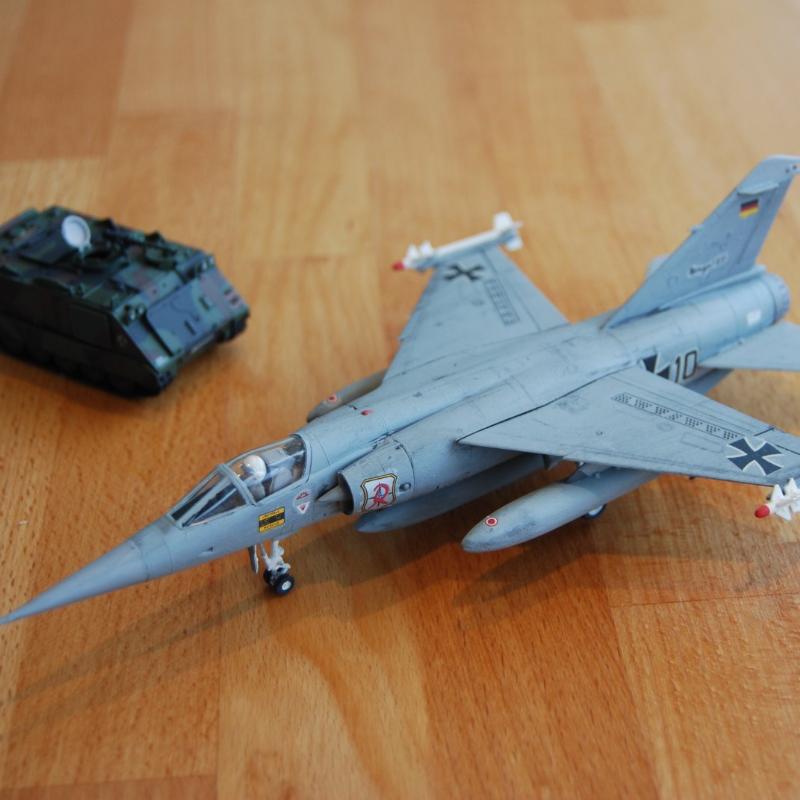
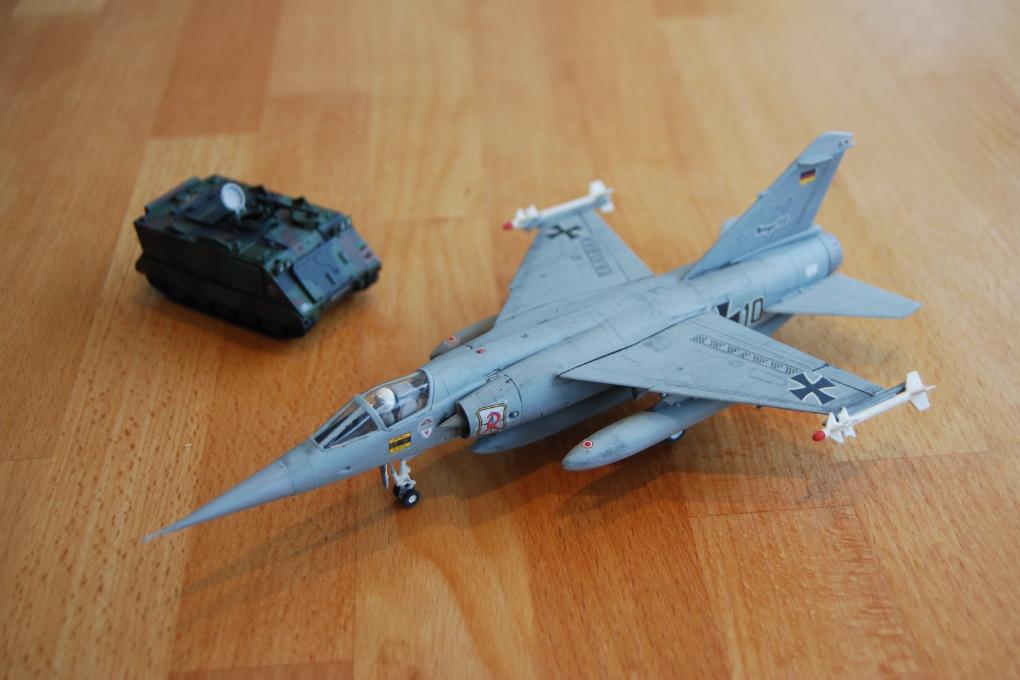
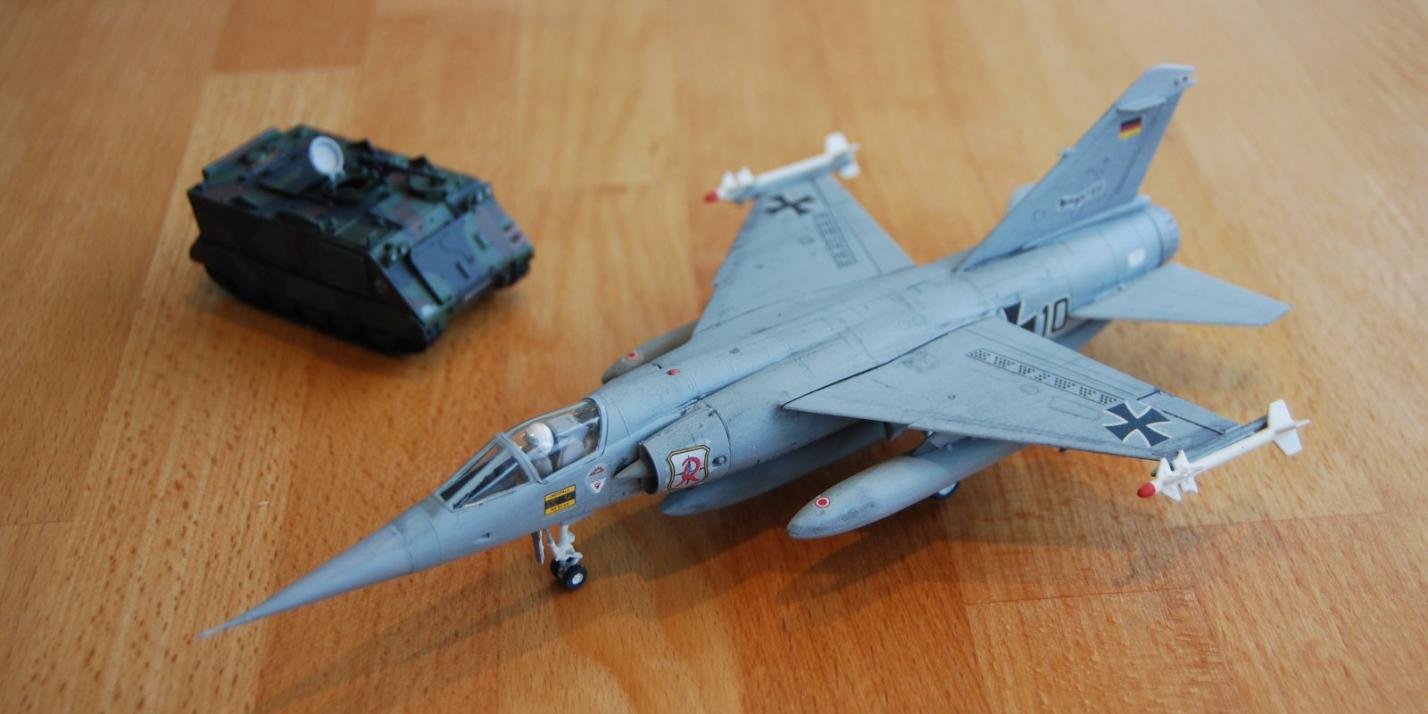
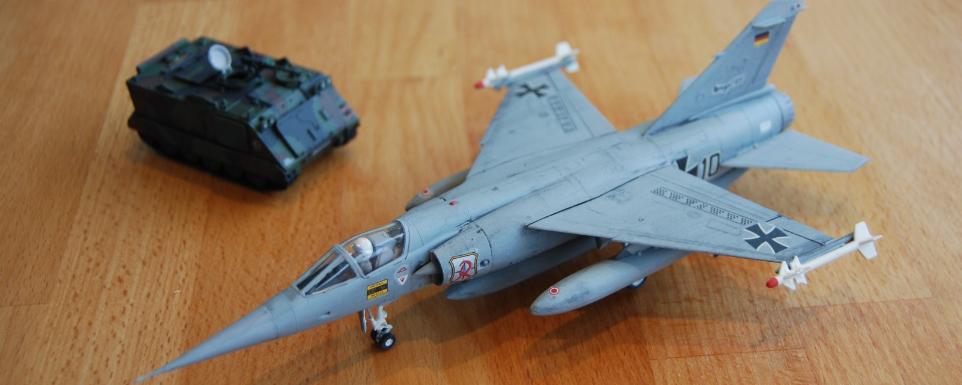
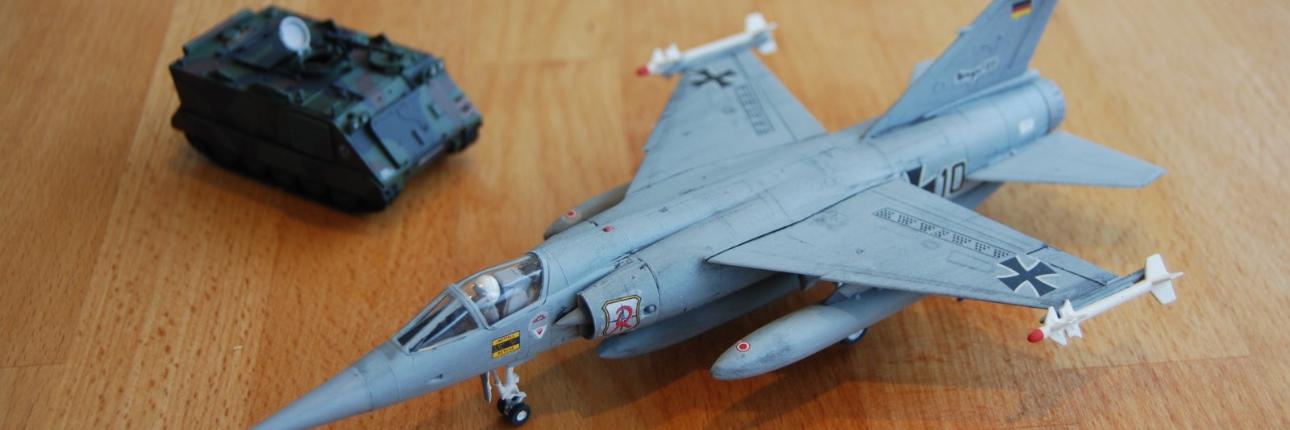
The model shows a German Mirage F1.C of Jagdgeschwader 71 "Richthofen" during the NATO operations over Bosnia and Serbia in April 1999.
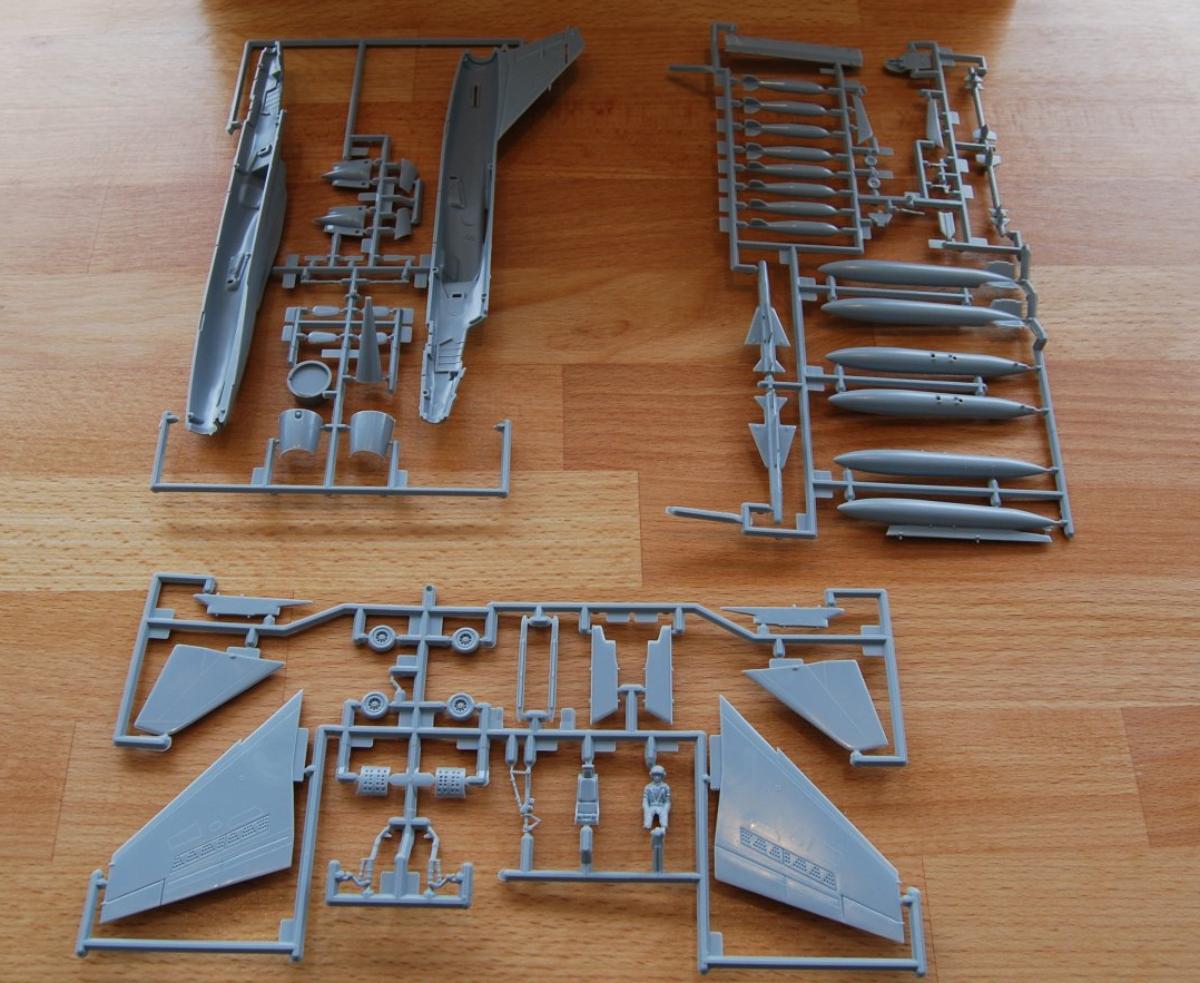
I always liked the Mirage F1, so there was the idea to build a Luftwaffe version of it. I used a old (1976) Airfix Mirage for it. Its build directly out of the box, without any changes ecxept the painting and the Luftwaffe decals. Despirte its age, it was simple but quite good to build. For the color scheme, I used a one of e Luftwaffe Eurofighter. Additionally I tried some weathering wihch I tihnk worked quite good on the model, it looks as if it is heaviely used. Decals are a mix of those of a Luftwaffe Do28 and what else was found in the spare parts box.