Manufacturer: Airfix
Scale: 1/72
Additional parts: a second Airfix Do 217 kit plus parts from a Revell He 177
Model build: Oct 2014 - Jan 2015
Manufacturer: Airfix
Scale: 1/72
Additional parts: a second Airfix Do 217 kit plus parts from a Revell He 177
Model build: Oct 2014 - Jan 2015
October 26th, 1938. A crisp autumn wind whipped across the tarmac of Rechlin Airfield, Germany. Among the sleek lines of Messerschmitts and Heinkels, a lumbering giant stood out. This was no ordinary bomber. The Dornier Do 218A, a Frankenstein's monster of German engineering, was about to take its first flight.
Born from the ashes of the failed Uralbomber project, the Do 218A was a gamble. Built on the bones of the Do 217, it boasted a stretched fuselage, enlarged wings, and a quartet of growling Jumo 211B engines. While unorthodox, it promised a longer range and heavier payload than any bomber in the Luftwaffe's arsenal.
Hauptmann Franz Schmidt, a grizzled veteran with a steely gaze, gripped the controls. His crew, a mix of seasoned veterans and eager rookies, watched his every move. This was their chance to prove the naysayers wrong.
The engines roared to life, sending a tremor through the massive aircraft. Schmidt eased the throttle forward, and the Do 218A lumbered down the runway, picking up speed with surprising alacrity. As the wheels lifted off the ground, a cheer erupted from the control tower. The "Phoenix," as the crew had christened it, had risen.
The test flight was a baptism of fire. The tail fins proved insufficient. The Do 218A danced precariously in the sky, a wild beast struggling for control. Schmidt, his knuckles white on the controls, fought to keep the aircraft aloft. His calm voice over the intercom reassured his crew as he nursed the bomber through a series of harrowing maneuvers.
Back on the ground, engineers huddled around telemetry data, their faces etched with concern. The Do 218A had the potential, but its stability issues were undeniable. Despite the near-disaster, Schmidt's skill had saved the flight and, perhaps, the future of the bomber.
News of the test flight reached Ernst Udet, head of the Luftwaffe's technical office. Impressed by the Do 218A's potential, he ordered modifications. The enlarged tail fins became a permanent feature, christened the "Schmidt Stabilizers" in the pilot's honor. With these changes, the Do 218B variant was born, a more stable and formidable bomber.
Fast forward to the summer of 1940. The Battle of Britain raged. While the Do 17s and He 111s pummeled southern England, a squadron of Do 218Bs, led by the now-famous Hauptmann Schmidt, embarked on daring nighttime raids. Their extended range allowed them to strike targets beyond the reach of other Luftwaffe bombers, wreaking havoc on vital industrial centers.
One night, on a mission to cripple a Royal Air Force airfield, Schmidt's squadron found itself intercepted by a flight of nimble Spitfires. The ensuing dogfight was a ballet of fire and steel. The Do 218Bs, with their heavier armament, fought back valiantly. Schmidt, ever the tactician, used his formation's firepower to devastating effect, taking down several Spitfires.
However, the Do 218Bs were not invincible. Their bulk made them cumbersome against the agile British fighters. One by one, they fell victim to concentrated attacks. By the time the last Spitfire limped away, only Schmidt's Phoenix remained, riddled with bullet holes but stubbornly airborne.
News of Schmidt's lone return, defying overwhelming odds, became a legend within the Luftwaffe. The Do 218A, the "Phoenix," had proven its worth. Though overshadowed by later bomber designs, it carved its niche in history, a testament to German engineering ingenuity and the courage of its crew.

In the mid-1930s, the Reichsluftfahrtministerium (RLM) briefly pursued a true strategic bomber under the so-called “Uralbomber” program, producing two prototypes: the Dornier Do 19 and the Junkers Ju 89. Both proved underpowered and outdated before entering service, leading the RLM to abandon the heavy bomber concept in favor of medium bombers such as the He 111 and Ju 88.
At Dornier, however, the lessons of the Do 19 were not forgotten. Anticipating the limitations of Germany’s bomber force, Dornier engineers began work—without formal approval—on a larger derivative of their new Do 217 medium bomber. This private venture became the Dornier Do 218, intended to bridge the gap between a medium and a true long-range bomber.
The Do 218 utilized the basic fuselage form of the Do 217 but enlarged both wingspan and fuselage to carry more fuel, crew, and defensive armament. It was powered by four Jumo 211B engines, each producing 1,200 hp. The bomb bay capacity was increased by 25% compared to the Do 217, and defensive armament included nose, dorsal, ventral, and tail-mounted positions equipped with 7.92 mm MG 15s and later MG 131s.
The prototype Do 218A first flew on 22 October 1938, only weeks after the Do 217 prototype. Initial testing revealed stability issues with the tail assembly, which were resolved on the Do 218B with enlarged twin fins. Performance was slightly superior to the Do 217: a top speed of 450 km/h, operational range of 2,500 km, and the ability to carry a 3,000 kg bomb load.
Because the design shared many parts with the Do 217, production could begin relatively quickly. Small-scale manufacture commenced in mid-1939.
The first Kampfgruppen were equipped with the Do 218A in spring 1940. By the summer, approximately 30 aircraft were operational in time for the Battle of Britain. Their extended range allowed them to strike industrial and logistical targets beyond London, including Liverpool and Bristol, which were out of reach for He 111s and Ju 88s.
During daylight raids, the Do 218 demonstrated its heavier defensive armament could repel small formations of RAF fighters. However, when intercepted by concentrated squadrons of Hurricanes and Spitfires, losses were heavy. By late September 1940, most Do 218 operations shifted to night bombing, where the type proved more survivable.
From 1941 to 1942, the Do 218 was deployed in long-range anti-shipping missions over the Atlantic, operating from western France in cooperation with Kriegsmarine surface raiders and U-boats. The aircraft’s range made it particularly valuable for shadowing convoys. Several Do 218s were modified to carry the Fritz X guided bomb in early tests, though this role was later assumed by the Do 217K.
By 1942, the introduction of the Heinkel He 177 signaled the phasing out of the Do 218. Production ended that year after 837 examples of the A, B, and C variants had been built. The He 177’s chronic engine troubles briefly led the RLM to consider restarting Do 218 production, but the design was by then outdated compared to emerging heavy bomber concepts.
By the end of the war, most surviving Do 218s had been scrapped or cannibalized for parts. Only a handful lingered in secondary roles such as transport or training aircraft. None are known to have survived postwar.
Although largely forgotten, the Dornier Do 218 represented Germany’s only semi-operational heavy bomber design before the He 177. While never produced in sufficient numbers to alter the course of the air war, its long-range capability offered the Luftwaffe a limited strategic reach during a critical period when medium bombers were stretched to their limits.
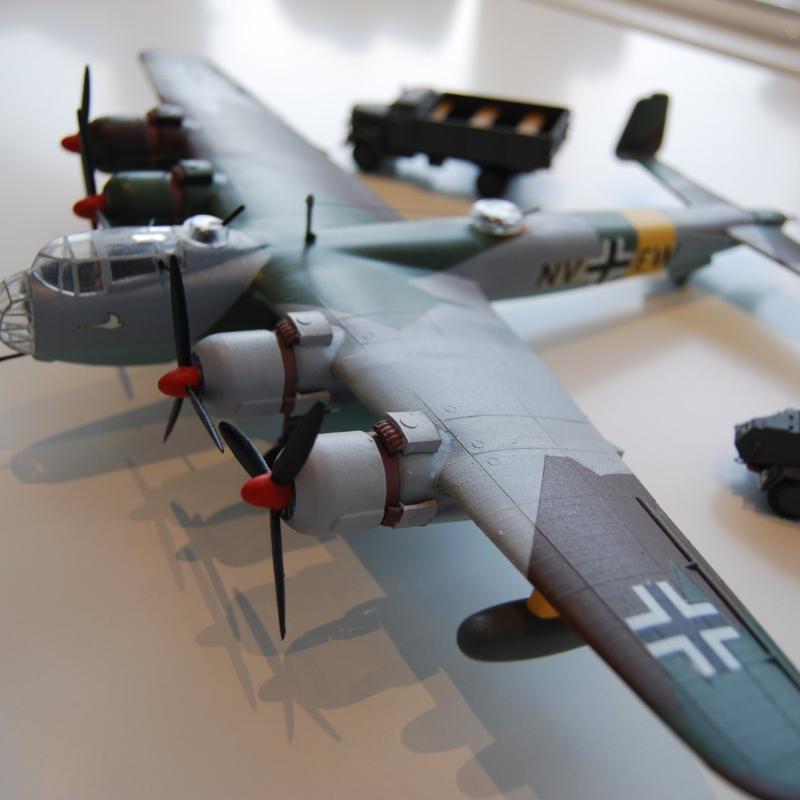
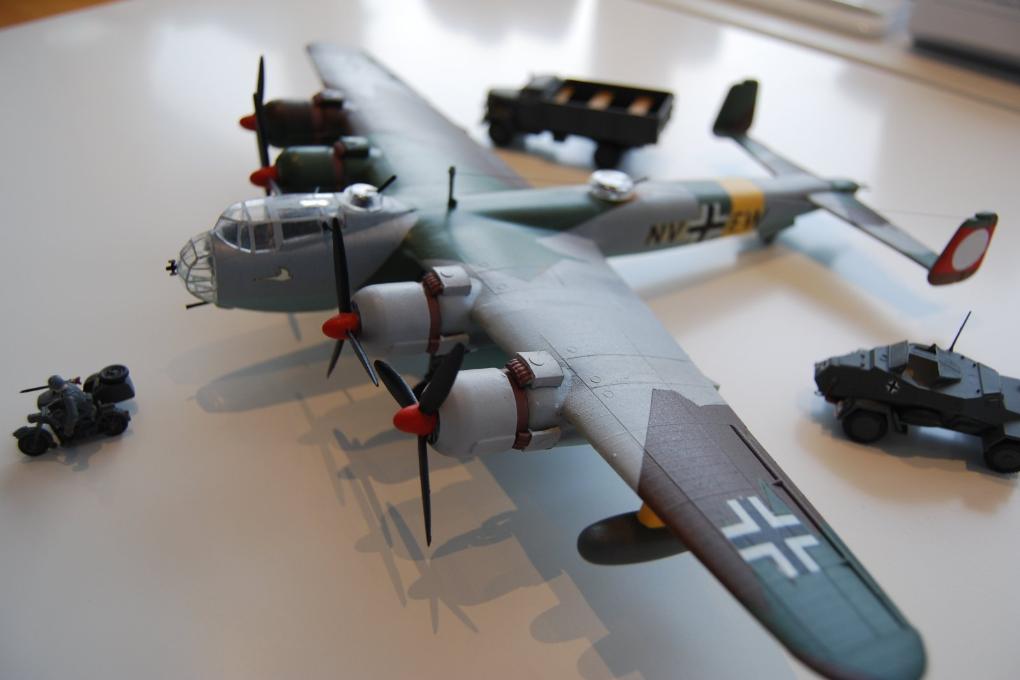
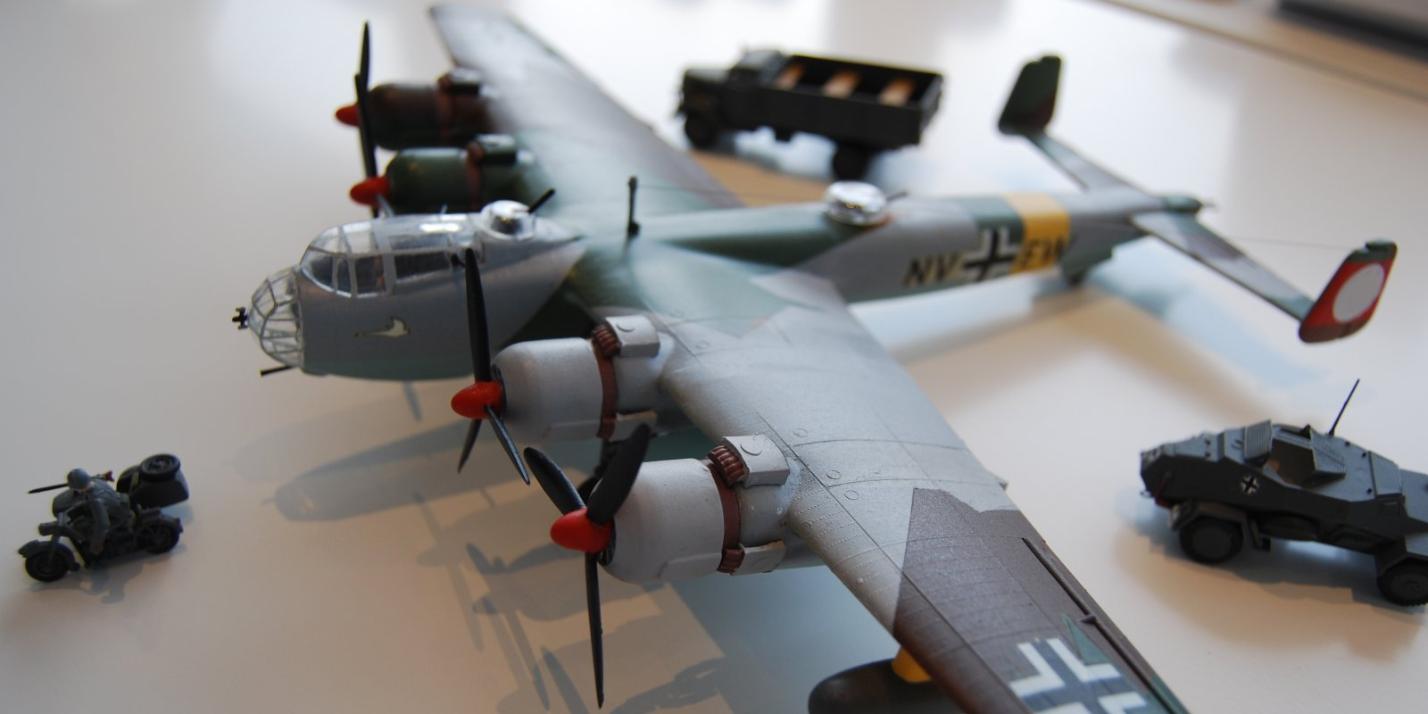
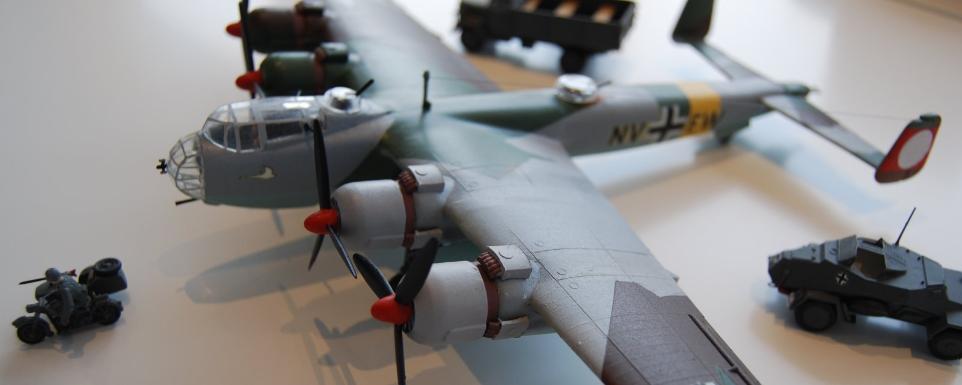
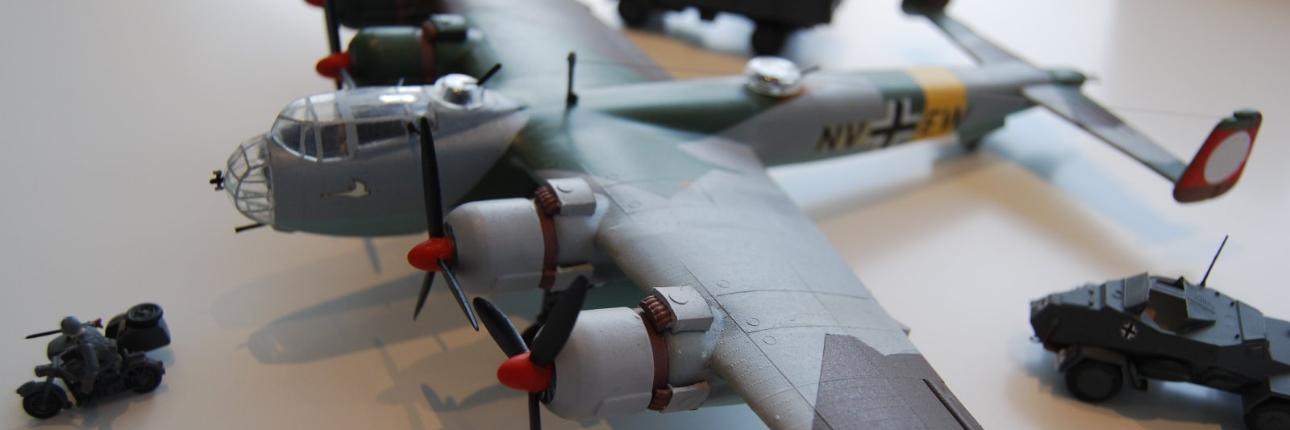
The model shows a Dornier Do 218A in a retro camo scheme in October 1938.
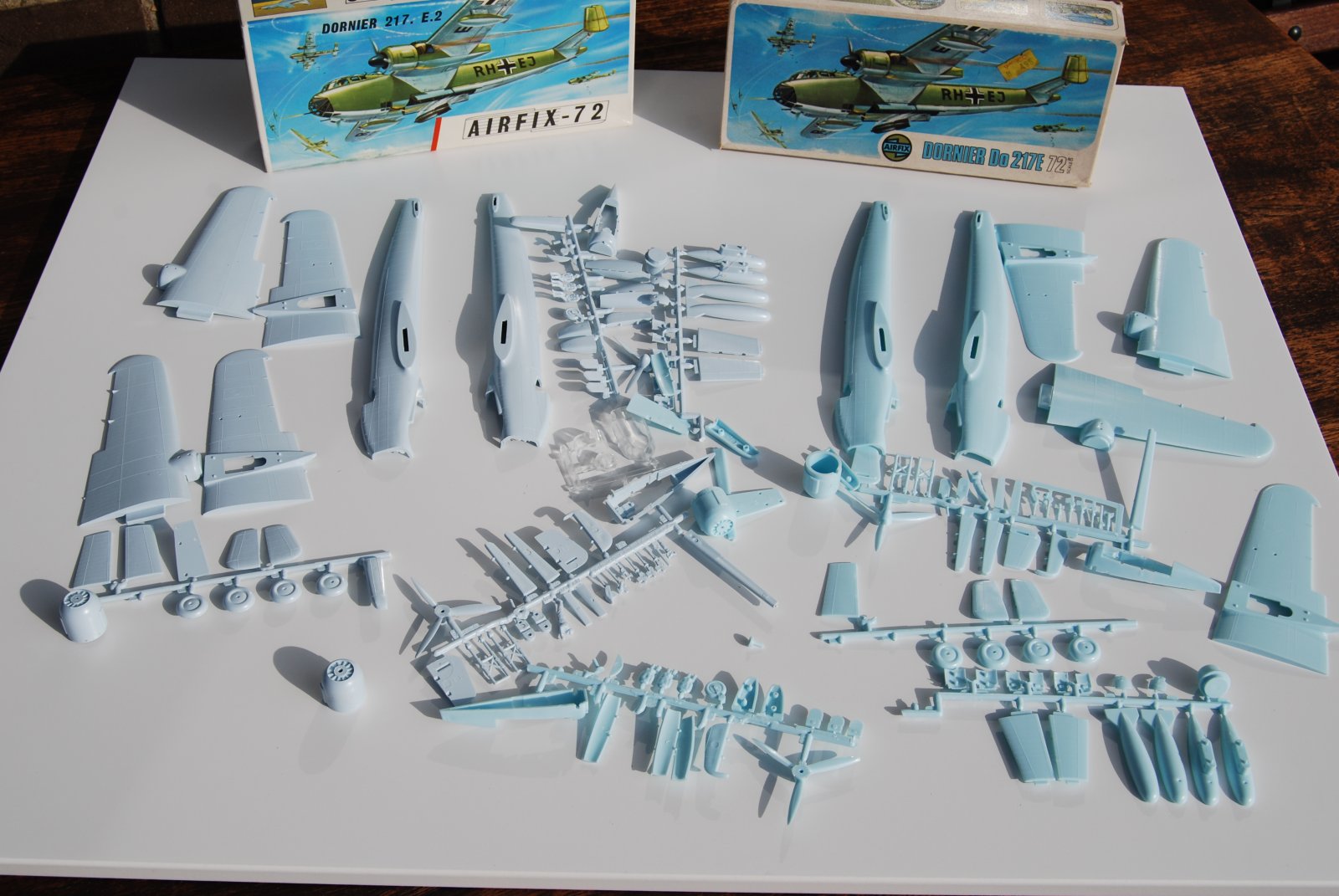
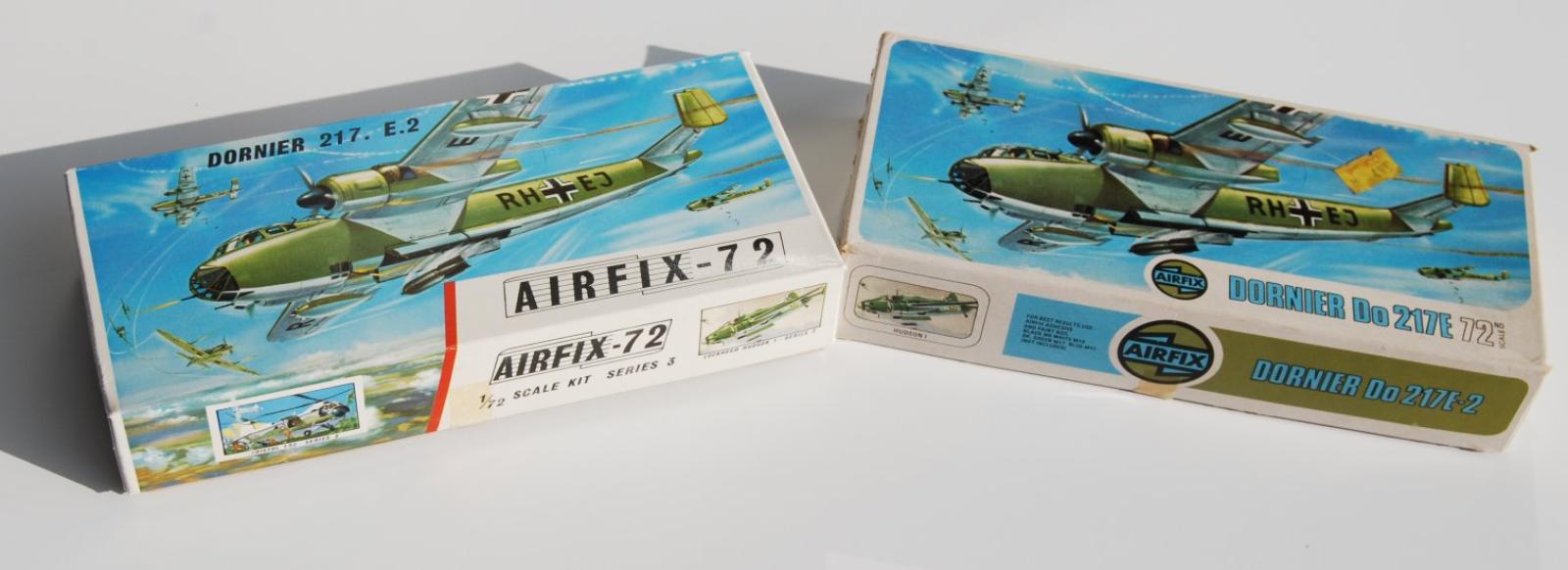
The model was made using two old Airfix 1/72 scale Do 217 kits. The wings were enlarged by adding the inner wings of the second Do 217 kit to it. The hull itself was streched with plastic parts and a lot of putty.
The second gun position on the hull was made using parts of a Revell He 177 kit. Cockpit, landing gear and tail fins were made using the original Do 217 parts.
The model was airbrushed with Revell Aqua Color colors and the decals were taken from an old Italieri Ju 86 kit.