Manufacturer: HobbyBoss
Scale: 1/72
Additional parts: none
Model build: Jun-Aug 2019
Manufacturer: HobbyBoss
Scale: 1/72
Additional parts: none
Model build: Jun-Aug 2019
The salty spray stung Lieutenant Jeb Kerbalski's eyes as he clambered onto the makeshift raft, watching his beloved F4F Wildcat settle beneath the turquoise waves of Vangunu Island. It had been a close call. Anti-aircraft fire had chewed into his fuel line, forcing him to ditch the plane. Now, stranded on a remote island, he could only hope for rescue.
Little did Jeb know, his ordeal was just beginning. On the other side of the Pacific, a different kind of drama unfolded. Back in Japan, the news of a captured Wildcat sent a jolt of excitement through the ranks of the Mitsubishi Jukogyo K.K. company – a chance to dissect their American adversary.
Under the cloak of night, Japanese engineers meticulously salvaged the mostly-intact Wildcat. Reborn with a fresh coat of Japanese paint, the once proud American fighter found itself the unwilling guest at an enemy hangar. Here, it fell into the eager hands of Captain Yuta Yamakawa, a rising star in the Imperial Navy.
Yamakawa's first test flight was a revelation. The Wildcat, nicknamed "The Claw" by the Americans, felt sluggish compared to his nimble Zero. But it packed a punch. Its ruggedness and firepower were undeniable. Over the next few months, Yamakawa put the captured Wildcat through its paces. He discovered its weaknesses – its limited turning radius, its vulnerability to high-speed maneuvers – but also its strengths – its incredible resilience and ease of handling.
With each simulated dogfight against Japanese fighters, Yamakawa developed new tactics. He learned how to exploit the Wildcat's turning limitations, how to exploit its blind spots. His reports became a coveted source of information amongst Japanese pilots, helping them gain an edge over American Wildcats in the Pacific skies.
But the tables were about to turn. By early 1943, a new predator entered the fray – the F6F Hellcat. Faster, better-armed, and more maneuverable than the Wildcat, the Hellcat quickly became the American Navy's new champion. The captured Wildcat was no longer relevant. Its days as a trainer were over.
On March 20th, 1943, Yamakawa took the Wildcat for its last recorded flight. As he landed, a strange mix of emotions washed over him. He respected the aircraft, its resilience a testament to American engineering. Yet, a sense of satisfaction bloomed within him. Japan had learned valuable lessons from their captured prize, lessons that would be put to use against the new American threat.
The final fate of the Wildcat remained a mystery. Was it scrapped, used for target practice, or perhaps hidden away as a forgotten relic? Jeb Kerbalski, eventually rescued from Vangunu, never saw his aircraft again. However, his sacrifice, and the captured Wildcat, had unknowingly played a role in the ongoing aerial war, shaping the strategies of two sides locked in a desperate struggle. The Pacific skies continued to roar with the clash of engines and the deadly ballet of fighter planes, a testament to the silent story of a captured Wildcat.

Although it was never officially acknowledged during wartime, Imperial Japanese Navy archives declassified in the late 1960s confirmed one of the most unusual episodes of the Pacific War: the acquisition and operational testing of an American Grumman F4F Wildcat by Japan.
Following the American landings on Guadalcanal in August 1942, intense air-sea battles raged in the surrounding Solomon Islands. On 18 August, an F4F-4 Wildcat of U.S. Marine Fighter Squadron VMF-223, flown by Lt. Jeb Kerbalski, sustained damage from Japanese anti-aircraft fire while escorting SBD Dauntless dive bombers. With fuel flow interrupted, Kerbalski successfully ditched his aircraft off the coast of Vangunu Island. He escaped the wreck and evaded capture for nearly two weeks before being evacuated by U.S. PT boats—however, his abandoned aircraft remained largely intact.
A reconnaissance report from a Japanese destroyer returning to Rabaul identified the overturned Wildcat. Acting quickly, the Imperial Navy dispatched a recovery team. Under the cover of night on 27 August 1942, the aircraft was salvaged and transported first to Rabaul, then shipped to Mitsubishi’s test facility in Nagoya.
The aircraft was repaired, stripped of U.S. markings, and repainted. On 29 September 1942, it took to the air for the first time under Japanese control, piloted by Lieutenant (jg) Yuta Yamakawa of the Yokosuka Naval Air Technical Arsenal. Over the following months, the aircraft—now designated AXF-1 (Allied Experimental Fighter No. 1)—was put through exhaustive trials.
Japanese engineers were impressed by:
Its rugged construction and ability to sustain heavy battle damage
The reliability of the Pratt & Whitney R-1830 Twin Wasp engine
The strength of the landing gear in carrier landings
However, they criticized its relatively sluggish roll rate compared to the A6M2 Zero and its poor climb performance at higher altitudes.
The AXF-1 participated in mock dogfights against A6M2 Zeros, Ki-43 Hayabusas, and the experimental J2M Raiden. These tests influenced evolved tactics: Japanese pilots were instructed to avoid head-on attacks and engage Wildcats from above or in climbing turns.
Testing ceased abruptly in early 1943 with the arrival of the more powerful Grumman F6F Hellcat in combat. The Wildcat no longer represented the primary enemy fighter. The last recorded flight of the captured machine occurred on 20 March 1943.
Afterward, the aircraft was reportedly stored in a hangar at Mitsubishi’s Nagoya complex. Its ultimate fate remains unknown—some theories suggest it was destroyed during U.S. bombing raids in 1945, while others claim it was quietly scrapped postwar by occupation forces.
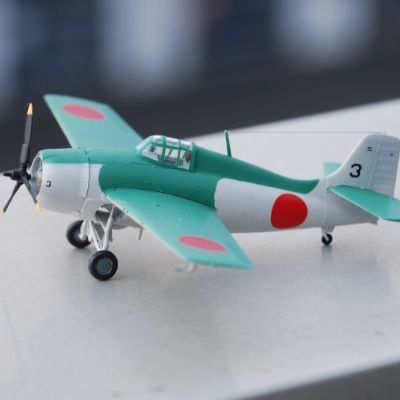
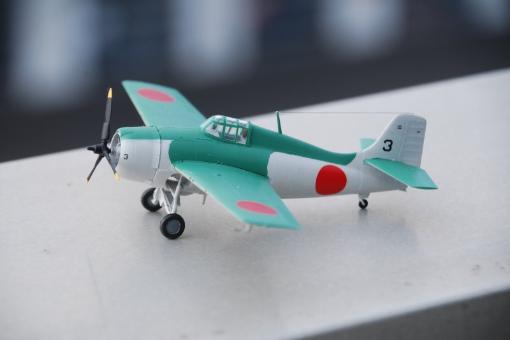
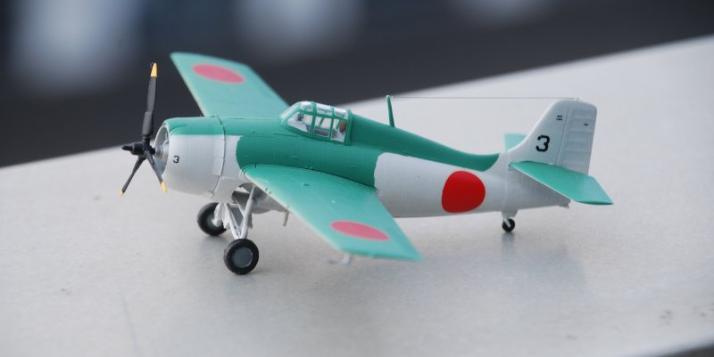
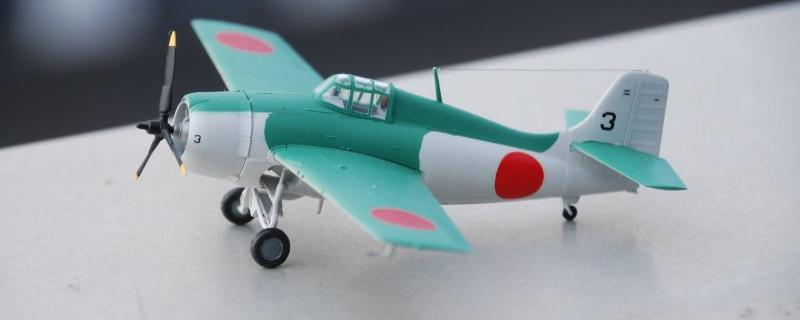
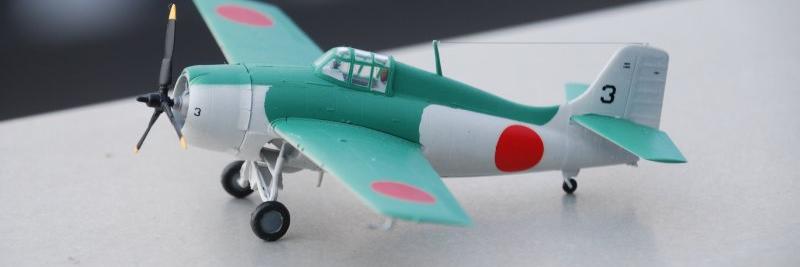
The model shows the captured F4F Wildcat just before its first flight in Japan.
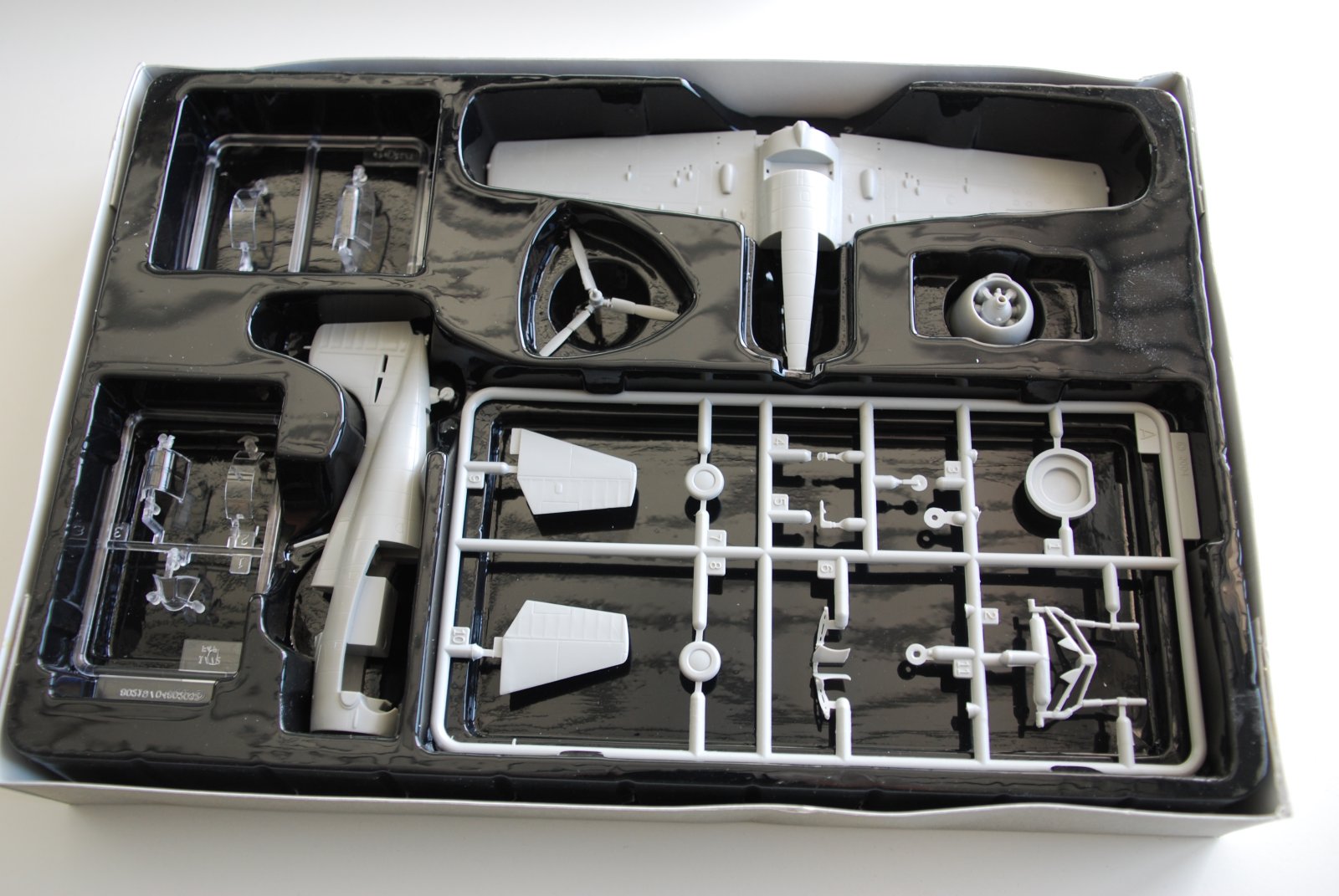
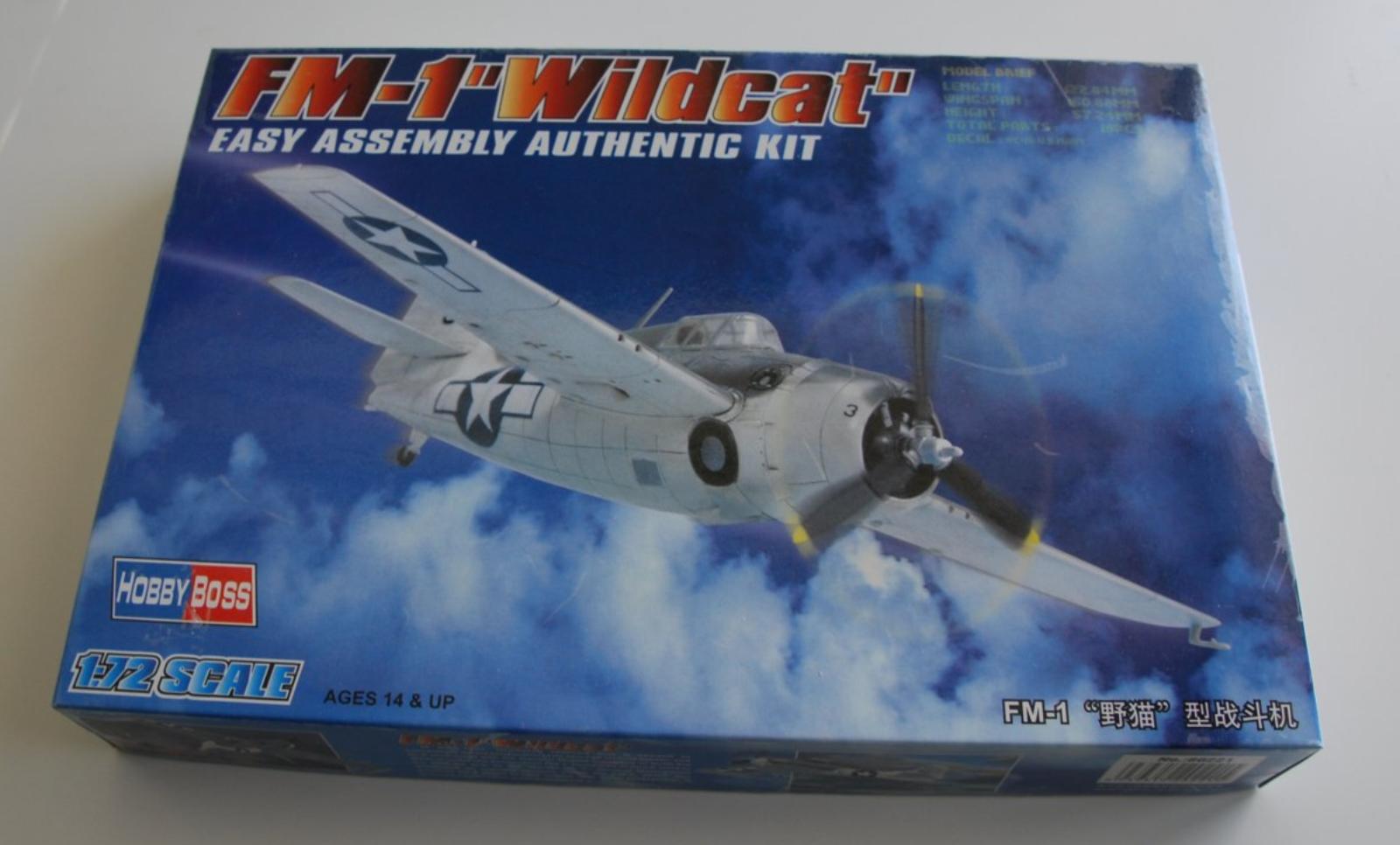
This is a 1/72 scale HobbyBoss kit of the easy series, build OOB. Painted with Revell Aqua Color, it uses some of the original decals and some from the spare part box.