Manufacturer: Airfix
Scale: 1/72
Additional parts: none
Model build: Mar-May 2021
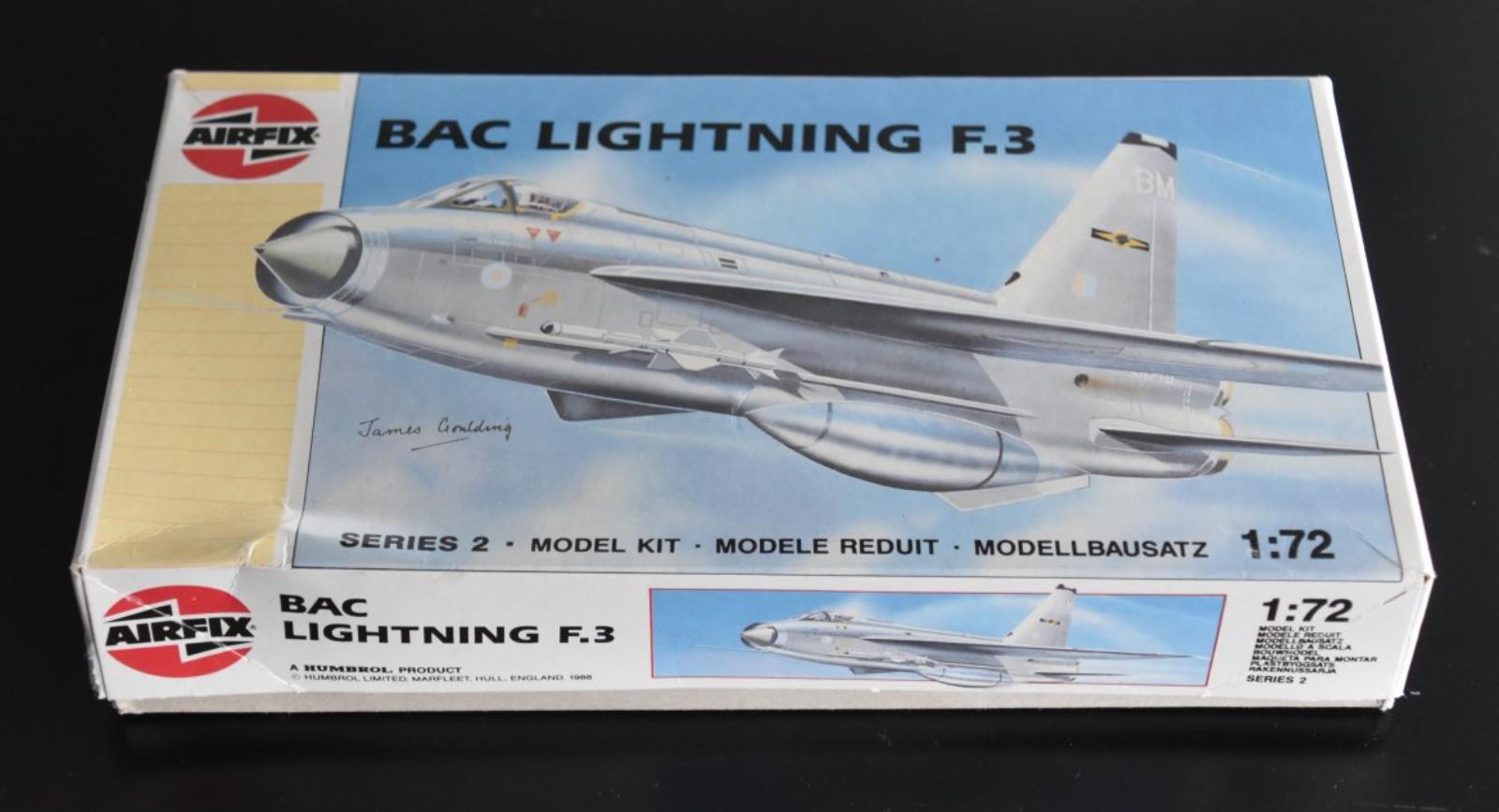
Manufacturer: Airfix
Scale: 1/72
Additional parts: none
Model build: Mar-May 2021
The year is 2024. May winds whipped across the North Sea, churning the grey waters into a frenzy. In a hangar nestled deep within the Kinloss Barracks, a lone figure ran his hand along the sleek fuselage of a BAC Lightning. Squadron Leader Fiona Campbell traced the faded white markings that identified her aircraft - FZ633, the Saltire proudly displayed on its tail.
Fiona adjusted her helmet, the familiar weight a comfort. These Lightnings, relics of a bygone era, were Scotland's first line of defense. Angus MacIntosh, the old warbird collector, had turned hero when he offered his restored Lightnings to the fledgling Scottish Air Force.
A crackle on the comms jolted Fiona back to reality. "Scramble, Scramble, Scramble! Two Bogies inbound, MiG-29s, bearing 020, ETA five minutes."
Adrenaline surged. Fiona leaped into the cockpit, the familiar pre-flight checks a blur of practiced movements. The old Lightning hummed to life, the whine of its engines a thrilling counterpoint to the howling wind.
With a deafening roar, Fiona rocketed down the runway, the ancient jet defying its age with a surge of acceleration. Pushing the throttle forward, she blasted through the low cloud cover, breaking into the clear blue above.
The radar display flickered to life, two emerald blips representing the encroaching MiGs. Fiona wasn't alone. Flight Lieutenant Hamish Fraser, her wingman in FZ631, ghosted in beside her, his own Lightning a silver arrow against the azure canvas.
These were routine patrols now. The Russians, surprised by the reappearance of the Lightnings, had scaled back their incursions into Scottish airspace. But underestimating the old jets was a mistake Fiona was determined the Russians wouldn't repeat.
The sleek shapes of the MiGs resolved on the horizon. Fiona locked onto the lead aircraft, her gloved finger tightening on the trigger. The Lightning, a marvel of 1960s engineering, was built for one thing - speed.
She knew the MiGs were more advanced, but they couldn't match the Lightning's raw power. With a flick of the wrist, she unleashed a volley of air-to-air missiles. The sky erupted in a fiery ballet as the missiles streaked towards their targets.
One MiG sputtered and broke formation, smoke trailing from its engines. The other swerved evasively, but Fiona wasn't done. Pushing the Lightning to its limits, she chased the remaining MiG in a high-speed game of cat and mouse.
The North Sea stretched out below them, an endless expanse of churning grey. The MiG pilot, clearly rattled, made a desperate maneuver, pulling a tight turn that would have stalled a lesser aircraft.
But not the Lightning. Fiona held firm, the G-forces pressing her into her seat. With a final burst of speed, she closed the distance, the roar of her engines a challenge. The MiG pilot, defeated, banked away, disappearing into the clouds.
Fiona eased back on the throttle, the tension draining from her shoulders. A shaky voice crackled over the comms. "Nice work, Fiona. That was textbook." It was Hamish, his voice laced with admiration.
Fiona smiled, a genuine, exhilarated grin. Back at Kinloss, she climbed out of the FZ633, the old warbird still humming with residual heat. These Lightnings, relics of a bygone era, were her companions, her defenders of a nascent nation. And as long as they soared through the Scottish skies, her nation, and its airspace, would remain free.

When Scotland declared independence in the turbulent years following Brexit, its newfound sovereignty came with an immediate problem — defense. The newly formed Scottish Republic found itself squeezed between two powerful air forces: the Royal Air Force, still patrolling along the southern border, and the Russian Aerospace Forces, testing radar coverage over the North Sea.
The Scottish Air Force (Sgèith Adhair na h-Alba) was established in 2021, but like the rest of the young nation’s military, it had to start from scratch. While a long-term modernization plan was already underway — including the acquisition of used F-16s from U.S. surplus stocks and research into a domestic upgrade program led by Scottish Aviation at Prestwick — the immediate need for air defense remained dire.
Help came from an entirely unexpected source.
Angus MacIntosh, a wealthy businessman and eccentric collector of Cold War military equipment, contacted the Ministry of Defence in Edinburgh with an astonishing proposal: he owned twelve fully preserved BAC Lightning interceptors, once the pride of the Royal Air Force, purchased in the 1980s when the type was retired. Stored, maintained, and occasionally taxied for airshows, they were — in his words — “ready to fight again, with a bit of polishing.”
At first, the offer was met with disbelief. The English Electric/BAC Lightning, with its distinctive twin-engine, stacked-engine layout, had been a legend of the Cold War, capable of reaching Mach 2.0 and climbing faster than any Western jet of its time. But by modern standards, it was a relic — short-ranged, fuel-hungry, and armed only with old-fashioned cannons and heat-seeking missiles.
Nevertheless, the Scottish parliament, under pressure from daily airspace incursions by Russian Tu-95 “Bear” reconnaissance bombers, debated the issue in a heated emergency session. The “Lightning Bill” passed narrowly on March 12, 2022, authorizing the purchase and reactivation of eight of MacIntosh’s aircraft, with the remaining four to be cannibalized for spare parts.
Within months, engineers at Prestwick Airfield and retired RAF technicians from Leuchars worked around the clock to restore the aircraft. Equipped with refurbished Avon engines, modern transponders, and limited updates to radar and communications systems, the reborn fighters — now officially designated Lightning F.6(S) — roared back into the skies in late 2022.
Their return caused a sensation across Europe. Many military analysts dismissed the move as a desperate publicity stunt — until the Lightnings proved them wrong.
In January 2023, two Lightning F.6(S) fighters from No. 1 “Thistle” Squadron scrambled from Prestwick to intercept a pair of Russian Tu-142 maritime patrol aircraft off the Shetland coast. Climbing at over 50,000 feet per minute, the Scottish pilots intercepted the intruders in record time, their vintage jets streaking past the lumbering Russian bombers in a flash of silver. Photos taken from the Russian crews, later leaked online, showed the distinctive wings of the Lightning — a Cold War ghost reborn.
From then on, the message was clear. The Russians scaled back their northern incursions.
Nicknamed “Mac’s Miracles” by the Scottish press, the Lightnings became both a symbol of national pride and a practical deterrent. Despite their age, they were ideally suited to Scotland’s defensive needs: rapid-reaction interceptors capable of operating from short runways and climbing fast to meet incoming threats.
The introduction of upgraded F-16AT “Thistlehawk” aircraft gradually reduced the Lightnings’ operational role, but a small number remained active well into the next decade, often flying ceremonial or air-policing missions.
When the last Lightning F.6(S), tail number XS935 “Spirit of Alba,” made its final flight in 2032, it did so escorted by a pair of modern F-16ATs — the new generation saluting the old.
Today, two restored Lightnings stand proudly on display: one at the Scottish National Air Museum in East Fortune, and one in a hangar at Prestwick, kept airworthy by volunteers.
For a brief, shining moment in Scotland’s modern history, the silver arrows of the past once again defended the skies — proof that even out of history’s scrapyard, legends can rise anew.
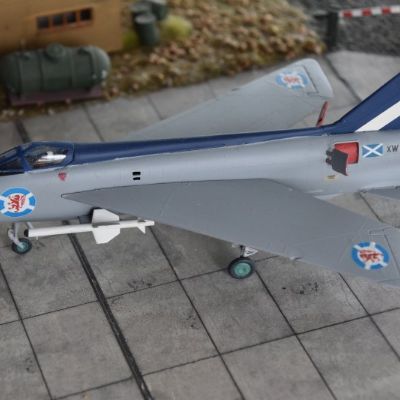
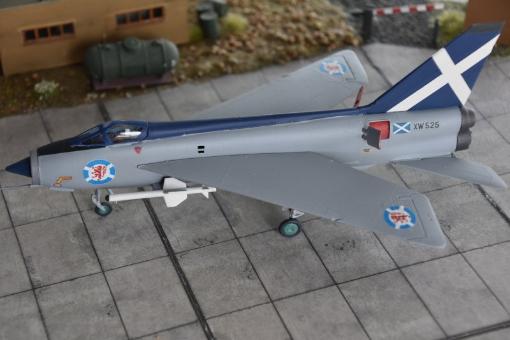
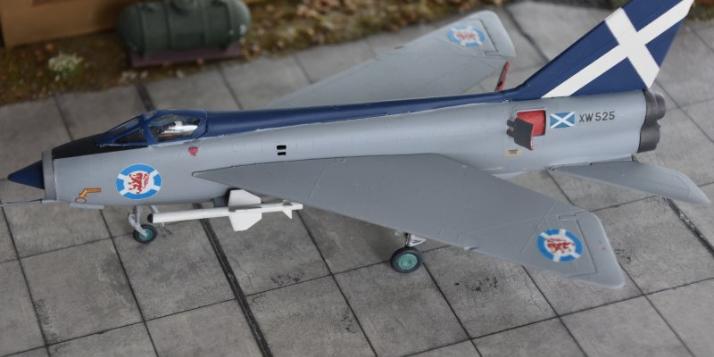
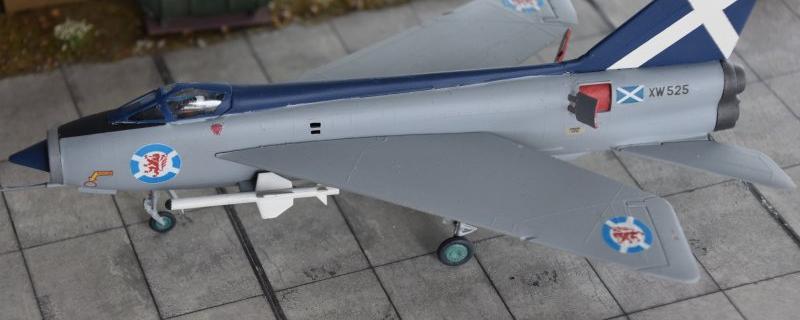
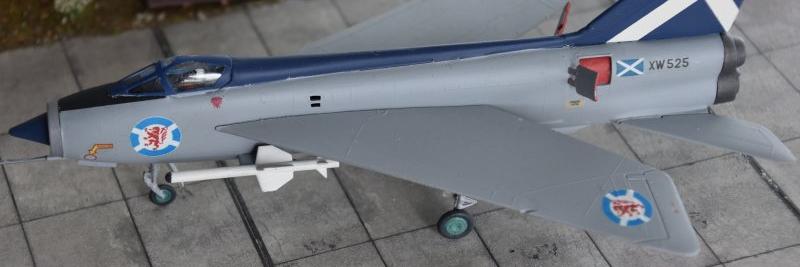
The model shows a BAC Lightning of the Scottish Airforce in May 2024.
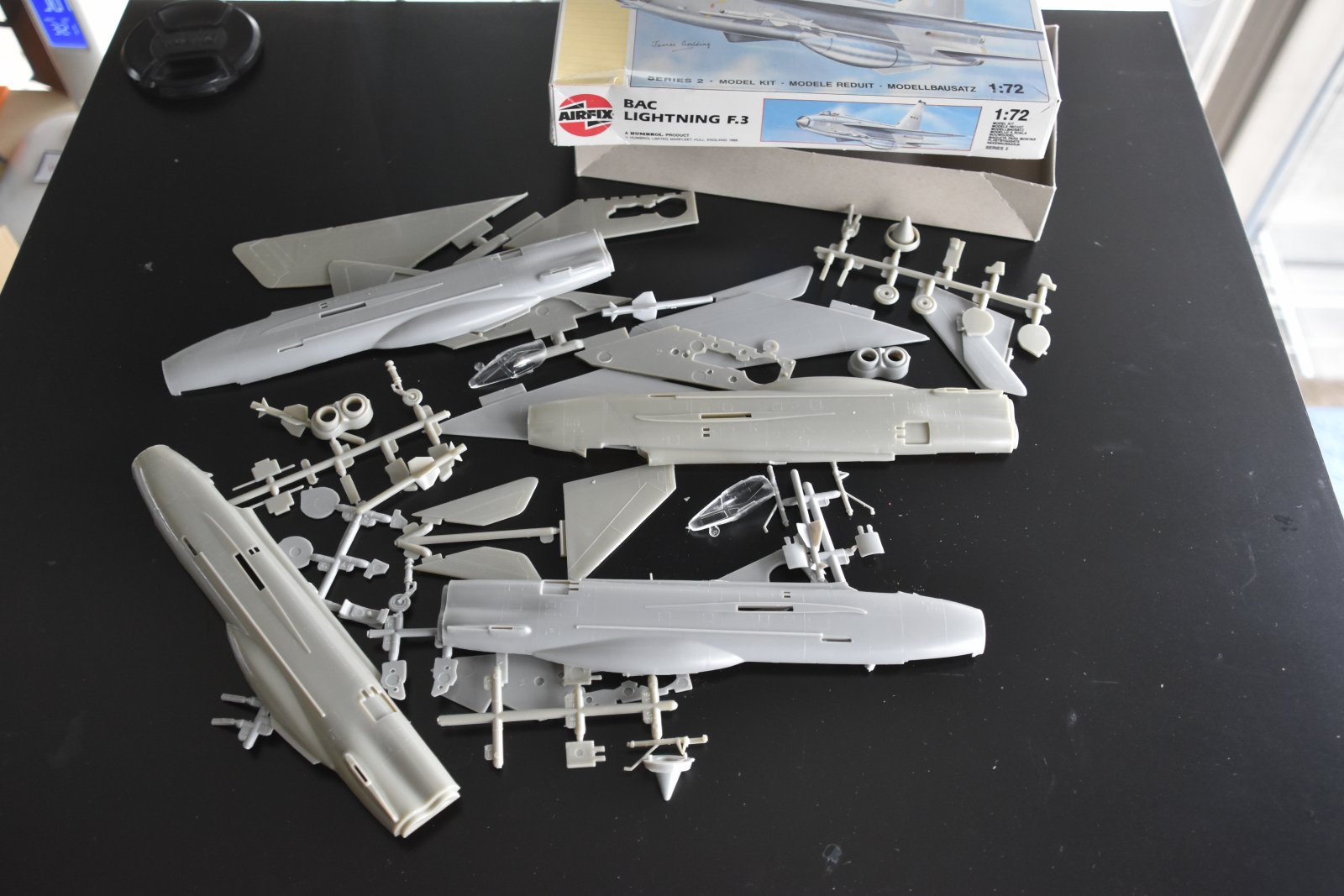
The model was a OOB build of a very old Airfix 1/72 Lightning model, with a different paint scheme and self made Scottish decals.