Manufacturer: Revell
Scale: 1/72 (original model 1/81)
Additional parts: Parts of a Heller P-51
Model build: Jan-Mar 2016
Manufacturer: Revell
Scale: 1/72 (original model 1/81)
Additional parts: Parts of a Heller P-51
Model build: Jan-Mar 2016
The searing sun beat down on Edwards Air Force Base, California, sweat stinging Captain Harrison "Hot Rod" Roberts' eyes as he climbed into the cockpit of the hulking Megasnark. This wasn't your typical fighter jet – no sleek curves or graceful lines here. The Megasnark was a monstrosity, a bulbous, blunt-nosed beast cobbled together from leftover missile parts. Nicknamed the "Snark-Ride" by pilots (and more derisively, "coffin ship" by some), it was a relic of a bygone era, a one-way ticket to enemy airspace and back...hopefully.
Hot Rod wasn't one for dwelling on doubts. He strapped himself in, the pre-flight checks a familiar litany. Today's mission: a recon flight over Soviet airspace, skirting the edge of their defenses to snap photos of a rumored new missile silo complex. Easy peasy, right? Wrong. The Megasnark wasn't exactly known for its maneuverability. It was a glorified cruise missile with a cockpit strapped on, and landing gear was an afterthought – a series of reinforced struts for a belly landing, a risky proposition at best.
With a roar that seemed to shake the very foundations of the base, the Megasnark lurched forward. Hot Rod wrestled with the controls, feeling like he was piloting a drunken hippopotamus. He broke the sound barrier in a shuddering climb, the high nose profile blocking half his view. This design flaw, a constant source of grumbling amongst Snark-Riders, made navigating enemy territory a gamble.
As they crossed into Soviet airspace, radar screens lit up like angry christmas trees. Hot Rod knew they were spotted. He flicked a switch, engaging the onboard jamming equipment, a desperate attempt to mask their electronic signature. Tracers streaked past the cockpit, a chilling reminder of the firepower that awaited them.
Suddenly, a jolt. A lucky SAM had found its mark, smoke billowing from the starboard wing. Hot Rod cursed, adrenaline flooding his veins. No time for heroics. He flipped another switch, a switch no pilot ever wanted to throw – the jettison switch. With a sickening lurch, the nose cone detached, revealing a capsule nestled within.
"Bail out, Hot Rod!" a voice crackled over the comms. It was Colonel Edwards, his voice laced with urgency.
Hot Rod ejected, the world a blur of orange and white as his parachute deployed. Below him, the Megasnark, now a burning comet, plummeted towards the earth. He watched, a pang of sadness mixed with relief. It was a deathtrap of a plane, but it had gotten him this far.
Landing hard in a field, Hot Rod scrambled to his feet, adrenaline slowly ebbing away. He knew he was deep in Soviet territory, miles from friendly lines. But he was alive. He had the recon data stored securely in his suit. A grin, wide and reckless, split his face. This Snark-Rider wasn't done yet. The fight for survival, it seemed, had just begun.

Northrop RF-62 “Megasnark” – The Forgotten Titan of the Early Cold War
(Excerpt from “The Secret Skies of the Cold War,” Strategic Air Command Historical Division, 1987 Edition)
In the uncertain dawn of the Cold War, when fear of nuclear confrontation shaped the ambitions of engineers as much as generals, the Northrop RF-62 “Megasnark” emerged as one of the strangest and most audacious projects ever conceived by the United States Air Force.
The project traced its lineage to the SM-62 Snark, a long-range intercontinental cruise missile developed by Northrop in the mid-1950s. Conceived as a stopgap strategic deterrent before intercontinental ballistic missiles became operational, the Snark was a large, jet-powered missile capable of crossing oceans — and, at least theoretically, returning photographic or telemetry data.
In 1957, Lt. Col. Samuel “S.” Cratch, a maverick test officer at Wright-Patterson Air Force Base, proposed an idea as bold as it was unconventional: transform the unmanned Snark into a family of manned aircraft — an entire “Snark force.” His concept envisioned three principal variants:
The F-62 “Fightersnark”, a high-speed interceptor;
The A-62 “Gigasnark”, a low-level strike and tactical nuclear delivery aircraft;
And the RF-62 “Megasnark”, a high-altitude photographic reconnaissance vehicle.
Cratch’s idea centered around quantity over survivability. The manned Snarks were to be cheap, disposable aircraft, launched en masse from mobile platforms to overwhelm Soviet defenses. The coordinated release of dozens of such aircraft was code-named “Operation Snarknado.”
Since the Snark airframe had never been designed to return to base, none of the proposed manned variants included a conventional landing gear. Instead, pilots — irreverently dubbed “Snark-Riders” — were expected to bail out after completing their missions, or, with luck and good aim, bring their craft down in controlled belly landings on reinforced runways. The official safety documentation optimistically referred to this as “pilot retrieval optional.”
The first RF-62 Megasnark was rolled out in March 1959, fitted with a bubble canopy ahead of the air intake and a camera compartment replacing the missile’s warhead section. Powered by the same Pratt & Whitney J57 turbojet as the SM-62, the Megasnark could reach Mach 0.95 at 55,000 feet and had a range of nearly 4,000 miles.
Three prototypes were built and conducted a total of 26 test flights between 1959 and 1961. Flight reports described the controls as “heavy,” visibility as “extremely poor,” and landings as “inevitably destructive.” On three occasions, Snark-Riders were forced to eject after control loss or engine flameout. Despite the unconventional challenges, the RF-62 demonstrated impressive high-altitude stability and accurate camera performance.
Nevertheless, the program was quietly cancelled in late 1961, as reconnaissance satellites and the U-2 program rendered such dangerous manned concepts obsolete. Lt. Col. Cratch, embittered by the Air Force’s lack of enthusiasm for his “Snarknado doctrine,” resigned in 1962 and disappeared into the Californian aerospace industry — where rumors persist he later advised on early reusable space vehicle concepts.
Only one partial RF-62 airframe survived the scrapyard. It was rediscovered in the 1980s at a storage yard near Edwards AFB, its nose section preserved at the National Museum of the U.S. Air Force under the label:
“Northrop RF-62 Megasnark – Test Article. Project Cancelled, 1961. Pilot Recovery: Optional.”
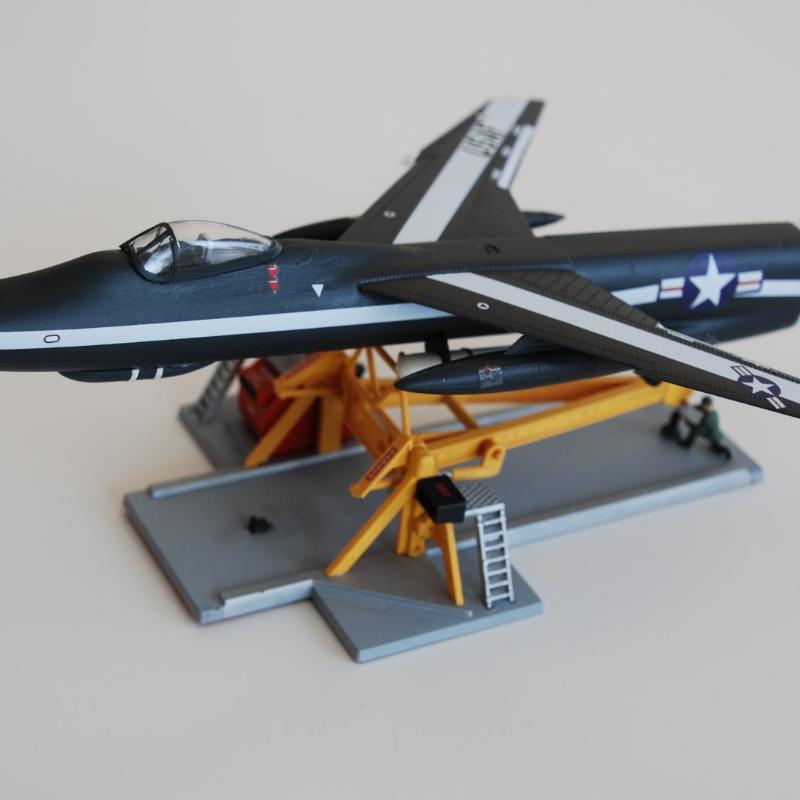
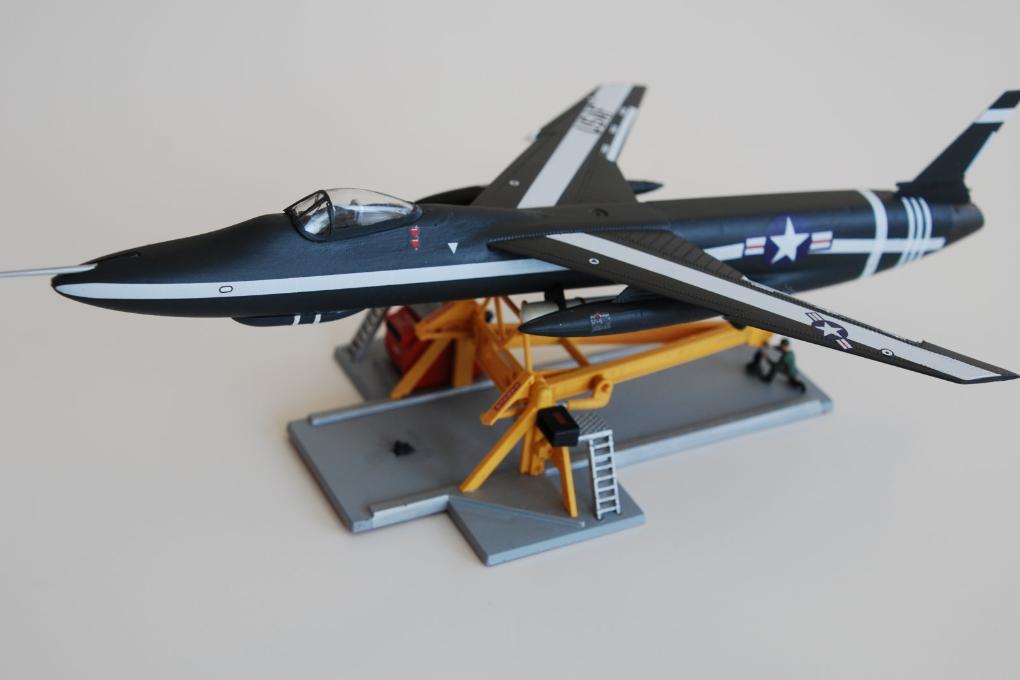
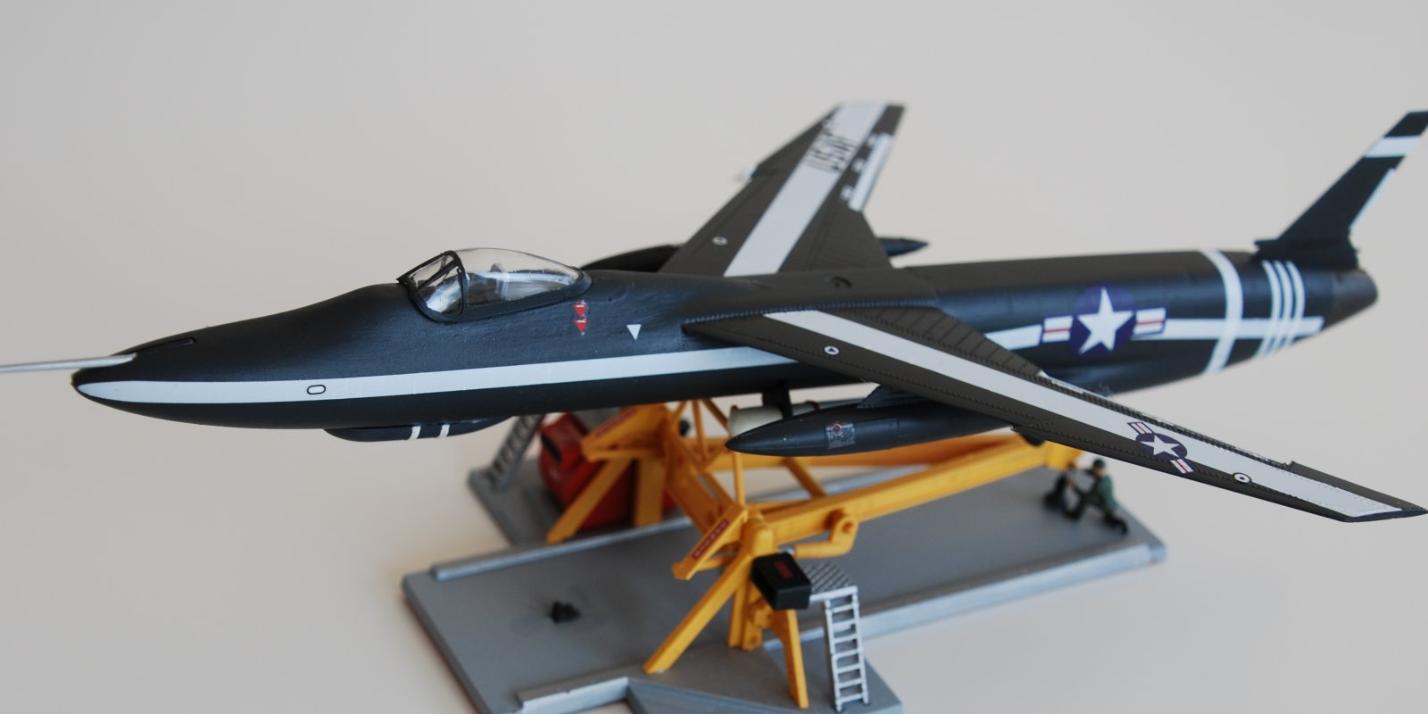
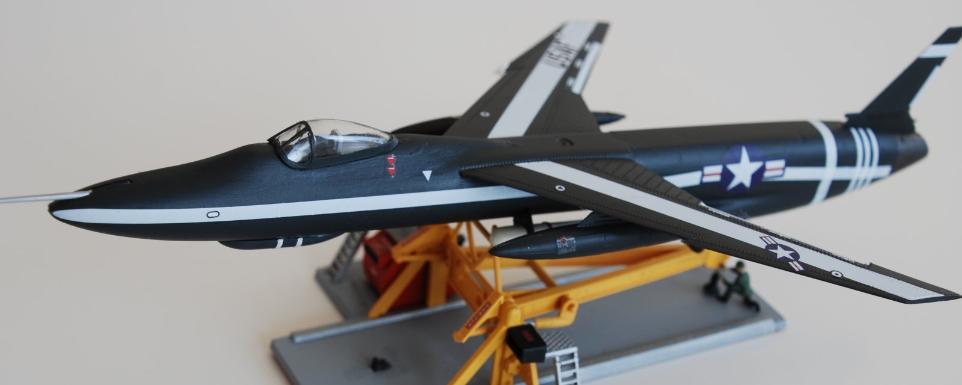
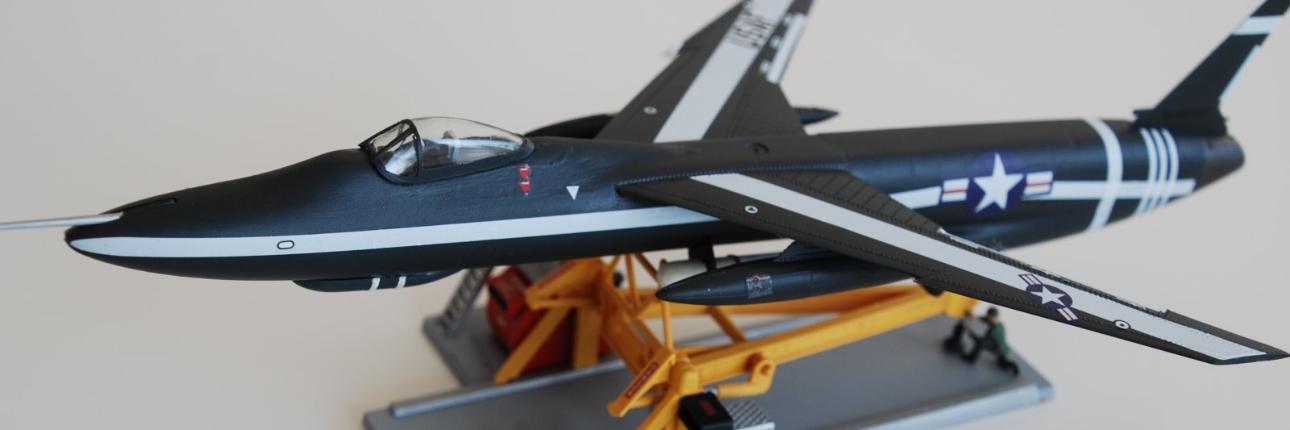
The model shows the first RF-62 Magasnark before its first flight in March 1959.
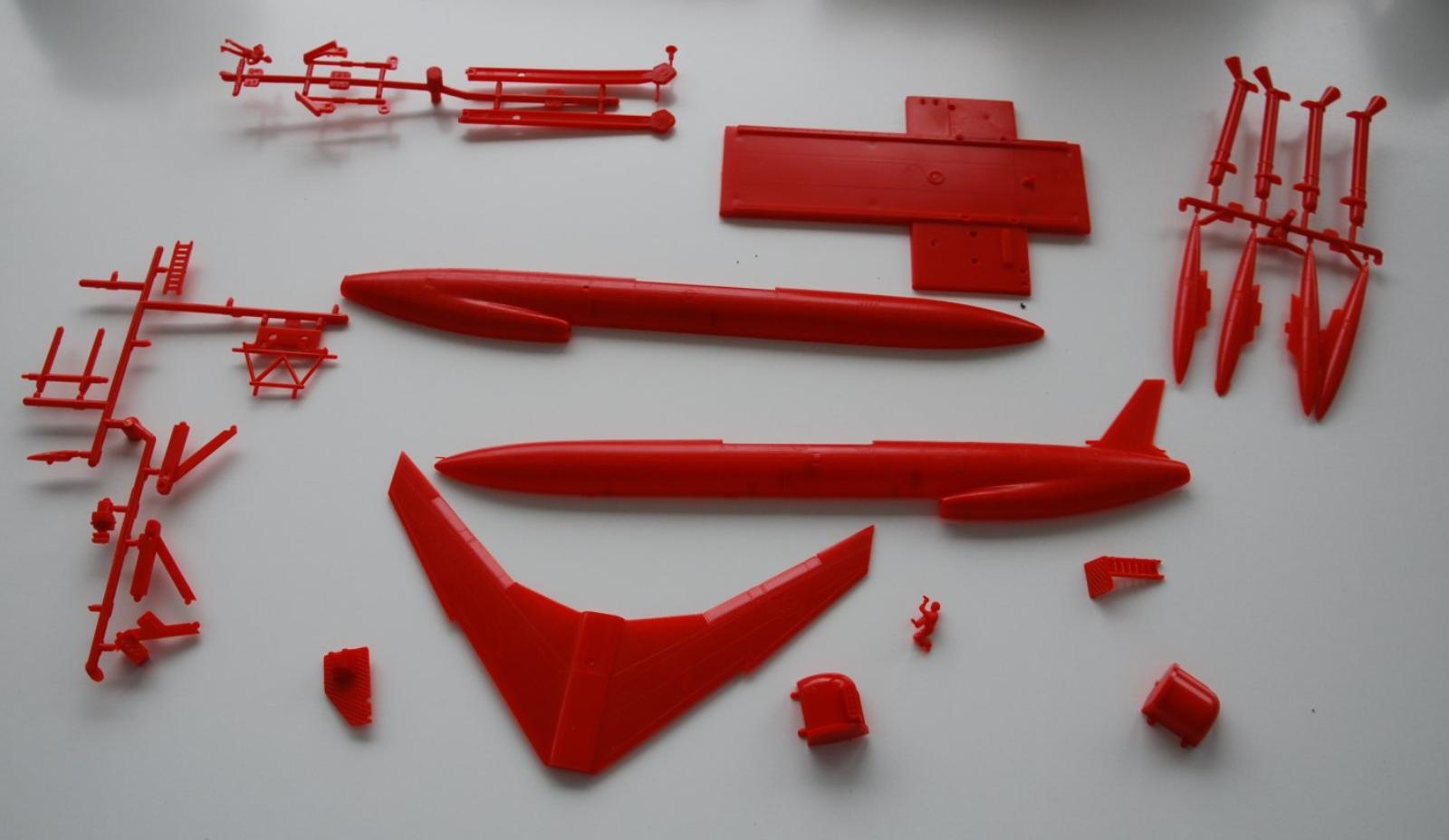
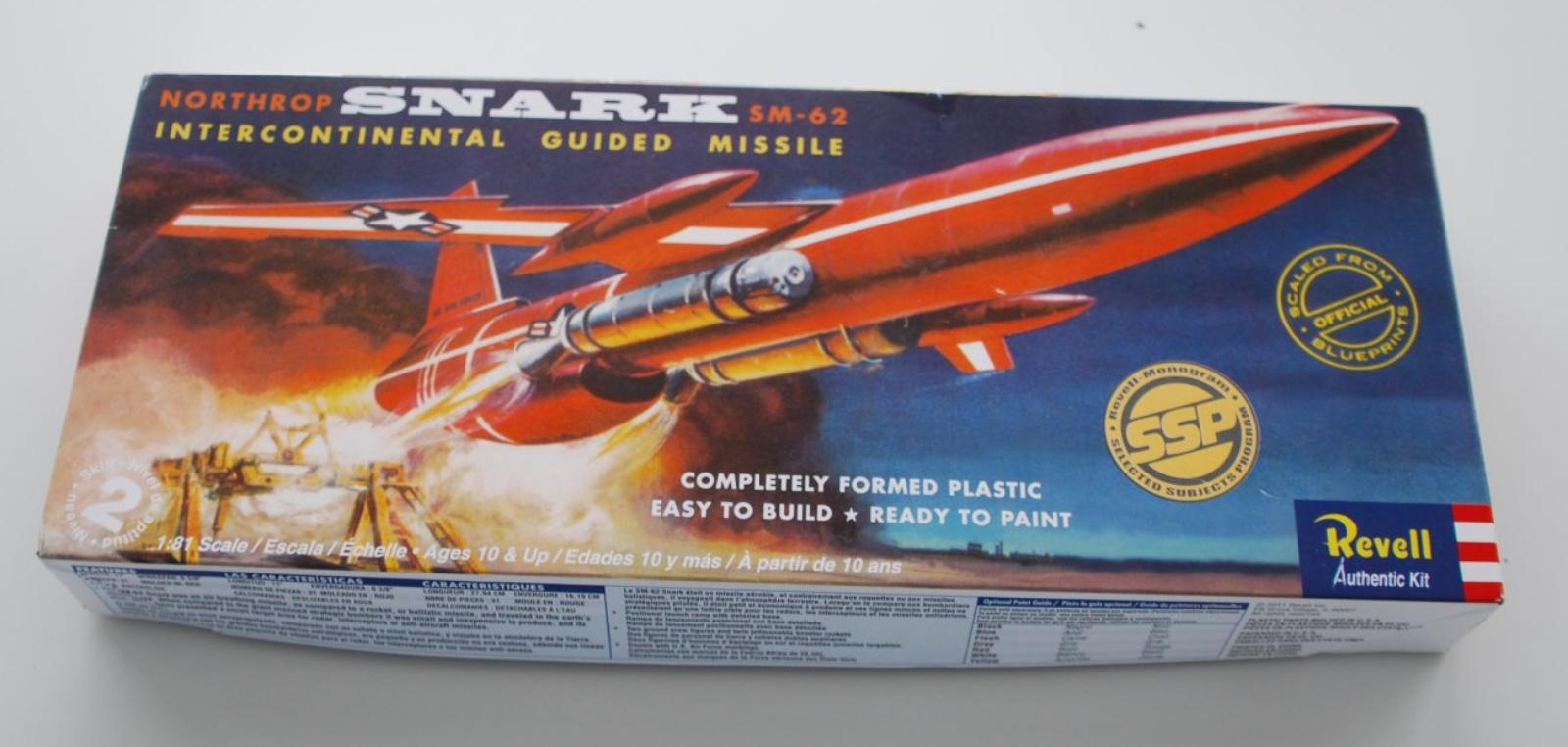
This is a 1982 re-release of the old Revell model of the Sm-62 Snark, produced in the 1950s. Scale of the model is 1/81, so it fits to other 1/72 kits. The cockpit was taken by a Heller P51 kit, besides this the model was build without any additional parts.
Painted with Revell Aqua-Color, it uses the original decals plus a few additional ones from the spare part box.