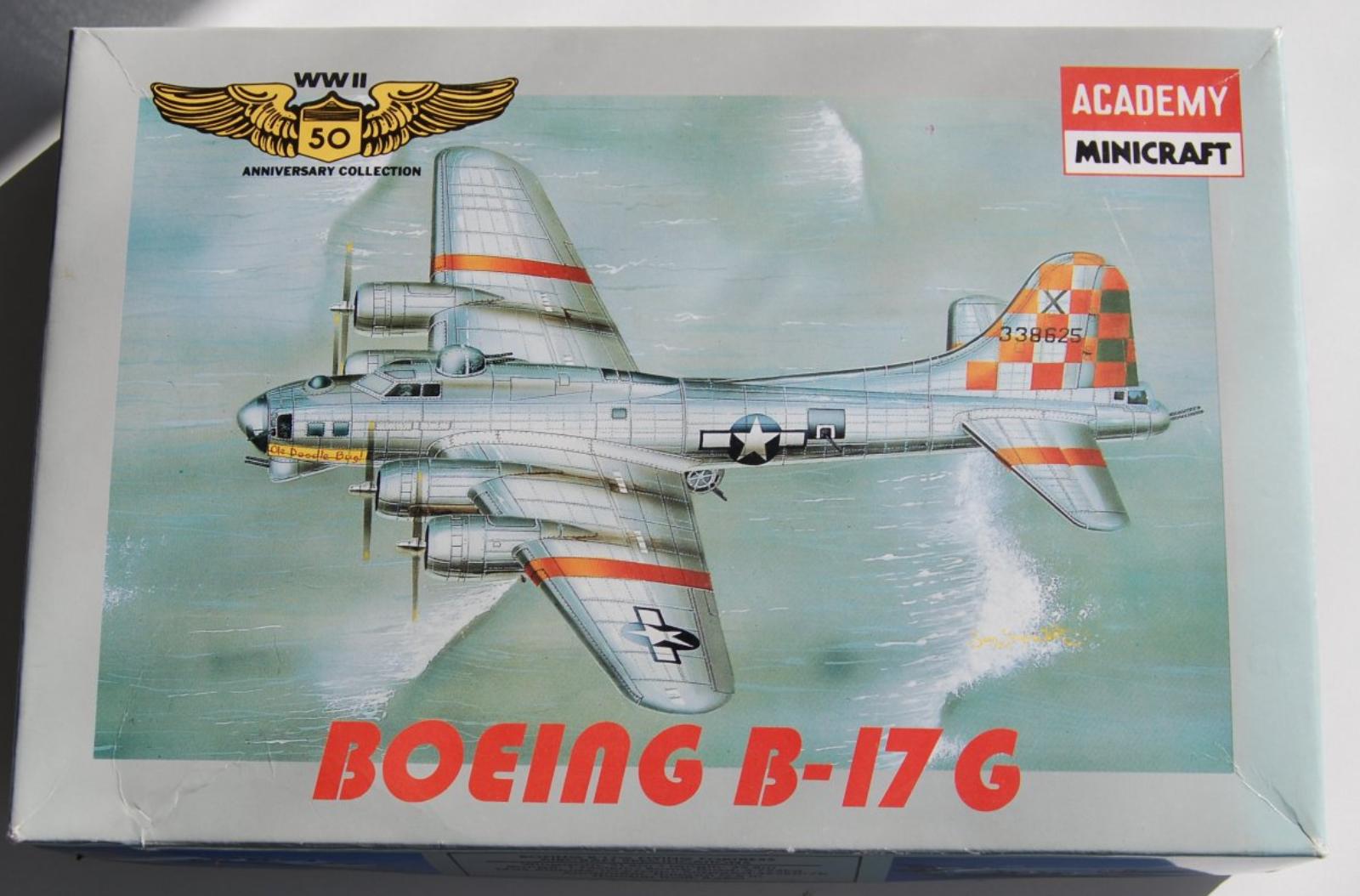
Manufacturer: Minicarft
Scale: 1/144
Additional parts: none
Model build: Oct 2012
Manufacturer: Minicarft
Scale: 1/144
Additional parts: none
Model build: Oct 2012
The icy wind clawed at Lieutenant Franz Schmidt's face as he surveyed the crippled B-17. The four-engine American bomber, a monstrous silhouette against the dawn, had crash-landed behind enemy lines the previous night, its belly ripped open on a hidden flak battery. Yet, here it sat, a captured prize, on a makeshift airstrip carved from a recaptured French village.
Franz wasn't a Luftwaffe pilot by trade. He was with Kampfgeschwader 200, a shadowy unit tasked with the near-impossible: deep penetration missions behind enemy lines. Tonight, his mission was bold – infiltrate the very heart of a recaptured French city, recently liberated by Allied forces, and deliver a package to a high-value Nazi informant.
The captured B-17, christened "Fräulein Fortuna" by its German crew, was their key to success. Amongst the hodgepodge of Luftwaffe aircraft used by KG 200, the B-17 offered a distinct advantage. Blended amongst Allied bombers returning from raids, "Fräulein Fortuna" would be less likely to raise suspicion.
The pre-flight checks were tense. Franz and his crew, a motley bunch of ex-Luftwaffe pilots and veterans of captured bomber squadrons, had trained extensively on the B-17, but a live mission was a different beast. The engines coughed and sputtered to life, the throaty roar a foreign sound compared to the whine of their usual Messerschmitts.
Taking off under the cover of darkness, "Fräulein Fortuna" lumbered skyward. Hours bled into one another as they navigated the treacherous skies, evading Allied radar and dodging the occasional night fighter patrol. As dawn painted the horizon a fiery orange, the French city sprawled beneath them, a patchwork of liberated sectors and Nazi holdouts.
Their target – a crumbling cathedral, its once-majestic spires now jagged claws against the sky. Franz guided the B-17 in a low pass, the city stirring awake below. The drop zone was a narrow alleyway, hemmed in by liberated buildings. With a silent prayer, Franz’s co-pilot, a grizzled veteran named Hans, threw open the bomb bay doors. The precious cargo – a canister containing vital information for the Nazi high command – plummeted towards its uncertain fate.
A sudden burst of anti-aircraft fire erupted, shattering the tense silence. Allied troops! They had been spotted! Hans banked the bomber sharply, the B-17 groaning under the strain. Flak filled the air, a deadly hail of shrapnel. Smoke began to curl from the number two engine.
"We're taking fire, Franz!" Hans yelled above the roar of the engines.
Adrenaline surged through Franz. They had to get out of here. He pushed the B-17 to its limits, weaving through the maze of buildings, the city a gauntlet of fire and fury. The burning engine sputtered and coughed, finally coughing out completely.
"We're losing altitude!" Hans’ voice was laced with panic.
Below, the liberated city seemed to rise to meet them. Desperate, Franz scanned the rooftops, praying for a sliver of hope. A park. A small, deserted park in the heart of the city offered a sliver of a chance.
With a final, herculean effort, Franz wrestled the crippled bomber down, a harrowing belly landing shattering the park's serenity. The B-17 groaned to a halt, its once proud form now a broken beast.
Dazed but alive, the crew scrambled out. Smoke billowed from the wounded bomber, a pyre to their daring mission. They had delivered the package, but escape seemed a distant dream. Franz looked around, the weight of their situation settling in. They were stranded behind enemy lines, in a captured American bomber, with the city stirring awake around them.
The story of KG 200, and Franz Schmidt's daring mission in "Fräulein Fortuna", had only just begun.

During the Second World War, several damaged Boeing B-17 Flying Fortress bombers were forced to make emergency landings in German-occupied Europe. While many were scrapped or dismantled for study, a small number were repaired and pressed into limited service by the Luftwaffe.
The first intact B-17s captured in 1943 were ferried to Rechlin test center, where German engineers evaluated their defensive armament layouts, bomb bay mechanisms, and navigation systems. Test flights provided valuable intelligence on performance and weaknesses, especially regarding bomber formations and defensive blind spots.
Following evaluation, several airworthy B-17s were transferred to the clandestine unit Kampfgeschwader 200 (KG 200), which specialized in unconventional missions. The unit operated a diverse fleet, including Ju 290 long-range transports, He 111 bombers, and captured Allied aircraft.
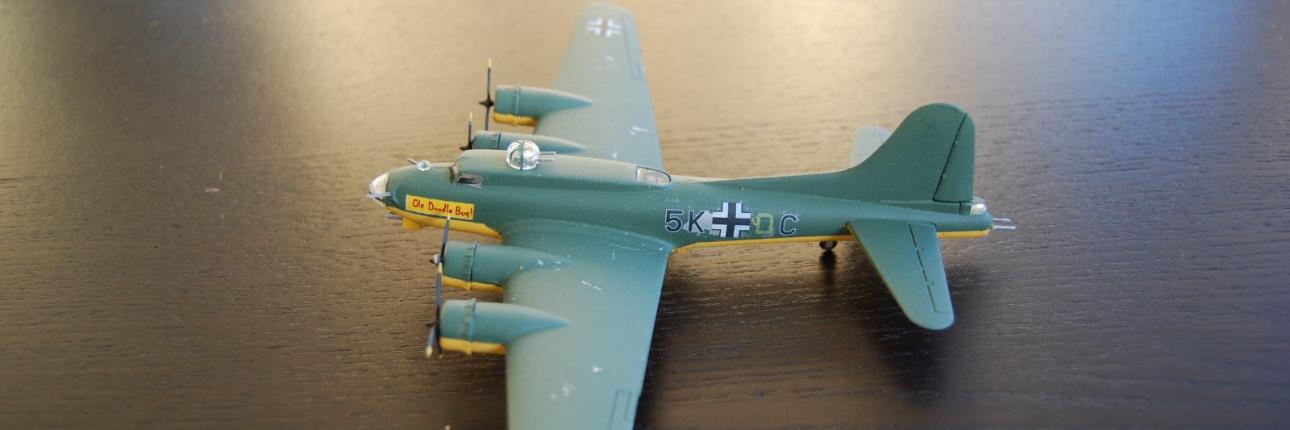
For KG 200, the advantage of operating the B-17 was clear: Allied aircraft markings allowed for deeper penetration into enemy airspace with reduced risk of interception—at least until closer visual inspection revealed the deception.
Captured B-17s were primarily employed for:
Reports suggest that some operations in late 1944 involved B-17s infiltrating damaged bomber streams returning from raids, only to divert once safely beyond Allied radar coverage.
Despite their utility, German-operated B-17s faced constant challenges. Maintenance was difficult due to lack of spare parts, and crews required extensive retraining to adapt to foreign systems. There was also the continual risk of friendly fire from German ground defenses and fighters unfamiliar with KG 200’s operations.
By early 1945, most of the surviving captured B-17s were grounded due to shortages of fuel and spare parts. None survived the war in flyable condition.
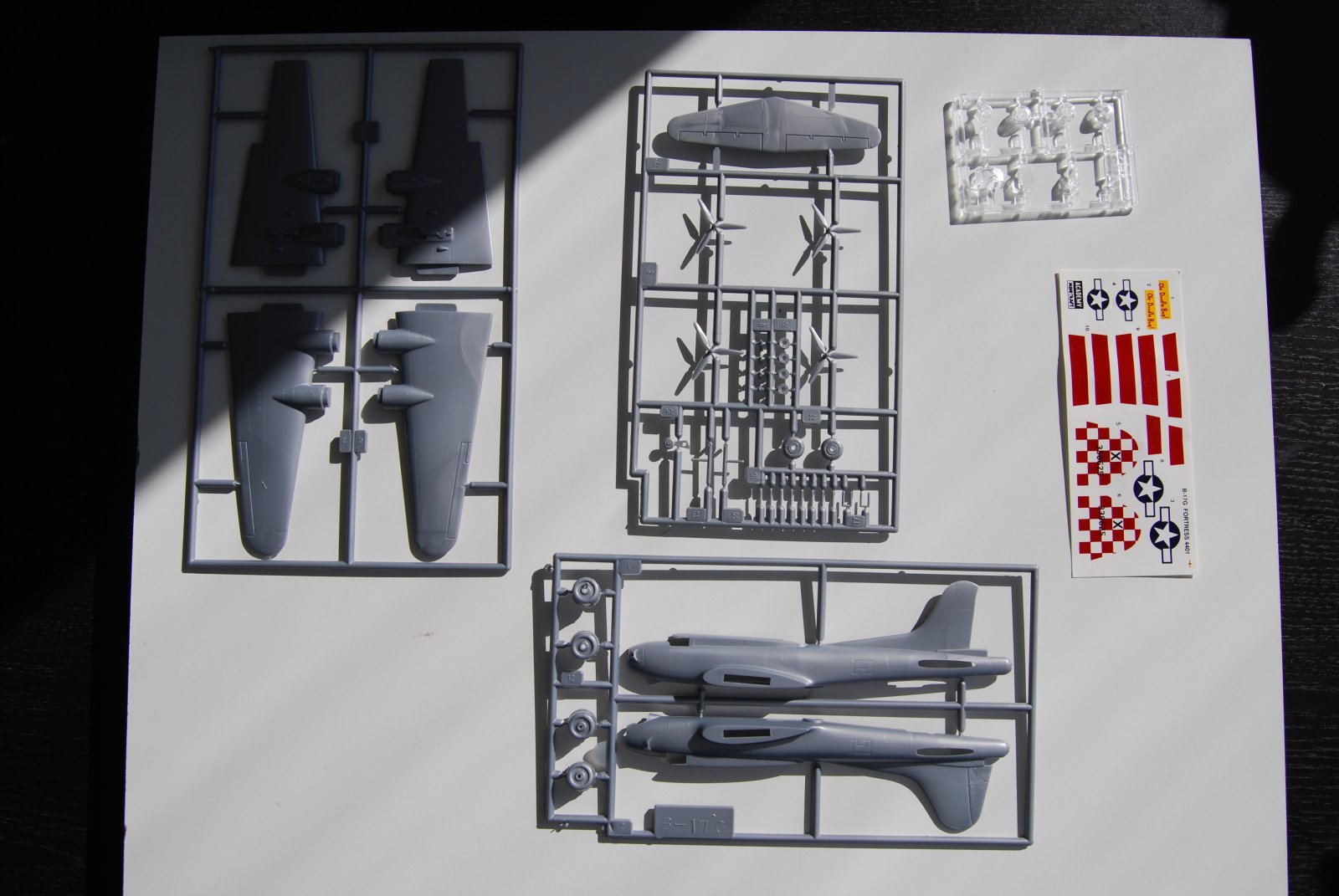
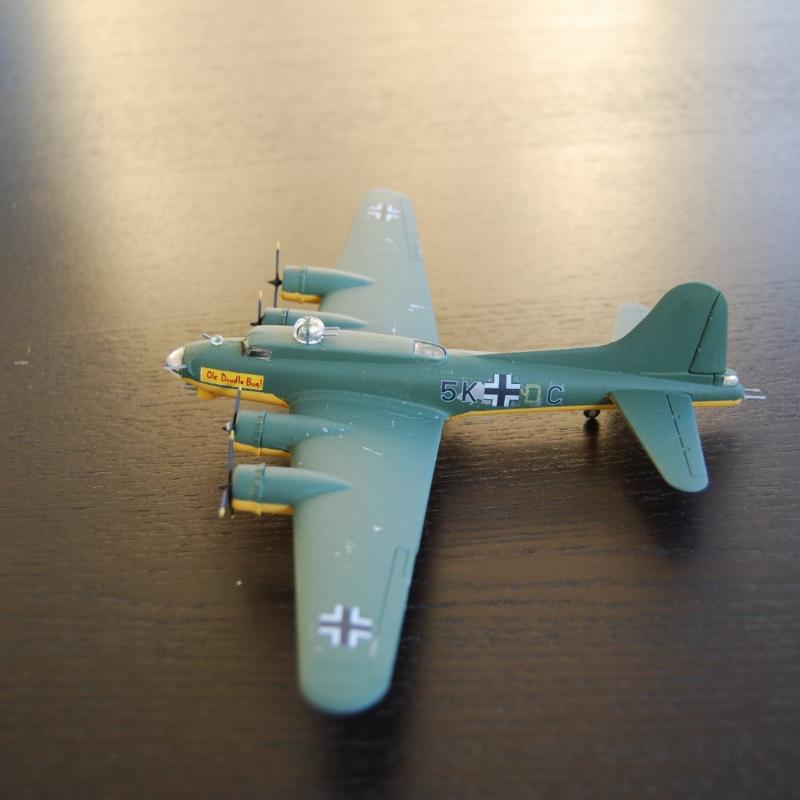
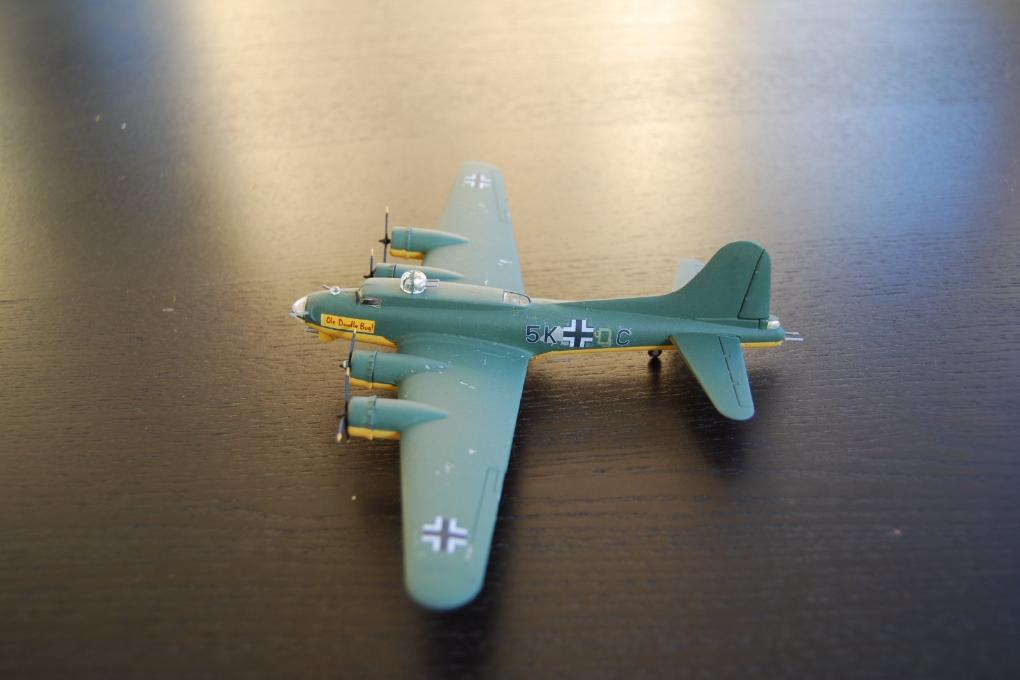
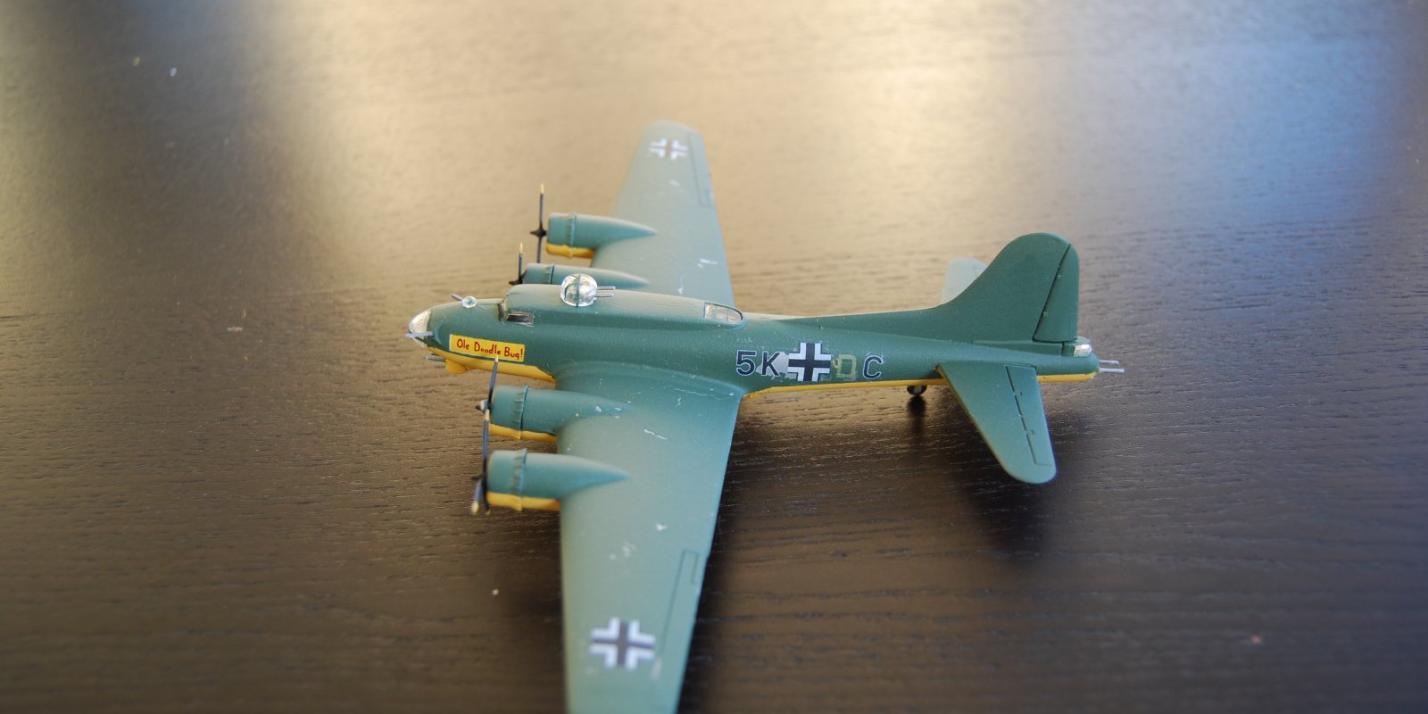
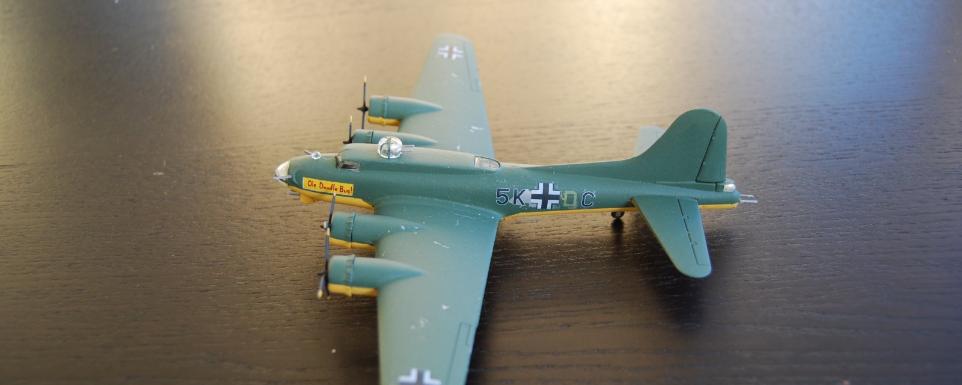
The model is a quite simple Minicraft 1:144 B-17. I used the typical camo painting which was used on captured aircraft during evaluation by the Luftwaffe - yellow lower part and the rest in dark green. For the first time, I tried the hairspray technique to make the model look as if some color is peeling away. This means: Paint the model in aluminum colors, glossy finish on it, then hairspray. Paint it in the real colors. Use warm water and a hard brush to remove some of the color again. Finally use glossy finish before adding the decals.