Manufacturer: Revell
Scale: 1/700
Additional parts: Airfix 1/600 ship parts, 3D prints.
Model build: Aug-Oct 2026
Manufacturer: Revell
Scale: 1/700
Additional parts: Airfix 1/600 ship parts, 3D prints.
Model build: Aug-Oct 2026
Gulf of Tonkin, September 1967
The morning sun had barely risen above the eastern horizon when HMAS Australia settled into her patrol station in the Gulf of Tonkin. The sea was unusually calm, its surface broken only by the long white wake of the battleship and the smaller silhouettes of two American destroyers several miles to the southeast.
For the past three days, the Australian flagship had been operating with a United States Navy task group supporting naval operations off the North Vietnamese coast. Her six 14-inch guns had already fired more than a hundred rounds against coastal artillery positions and supply installations. Now, with her ammunition replenished during a brief rendezvous with a fleet supply ship, Australia was returning to her assigned patrol area.
On the bridge, Captain Richard H. Collins studied the morning reports. At fifty-two, Collins was a veteran of the Korean War and had commanded the battleship for nearly eighteen months. He knew her strengths, her weaknesses, and the peculiar demands of operating a vessel originally designed before the Second World War in an age increasingly dominated by supersonic aircraft and guided missiles.
"Weather looks promising, sir," Lieutenant Commander Peter Wallace, the officer of the watch, remarked. "Visibility twenty miles, light winds from the northeast."
Collins nodded. "Let's hope the North Vietnamese appreciate it as much as we do."
A few officers smiled.
Below them, the great ship continued steadily through the water at eighteen knots. Her two forward main turrets were trained slightly to starboard, their massive barrels elevated just above the horizon. Farther aft, the modern 4.5-inch twin mountings stood ready, their automatic loading systems maintained at immediate notice.
On the stern, the ship's Westland Wessex helicopter was secured to its landing deck, its rotor blades folded. A reconnaissance flight had been scheduled for later that morning.
For the moment, the battleship seemed at peace.
That changed at 07:42.
"Air contact! Bearing three-four-zero, range eighty-five miles!"
The announcement came from the radar operations room deep within the superstructure.
Petty Officer Michael Fraser leaned closer to his Type 965 radar display. Two faint returns had appeared at the northern edge of the screen, moving rapidly southward.
"Two aircraft," he continued. "Speed approximately five hundred knots. Altitude estimated fifteen thousand feet. Heading toward the task group."
The radar officer, Lieutenant Commander David Mercer, stepped beside him.
"Identification?"
"Negative IFF response, sir."
Mercer studied the tracks. The aircraft were approaching from the direction of North Vietnam, maintaining a steady course toward the allied formation.
He picked up the communications handset.
"Bridge, radar. Two unidentified fast contacts approaching from the north. Request permission to establish air defence condition one."
The reply came almost immediately.
"Approved."
Within seconds, the ship's internal communication system came alive.
"Action stations! Action stations! Air threat approaching from the north!"
Across Australia, the familiar alarm bells rang.
Sailors hurried through passageways, watertight doors were secured, and the ship's combat systems were brought to full readiness. On the upper decks, personnel moved rapidly toward protected positions.
Deep inside the Sea Slug missile complex, technicians began the final preparation of the weapons.
The enormous modernization programme completed only three years earlier was about to face its first serious test.
At 07:47, the two aircraft were positively identified as North Vietnamese MiG-17 fighters.
Although no longer among the world's most advanced combat aircraft, the MiG-17 remained a dangerous opponent. Its agility, powerful cannon armament and ability to operate at low altitude had already earned it a formidable reputation among American pilots.
The two fighters had been dispatched to investigate reports of a large allied warship operating near the coast. Their pilots had been informed that American destroyers were conducting bombardment operations in the area.
Neither had expected to encounter a battleship.
At the combat information centre aboard Australia, the tracks continued moving south.
"Range sixty-two miles," Fraser reported. "Both aircraft descending. Altitude now ten thousand feet."
Mercer frowned.
"They're coming straight toward us."
On the bridge, Collins received the latest information.
"Have the Americans acknowledged?"
"Yes, sir. Both destroyers have the contacts. No friendly aircraft reported in the area."
Collins looked toward the northern horizon.
"Very well. Maintain tracking. Sea Slug to immediate readiness."
The order passed through the ship.
In the missile control room, Lieutenant James Harrington, the Sea Slug weapons officer, watched the illuminated status indicators change from amber to green.
The Sea Slug system was a remarkable piece of British engineering, but it was far from simple.
Unlike the compact missiles of later generations, each Sea Slug was a massive weapon, more than six metres long, with four solid-fuel boosters surrounding its body. The missiles were stored horizontally within the battleship's extensive magazine complex, occupying much of the space once devoted to aircraft handling facilities.
From there, an automated system moved the missiles toward the launcher installed where the ship's aft 14-inch turret had once stood.
Harrington had spent countless hours supervising exercises and simulated engagements.
Now the targets were real.
"Missile one prepared," reported the loading officer.
"Guidance system?"
"Operational."
"Type 901?"
"Tracking."
Harrington took a breath.
"Sea Slug ready, sir."
At 07:53, the MiGs were forty miles away.
They had begun to separate.
One aircraft continued toward the battleship, while the second turned slightly eastward, apparently attempting to approach the formation from a different direction.
"Two independent targets," Mercer reported. "Lead aircraft bearing three-five-two. Second contact bearing zero-one-five."
Collins considered the situation.
The fighters were still beyond effective cannon range, but their intentions were becoming increasingly clear. Both were descending toward the allied ships.
"Transmit warning on guard frequency."
The radio operator repeated the challenge in English and Vietnamese.
There was no response.
A second warning followed.
Still nothing.
At 07:56, the leading MiG accelerated and began a shallow dive toward the formation.
"Lead aircraft now twenty-six miles. Speed five hundred and forty knots."
Collins made his decision.
"Engage the lead aircraft. Sea Slug."
In the missile control room, Harrington immediately responded.
"Sea Slug, target one. Prepare to fire."
The Type 901 fire-control radar locked onto the approaching aircraft, maintaining the tracking data required to guide the missile.
On the aft deck, the great twin-arm launcher swung toward the northern sky.
The weapon looked almost absurdly large compared with the compact Sea Cat launchers scattered around the battleship's superstructure. Yet it had been designed for precisely this task: destroying hostile aircraft before they could reach the fleet.
"Launcher trained."
"Guidance confirmed."
"Missile armed."
Harrington glanced at the firing officer.
"Fire one."
At 07:57, the first Sea Slug left the launcher.
Four boosters erupted simultaneously, surrounding the missile in a brilliant cloud of flame and smoke. The launch produced a thunderous roar that rolled across the battleship's upper decks.
The missile accelerated away from the ship, climbing rapidly toward the approaching MiG.
On the bridge, Collins watched the smoke trail stretching northward.
"Missile away," Wallace confirmed.
Deep inside the operations room, the missile's progress was followed through the fire-control system.
"Guidance stable."
"Target maintaining course."
"Range closing."
The North Vietnamese pilot saw the missile too late.
He broke sharply to port, rolling his fighter into a steep descending turn. But the Sea Slug continued toward the predicted interception point, guided by the battleship's radar.
"Ten seconds."
"Five."
A brilliant flash appeared against the pale morning sky.
For a moment, the MiG seemed to vanish inside a rapidly expanding cloud.
Then burning fragments emerged, tumbling toward the sea.
"Target destroyed!" Fraser shouted.
A brief cheer erupted inside the operations room before Mercer silenced it.
"Quiet! We still have another aircraft."
On the bridge, Collins allowed himself only a short nod.
"One down. Where's the second?"
The surviving fighter had reacted immediately to the destruction of its companion.
Its pilot abandoned his original approach and descended sharply, attempting to escape the battleship's radar by flying close to the sea.
"Second contact descending rapidly!" Fraser called. "Altitude five thousand feet ... three thousand ..."
The radar return became increasingly difficult to distinguish from interference near the surface.
"Range eighteen miles. Bearing zero-two-eight."
Harrington studied the tracking data.
The Sea Slug was primarily designed to engage aircraft at medium and high altitudes. A fast-moving fighter descending toward the sea presented a much more difficult target.
"Tracking quality deteriorating," the radar operator warned.
"Can we maintain guidance?"
"For the moment, yes."
Harrington contacted the bridge.
"Captain, target two is descending below our preferred engagement envelope. Recommend immediate second launch before we lose tracking."
Collins looked toward the starboard horizon.
"Approved. Engage."
The launcher had already returned to its loading position, where the next missile was being transferred from the handling system.
Inside the magazine complex, motors hummed and hydraulic machinery moved the heavy weapon into place.
"Missile two loaded."
"Guidance channel ready."
"Target range fourteen miles."
Harrington knew they had little time.
"Fire two!"
The second Sea Slug thundered away from the battleship.
The missile climbed initially, then began its guided approach toward the descending fighter.
For several seconds, everything appeared normal.
Then the radar operator spoke.
"Target turning hard starboard. Altitude eight hundred feet."
Harrington's expression tightened.
"Maintain illumination."
The MiG pilot was now flying dangerously close to the water, attempting to break the radar lock through violent manoeuvres.
The missile continued closing.
"Guidance unstable."
"Keep it on him."
"Range three miles."
The fighter began another turn, its wings banking steeply above the sea.
Then the radar display showed the two tracks converging.
"Impact imminent!"
A flash appeared just above the horizon.
A second later, the tracking signal disappeared.
"Target lost."
Nobody spoke.
Fraser studied the radar picture, searching for another return.
There was nothing.
Then the starboard lookout reported over the voice circuit.
"Explosion observed! Bearing zero-three-one! Aircraft debris falling into the sea!"
Harrington looked toward Mercer.
"Confirmed?"
Mercer waited for the reports from the American destroyers.
A few seconds later, the answer arrived.
"Both American ships confirm explosion and splash. No aircraft remaining on radar."
He lifted the handset.
"Bridge, operations. Second target destroyed. Two aircraft engaged, two aircraft down."
At 08:06, the air raid alarm was cancelled.
The entire engagement had lasted less than fifteen minutes from the first warning to the destruction of the second aircraft.
On the bridge, Captain Collins stood silently for a moment, looking toward the distant patch of sea where the second MiG had disappeared.
"Two missiles?" he asked.
"Two missiles, sir," Wallace replied. "Two confirmed kills."
Collins glanced toward the aft superstructure.
"Not bad for an old battleship."
The remark produced a few restrained smiles.
Within the ship, the atmosphere was more openly celebratory.
The Sea Slug crew had accomplished something many had doubted possible when the modernization programme was first proposed. A battleship launched during the Second World War had successfully defended a modern naval formation against jet aircraft using guided missiles.
For the men who had spent years maintaining the complicated weapon system, the engagement was a vindication of their work.
But Collins was already thinking about the next task.
"Signal the Americans. Inform them that the air threat has been neutralized and that we are returning to our assigned station."
"Aye, sir."
"And tell the gunnery officer I want the forward turrets ready by nine hundred. We still have a fire-support mission scheduled."
Wallace smiled.
"Very good, sir."
By late morning, HMAS Australia had resumed her position off the Vietnamese coast.
The battleship turned slowly to starboard, bringing her forward gun turrets onto their assigned bearing.
Several miles inland, Australian troops had requested naval fire support against a fortified position overlooking an important supply route.
The target coordinates were passed to the ship's gunnery control centre.
"Forward turrets ready."
"Target acquired."
"Commence firing."
A moment later, the two great forward turrets erupted in flame.
The enormous concussion rolled across the decks as the 14-inch guns sent their shells arcing toward the distant coastline.
The contrast could hardly have been greater.
Only hours earlier, the ship had destroyed two jet fighters with radar-guided missiles. Now she was using guns designed in the 1930s to support soldiers fighting ashore.
It was precisely this combination that made HMAS Australia unique.
She belonged to two generations of naval warfare.
Her armoured hull, massive gun turrets and powerful machinery were products of the battleship era. Her guided missiles, electronic sensors and helicopter facilities represented the technological revolution that had transformed naval combat since 1945.
For many years, critics had argued that the battleship was obsolete.
Yet on that September morning in 1967, far from the shipyards of Britain where she had been built, the former HMS Duke of York had demonstrated that an old warship could still have a place in a modern fleet.
In the official report submitted to the Royal Australian Navy, Captain Collins concluded with a brief assessment:
"The engagement demonstrated the effectiveness of the ship's modernized air defence systems under operational conditions. Both hostile aircraft were successfully engaged and destroyed. No damage or casualties were sustained aboard Australia or the accompanying vessels."
The incident became one of the most celebrated episodes in the battleship's post-war career.
When HMAS Australia finally returned to Sydney several months later, her crew painted two small aircraft silhouettes beneath the bridge wing, commemorating the first aerial victories achieved by the ship's Sea Slug missile system.
Years later, after the battleship had been decommissioned and preserved as a museum ship, those two silhouettes remained visible.
They served as a reminder of a remarkable morning in the Gulf of Tonkin, when a veteran of the Battle of the North Cape had faced the jet age — and emerged victorious.
The old battleship had not yet fired her last shot.

Following the end of the Second World War, the Royal Navy faced severe financial difficulties. Maintaining its enormous wartime fleet had become increasingly expensive, while Britain's struggling economy demanded substantial reductions in military expenditure. Numerous warships were placed in reserve, decommissioned or offered to allied nations.
Among them was HMS Duke of York, a King George V-class battleship that had distinguished herself during the war, most notably during the Battle of the North Cape in December 1943, when she played a decisive role in the destruction of the German battleship Scharnhorst.
In 1949, the British government agreed to sell the battleship to Australia. The Royal Australian Navy was seeking to strengthen its position in the Pacific, where the changing political situation and growing tensions in Southeast Asia demanded a more capable fleet. The acquisition provided Australia with a powerful capital ship at a fraction of the cost of constructing a new vessel.
Renamed HMAS Australia, she became the third major warship to bear the name and the largest warship ever to serve in the Royal Australian Navy.
Before her transfer, the battleship underwent a limited refit in Britain. Her machinery was overhauled, obsolete wartime equipment was removed, and improvements were made to her radar, communications and anti-aircraft systems. However, the ship retained her original main and secondary armament.
HMAS Australia arrived in Sydney in 1950, where she received an enthusiastic welcome and assumed the role of flagship of the Royal Australian Navy.
Throughout the 1950s, she participated in numerous exercises with British, American and Commonwealth naval forces. Her duties included fleet escort, maritime patrols, amphibious exercises and long-range deployments throughout the Pacific and Indian Oceans.
Despite the increasing importance of aircraft carriers and naval aviation, the battleship remained a valuable asset. Her heavy guns provided exceptional firepower, while her extensive command facilities made her particularly suitable for directing large naval formations.
By the end of the decade, however, advances in jet aircraft, guided missiles and electronic warfare had begun to expose the limitations of her largely wartime equipment.
In 1961, the Australian government approved an extensive modernization programme intended to extend the operational life of HMAS Australia into the 1970s.
The battleship returned to Britain in 1962, where she entered a naval dockyard for a comprehensive reconstruction lasting approximately two years. The programme was developed in close cooperation with British naval architects and weapons manufacturers and incorporated technology already being introduced aboard the Royal Navy's latest guided-missile destroyers.
The most significant modification was the removal of the aft 14-inch quadruple turret. Its position was taken by a Sea Slug surface-to-air missile launcher, giving the battleship a powerful long-range air defence capability.
The former aircraft catapult and associated aviation facilities amidships were removed to accommodate the extensive missile magazine, handling equipment and technical spaces. A purpose-built loading system connected the missile storage complex with the launcher.
The two forward main turrets, mounting a total of six 14-inch guns, were retained to preserve the ship's formidable surface engagement and shore bombardment capabilities.
The original eight twin 5.25-inch secondary turrets were replaced by eight modern twin 4.5-inch Mk 6 mountings. These weapons offered improved rates of fire, faster target engagement and greater flexibility against aircraft, surface vessels and coastal targets.
Four Sea Cat missile launchers provided additional short-range air defence, supported by two dedicated GWS-22 fire-control installations.
The ship's electronic equipment was extensively modernized. A Type 965 long-range air-search radar was installed on a newly constructed mast aft of the funnels, together with new fire-control radars, communications equipment and electronic warfare systems.
The original funnels received enlarged caps as part of modifications to the exhaust arrangements, while numerous alterations were made to the superstructure and internal compartments.
At the stern, a raised helicopter landing deck was installed, allowing the operation of a Westland Wessex helicopter for reconnaissance, search and rescue, personnel transport and other supporting duties. No permanent helicopter hangar was provided.
The modernization also included improvements to crew accommodation, damage-control equipment and the ship's command facilities.
When HMAS Australia completed her reconstruction in 1964, she had emerged as a unique combination of traditional battleship firepower and modern guided-missile technology.
Following extensive trials in British waters, the battleship returned to Australia and resumed her duties as fleet flagship.
With Australia's growing involvement in the Vietnam War, HMAS Australia was soon called upon for active operations in Southeast Asia.
Between 1965 and 1969, the battleship completed several deployments off the Vietnamese coast, operating in cooperation with the United States Seventh Fleet and other allied naval forces.
Her primary responsibilities included naval gunfire support, protection of allied naval formations, coastal surveillance and air defence.
The ship's heavy artillery proved particularly effective during operations against fortified positions, supply depots and enemy installations along the coast. Her six 14-inch guns could deliver devastating bombardments against heavily defended targets, while the sixteen 4.5-inch guns were employed against smaller installations and for more sustained fire-support missions.
During several major operations, Australia provided artillery support for Australian and American ground forces. Her ability to remain offshore for extended periods and deliver accurate, sustained naval gunfire made her a valuable asset to allied commanders.
The ship's missile systems also saw action.
In 1967, while operating in the Gulf of Tonkin, Australia detected two North Vietnamese aircraft approaching an allied naval formation. After the aircraft were identified as hostile, the battleship engaged them with her Sea Slug surface-to-air missiles.
Both aircraft were shot down, marking the first confirmed aerial victories achieved by the ship's guided-missile system.
The engagement demonstrated the effectiveness of the modernization programme and established HMAS Australia as one of the few battleships to have successfully engaged enemy aircraft with guided missiles.
Throughout her Vietnam deployments, the battleship gained a reputation for dependable fire support and effective cooperation with allied forces. Her unusual combination of heavy artillery and guided missiles made her particularly valuable in operations requiring both offensive firepower and fleet air defence.
However, the demanding operational schedule also placed increasing strain on the ship's ageing machinery.
Following her final Vietnam deployment in 1969, HMAS Australia returned to more traditional fleet duties.
She participated in exercises with allied navies, conducted training cruises and continued to serve as a prominent symbol of Australian naval power.
By the early 1970s, however, the financial burden of operating a battleship had become increasingly difficult to justify.
Despite her modern weapons and electronics, Australia still required a large crew, extensive maintenance and considerable quantities of fuel. Her machinery, originally designed before the Second World War, was approaching the limits of its practical service life.
At the same time, the Royal Australian Navy was investing in modern guided-missile destroyers, submarines and naval aviation.
A further major overhaul was considered but ultimately rejected on economic grounds.
In 1973, after almost twenty-four years of service under the Australian flag, HMAS Australia was formally decommissioned at Fleet Base East in Sydney.
Unlike most surviving battleships of her generation, she was not immediately sold for scrap.
Instead, the Australian government decided to retain the vessel in reserve while her future was considered.
For more than two decades, the former flagship remained laid up at Fleet Base East in Sydney.
Although no longer operational, the battleship received limited preservation maintenance. Her main armament, missile installations and much of her electronic equipment remained in place, making her an increasingly rare example of a warship that had served through two distinct eras of naval technology.
Over the years, several proposals were made to dispose of the vessel. However, naval veterans, maritime historians and preservation organisations argued strongly for her survival.
By the mid-1990s, a campaign to convert HMAS Australia into a permanent museum ship had gained widespread public support.
A restoration programme was subsequently approved, supported by government funding, private donations and volunteer organisations.
The work included extensive hull repairs, conservation of the superstructure and restoration of selected internal compartments. The ship's external appearance was returned to her late-1960s configuration, preserving the combination of heavy artillery, guided missiles and helicopter facilities that had characterized her operational career.
Particular attention was devoted to the Sea Slug missile installation and the original 14-inch gun turrets, allowing visitors to experience the remarkable technological transition from traditional naval gunnery to the missile age.
Following completion of the restoration, HMAS Australia opened to the public as a floating naval museum in Sydney Harbour.
Today, she remains one of Australia's most important maritime heritage attractions and a lasting reminder of the country's naval history.
Visitors can explore her decks, gun turrets, command facilities and preserved missile systems, gaining an insight into life aboard a major warship during the Cold War.
From her wartime service as HMS Duke of York to her transformation into a guided-missile battleship, her combat operations off Vietnam and her eventual preservation, HMAS Australia enjoyed one of the longest and most remarkable careers of any Commonwealth capital ship.

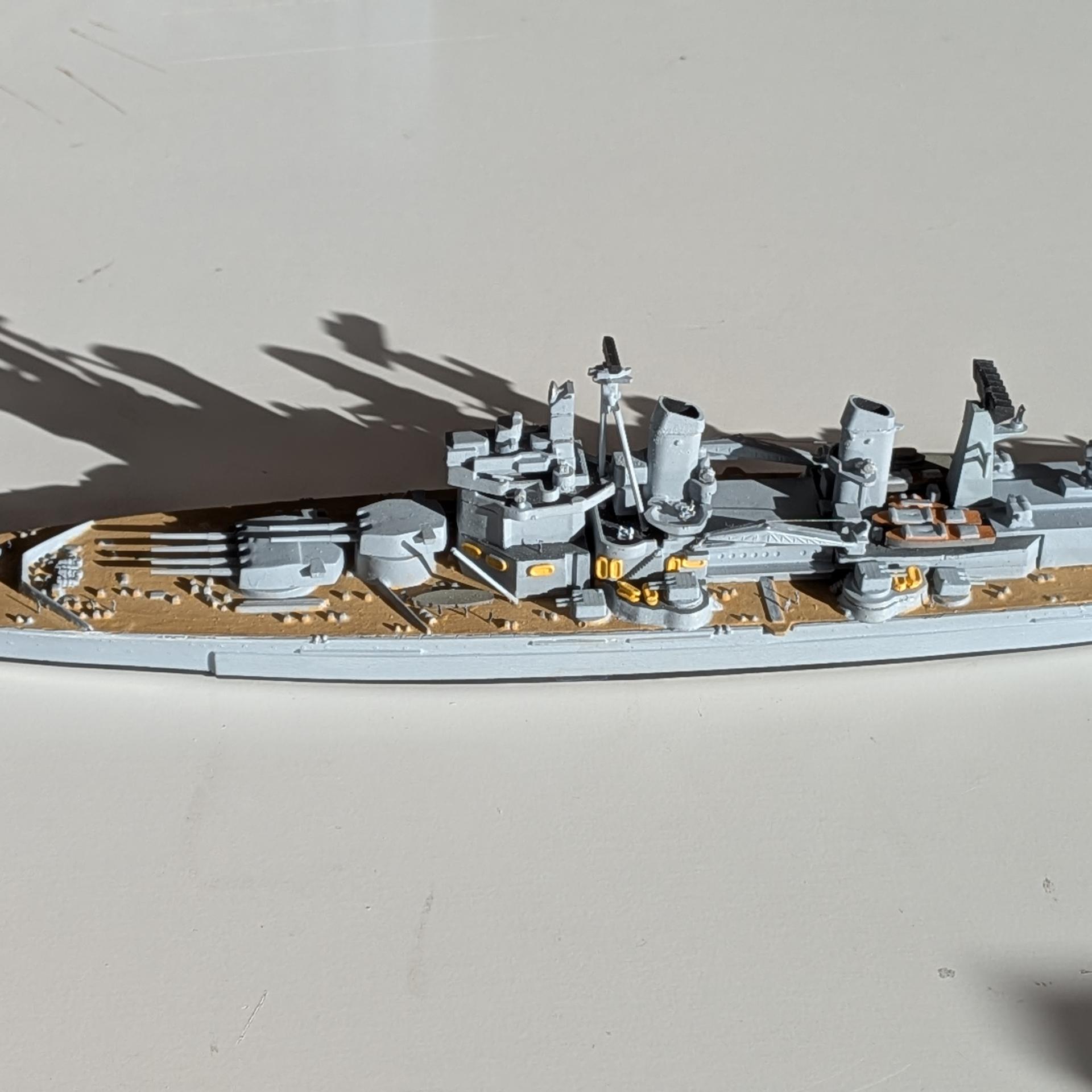
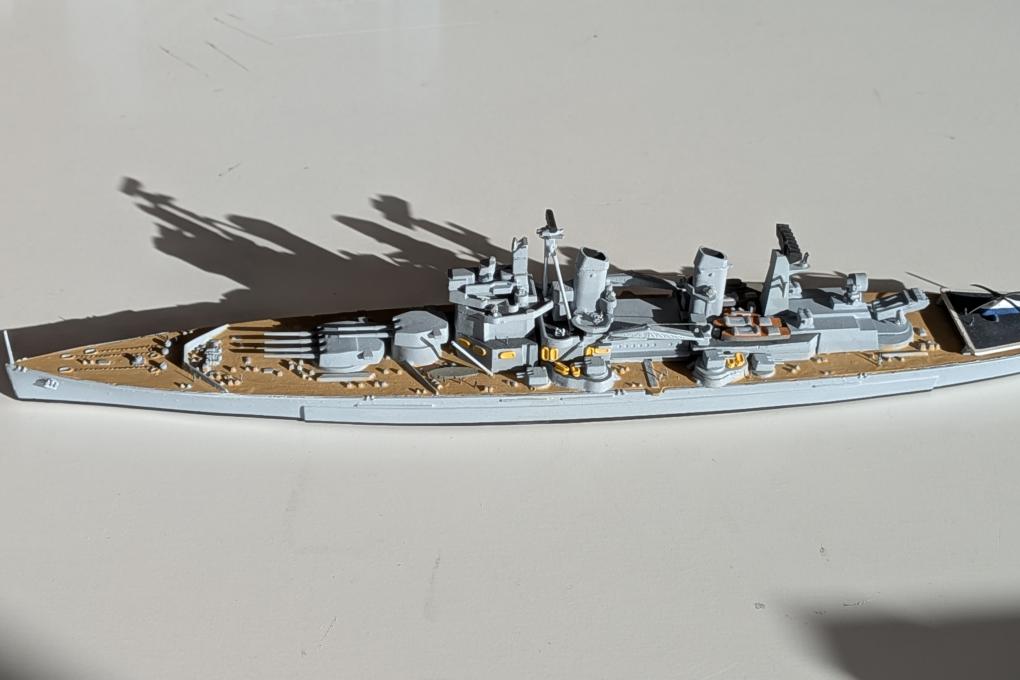
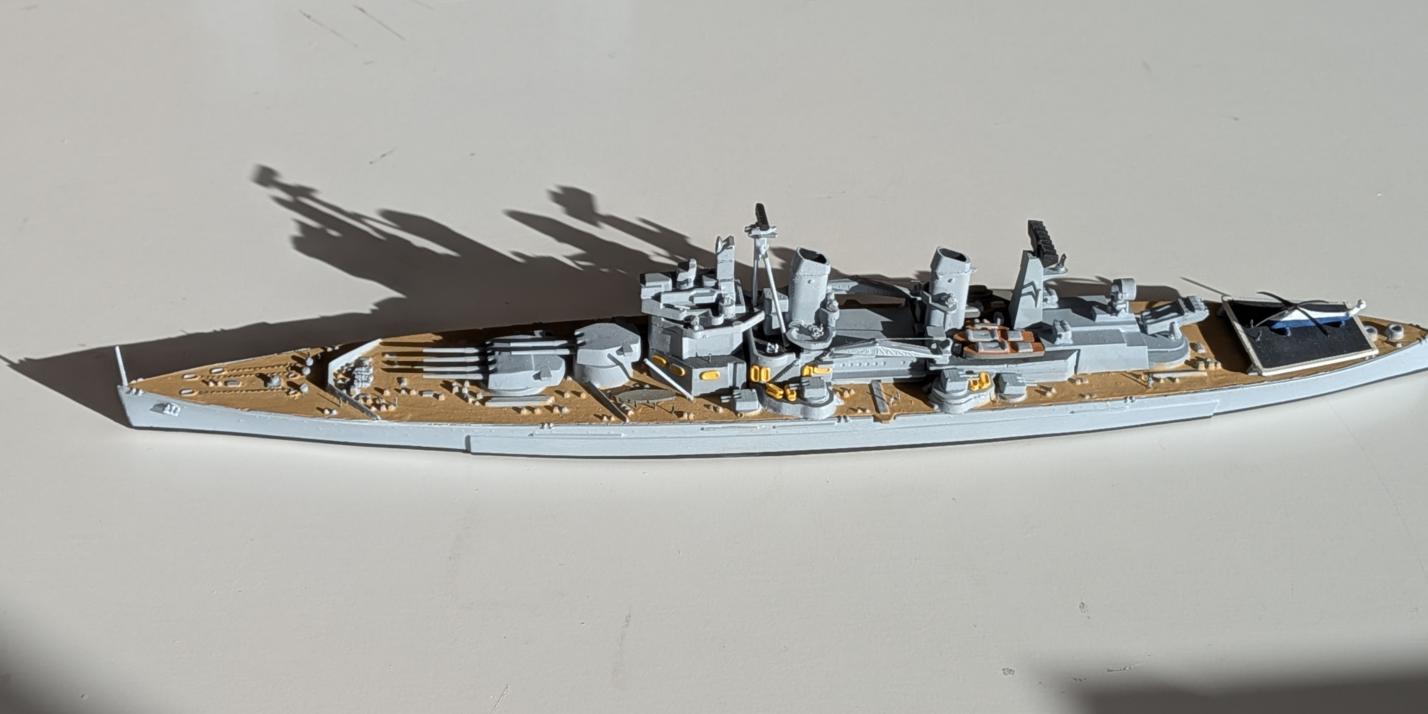
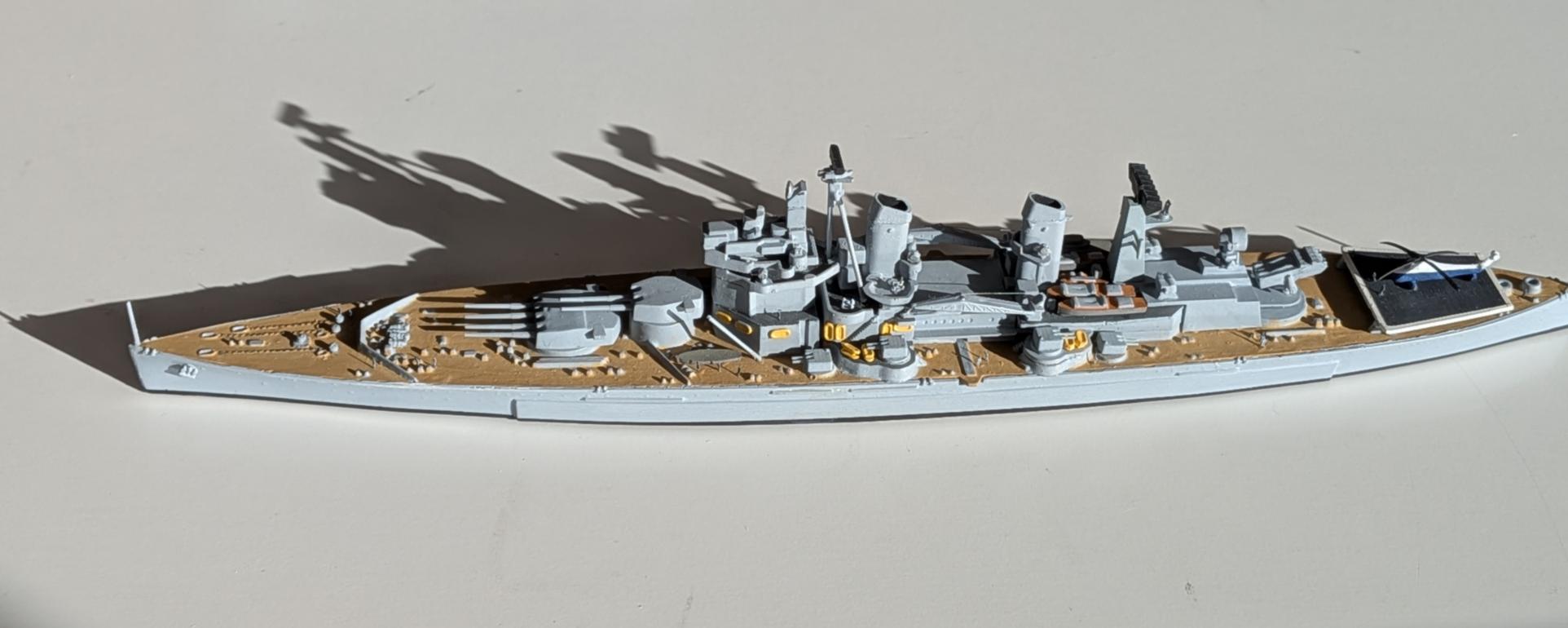
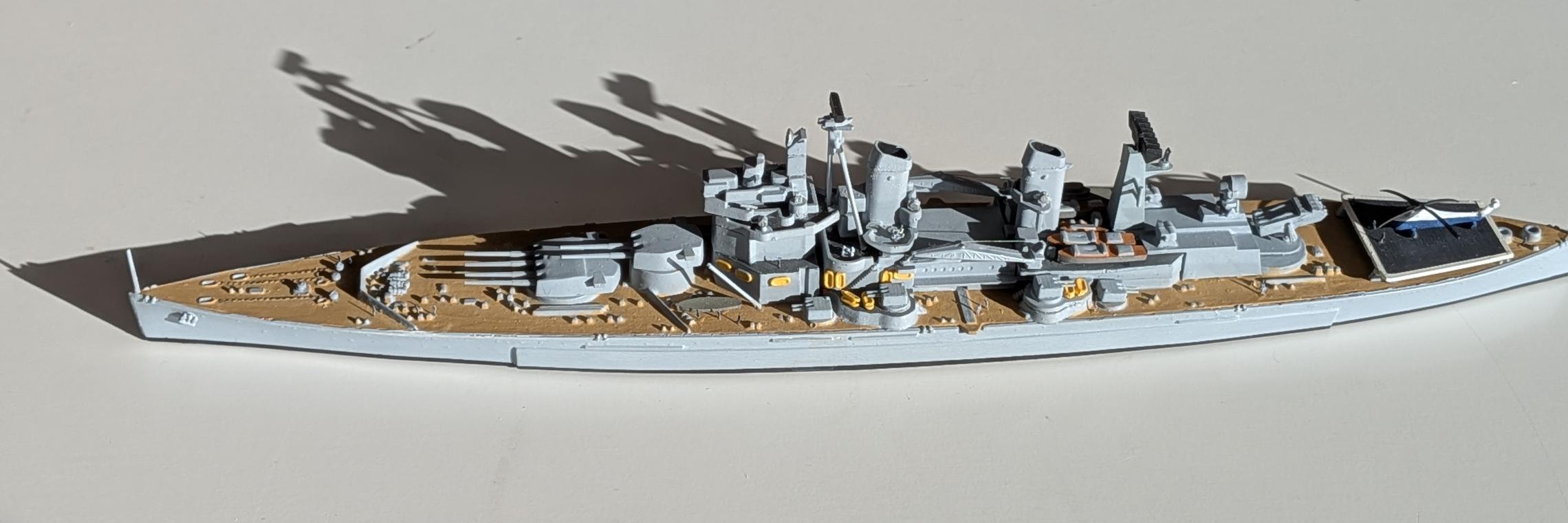
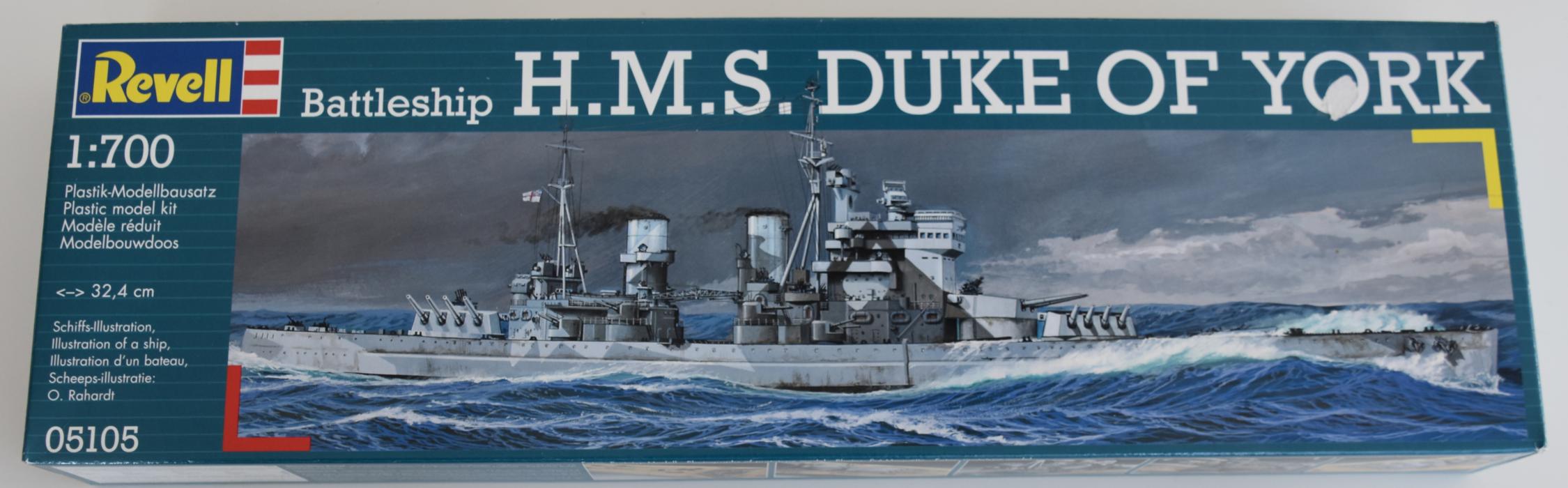
The 1/700 scale model of HMAS Australia is based on Revell's HMS Duke of York kit. The model was extensively modified to represent the battleship after its modernization in the 1960s.
The aft main gun turret, aircraft catapult and original secondary armament were removed. Eight twin 4.5-inch turrets replaced the original 5.25-inch guns. A Sea Slug missile launcher, new superstructures, radar equipment, masts, four Sea Cat launchers and a helicopter landing deck were added.
The Sea Slug launcher, its guidance director and the helicopter were taken from an Airfix Falklands War set in 1/600 scale. The new superstructures, radar equipment, masts and 4.5-inch gun turrets were designed in CAD and printed using a resin 3D printer.
The Sea Cat launchers and their guidance directors were created as AI-generated 3D models and also resin printed. The funnels were modified to match the modernized appearance of the ship.
Additional photo-etched (PE) crew figures were added to bring the model to life. The model was painted with Revell Aqua Color.