Manufacturer: 3D print, own model
Scale: 1/700
Additional parts: PE pars and some from the spare part box
Model build:Jun 2021 - Mar 2023
Manufacturer: 3D print, own model
Scale: 1/700
Additional parts: PE pars and some from the spare part box
Model build:Jun 2021 - Mar 2023
The salty spray stung Lieutenant Hiroshi Sato's eyes as he scanned the horizon from the bridge of the IJN Auxiliary Carrier Yamakawa Maru. January, 1943. A year had passed since the unthinkable - the loss at Midway. The once-proud Kido Butai, the Carrier Strike Force, was a shadow of its former self.
The Yamakawa Maru, never intended for war, was a constant reminder of Japan's desperation. Converted from a humble transport, her wooden flight deck creaked under the weight of five A6M Zeros and four Aichi D3A dive bombers. Her meager speed of 16 knots made her a liability, a sitting duck in the vast Pacific.
Hiroshi, a fresh graduate, had envisioned his service on a magnificent fleet carrier, launching fighters into the fray. Instead, he found himself on this makeshift vessel, tasked with training new recruits and overseeing a ragtag group of mechanics. The veterans, hardened by the crucible of Guadalcanal, spoke of the Yamakawa Maru with a mix of scorn and pity. "A glorified ferry," they grumbled.
Today, however, the ferry was carrying precious cargo - reinforcements for the desperate struggle on Guadalcanal. Three transports, lumbering giants laden with troops and supplies, flanked the Yamakawa Maru. Two aging destroyers, the only escorts they could muster, churned the water on either side.
Suddenly, the shrill shriek of air raid sirens shattered the tranquil morning. A lookout screamed, pointing towards the menacing shapes emerging from the clouds - six American dive bombers, their bellies fat with destruction.
Hiroshi's heart hammered against his ribs. The Yamakawa Maru lurched into action, its meager anti-aircraft guns barking defiance. But it was too late. Caught by surprise, the Zeros remained tethered on the deck, helpless chicks in a hawk's nest.
A bomb shrieked down, erupting in a fiery inferno on the hangar deck. Another found its mark amidships, buckling steel and sending plumes of smoke billowing into the sky. The Yamakawa Maru shuddered, a mortally wounded beast.
Through the chaos, Hiroshi saw his men scrambling, their faces etched with terror and determination. The mechanics, their training put to the ultimate test, fought valiantly to contain the damage. But the Yamakawa Maru was beyond saving.
With a heavy heart, the order came to abandon ship. As Hiroshi watched his comrades clamber into lifeboats, a wave of shame washed over him. This wasn't the glorious death he had envisioned. This was a slow, agonizing demise for a ship never meant for war.
The Yamakawa Maru, a symbol of Japan's wartime desperation, settled slowly into the turquoise embrace of the Pacific, taking with it a part of Hiroshi's soul. The question gnawed at him - was this a pointless sacrifice, or a desperate act of defiance in the face of overwhelming odds? Only time, and the unforgiving crucible of war, would tell.
January 1943, South Pacific
Lieutenant Miller squinted through the bomber's open hatch, the relentless sun baking his neck. Below, a Japanese convoy plodded through the endless blue - a fat, juicy target. Today wasn't shaping up to be your typical "Tin Can Tuesday," where they pounded on rusty Japanese freighters escorted by glorified fishing boats. This one had a surprise.
"Skipper," Miller yelled over the roar of the engine, "looks like they got a carrier with them. A small one, looks like a converted freighter by the looks of it."
Captain Jackson, a grizzled veteran with a perpetual two-day beard, peered down. "Probably one of thoseCVE knock-offs they're throwing at the wall these days. Makes our job easier, wouldn't you say, Miller?"
Miller wasn't so sure. A carrier, even a makeshift one, meant Zeros. And Zeros meant a fight. He gripped the controls tighter, willing the lumbering Dauntless dive bomber forward. Five SBDs roared in formation, a dagger poised to strike the heart of the Japanese convoy.
The meager puffs of anti-aircraft fire that erupted from the freighters and the two escorting destroyers were more comical than threatening. But as they neared the carrier, Miller saw a flicker of movement on its deck. A glint of metal - Zeros!
"Damn it!" he swore. "They're scrambling them!"
"Level out, Miller," Jackson barked. "We take out that carrier first. The rest can wait."
Miller pulled the bomber into a shallow dive, the world compressing into a terrifying rush of wind and churning water. Below, the carrier, a rickety contraption with a wooden flight deck, seemed to crawl beneath them. The Zeros, thankfully still sluggish on takeoff, were easy targets.
A curtain of fire erupted from the carrier's meager anti-aircraft guns, peppering the sky with black puffs. One bomber sputtered and dipped, trailing smoke. Miller gritted his teeth, ignoring the primal scream clawing at his throat. He had to make this count.
He lined up the sight, the carrier filling his vision. A split second later, the world went white. The bomb released, a silent promise of destruction.
The explosion rocked the Dauntless. Miller fought to regain control, his vision swimming. Through the haze, he saw the carrier shudder, a plume of black smoke erupting from its midsection. Two more bombs found their mark, the wooden deck splintering like a matchstick.
The remaining Zeros, their takeoff aborted, were easy pickings for his wingmen. Cheers erupted over the intercom as fiery blossoms dotted the sky. The carrier, mortally wounded, heeled over, listing badly in the water.
Miller pulled the bomber out of the dive, his heart pounding a victory march. Another Japanese warship sent to the bottom. Another blow to the Empire. But as he watched the carrier wallow, a flicker of unease sparked within him. Something about the way it went down, so easily, almost… pathetically, felt wrong.
Later, on board the carrier Wasp, debriefing the mission, a somber mood settled over the victorious flyers. Recon reports confirmed the carrier was a converted transport ship, barely more than a glorified barge. It likely carried raw recruits, men barely out of training, thrown into the meat grinder of the Pacific War.
Miller stared out at the endless ocean, the elation of the mission replaced by a cold, metallic taste in his mouth. Today's victory felt hollow, a win against a ghost. The war, he realized with a sickening certainty, was a machine that devoured lives, indiscriminately, on both sides. And he was just a cog in its bloody gears.

When historians discuss the Imperial Japanese Navy’s massive investment in aircraft carriers before the Pacific War, the spotlight usually falls on the great fleet carriers—Akagi, Kaga, Sōryū, Hiryū, and their successors. Far less known is a small but vital branch of this expansion program: Japan’s effort to create a dedicated platform for training aircraft maintenance crews at sea. This curious experiment produced one of the most obscure “carriers” ever to sail under the Rising Sun - the Yamakawa Maru.
By the mid-1930s, Japan had realized that the greatest bottleneck for its carrier fleet was not ships or aircraft but trained technical personnel. To ease the burden on frontline carriers, the Navy searched for a cheap, expendable vessel suitable for conversion into a floating classroom.
They found it in Yamakawa Maru, a humble 125-meter transport ship built in 1921. Cheap, sturdy, and available, she was stripped of her superstructure and rebuilt into a primitive escort-carrier-like vessel. The conversion added:
an open-sided hangar deck
a simple wooden flight deck
a small island
workshops and classrooms
no armament—none was considered necessary
Her sister vessel, the Kobiyashi Maru, underwent a similar conversion but was lost in a collision in 1939, leaving Yamakawa Maru as the sole survivor of Japan’s training-carrier concept.
Between 1937 and 1941, hundrets of maintenance specialists received their first real deck-handling experience aboard her. Many later served on Shōkaku, Zuikaku, Taihō, and other frontline carriers.
With the outbreak of war in December 1941, the Yamakawa Maru was hastily armed with light anti-aircraft guns and repurposed as:
a technical training carrier
an aircraft ferry for damaged or rebuilt machines
a rear-area auxiliary carrier
Then came June 1942.
The disastrous losses at Midway—four fleet carriers sunk in a single battle—left Japan desperate for any ship that could operate aircraft. Despite her meager speed of 16 knots, the Yamakawa Maru was pressed into frontline service.
After a modest upgrade that added several medium AA guns, she was sent to the South Pacific. In September 1942 she arrived at Rabaul, where she performed secondary carrier duties during the opening months of the Guadalcanal Campaign.
By January 1943, the Yamakawa Maru had become part of a small convoy carrying reinforcements and aircraft to the Solomon Islands. On board were:
five A6M Zero fighters
four Aichi D3A “Val” dive bombers
Escorted by two destroyers, the convoy approached the waters near Mbulo Island. At dawn, six U.S. Navy Dauntless dive bombers swooped in out of the sun. The Yamakawa Maru’s slow conversion elevator and minimal AA defenses made launching her fighters impossible.
Three bombs hit the ship in quick succession.
Flames tore through the hangar, igniting aviation fuel and destroying the crated aircraft. Listing heavily and unable to generate enough steam to move, the captain ordered the vessel beached on Mbulo Island to save the crew.
One of the convoy’s transports was also struck and sunk.
The grounded Yamakawa Maru was abandoned shortly afterward. Salvage attempts were deemed impractical, and the wreck slowly deteriorated in the tropical surf, ultimately collapsing into the sea during the 1950s.
Although never intended for combat and all but forgotten today, the Yamakawa Maru played a quiet but critical role in shaping the backbone of Japan’s carrier aviation - the hundreds of technicians, mechanics, and deck crews who made the great carriers of the IJN possible.
She remains one of the most unusual “carriers” ever built.
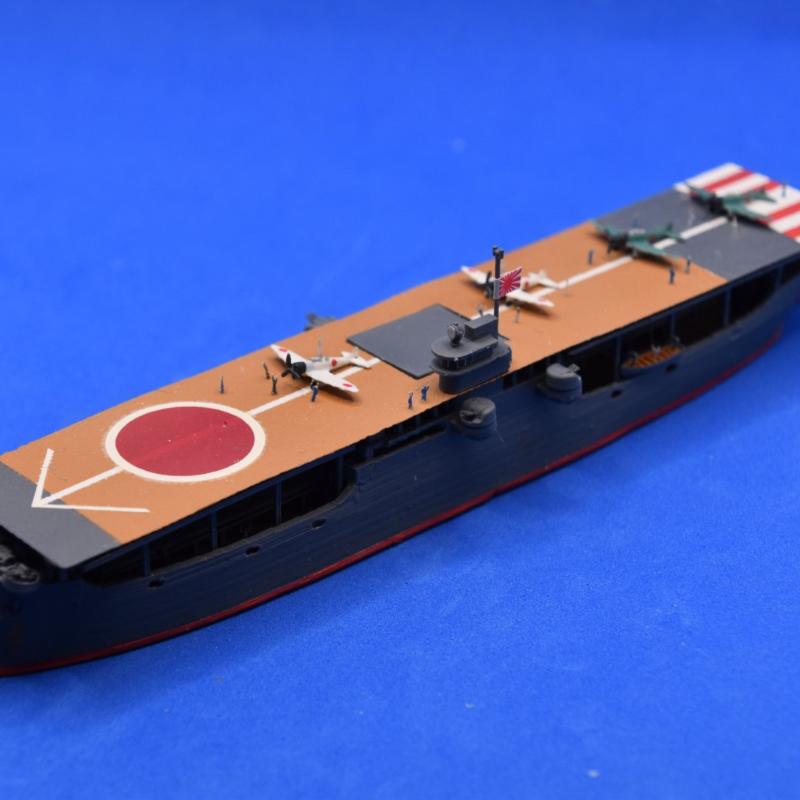
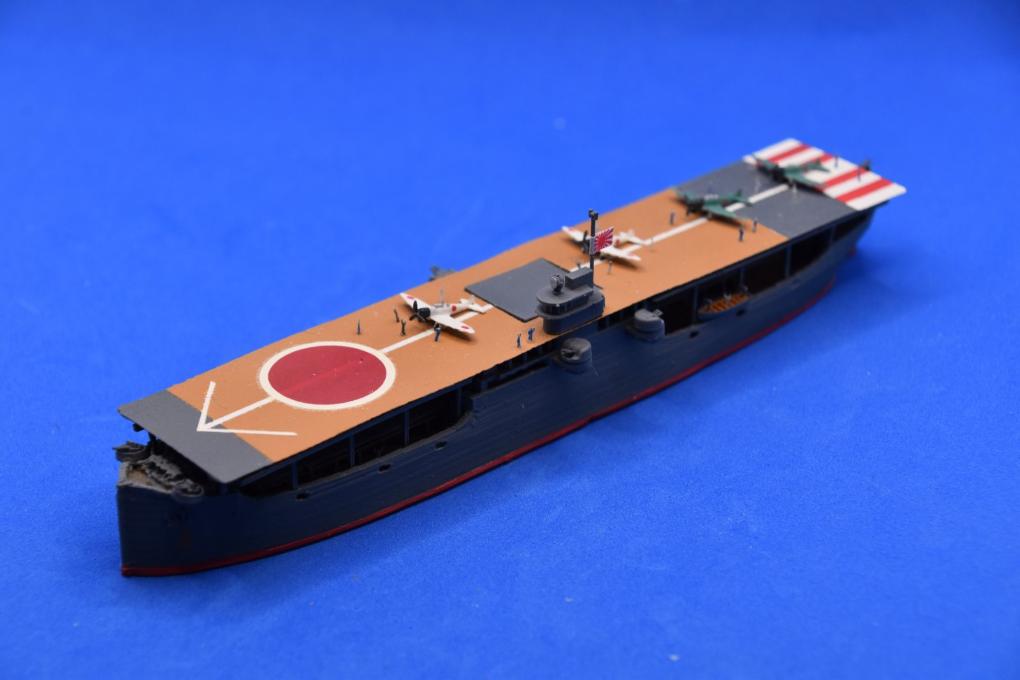
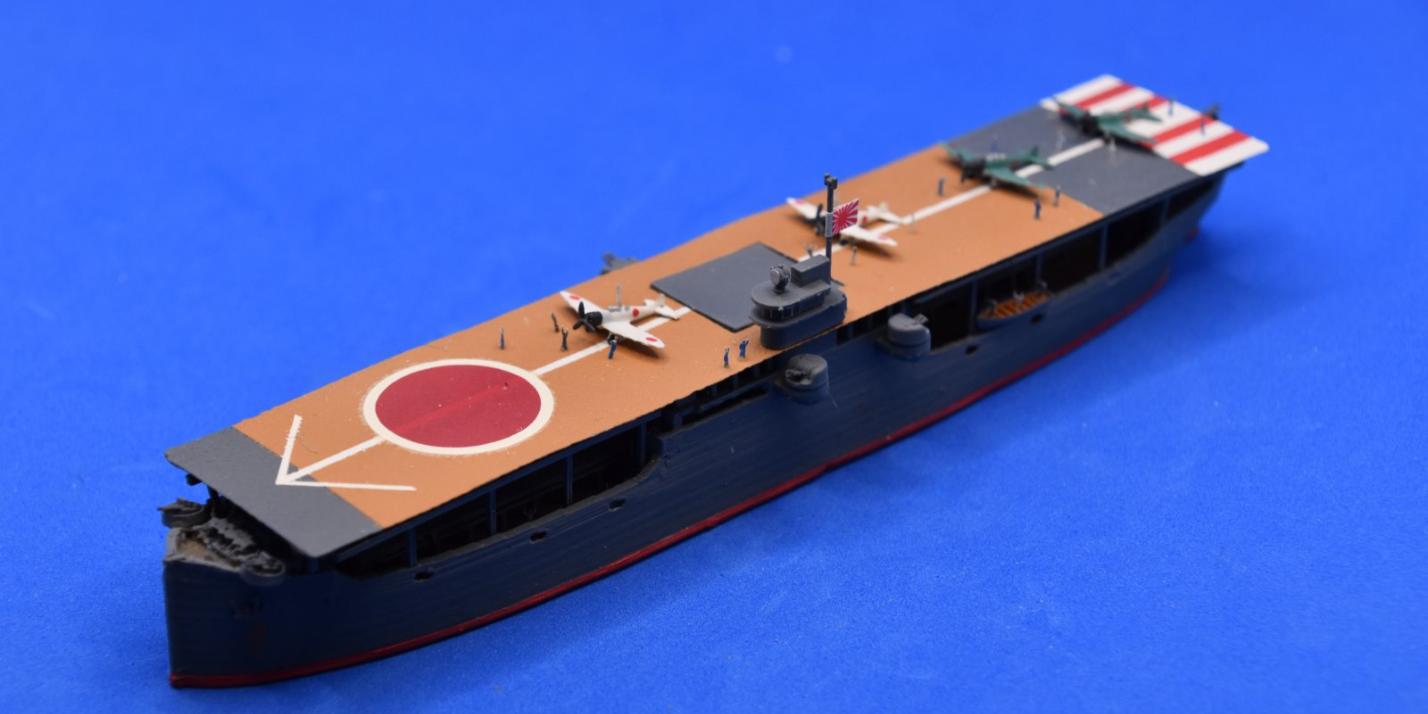
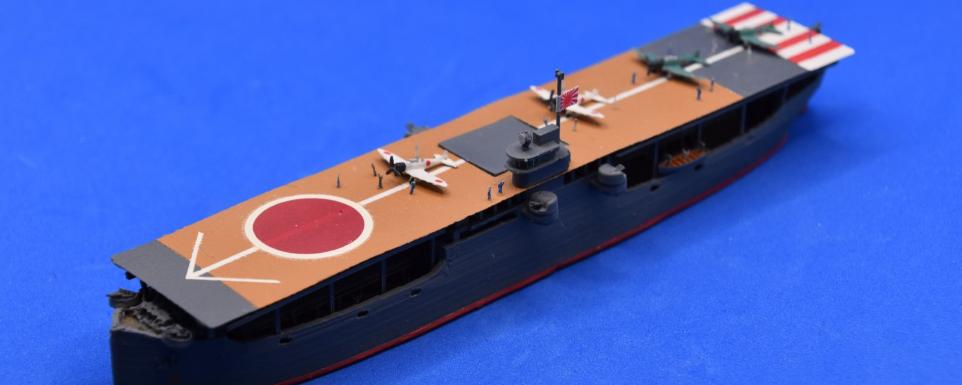
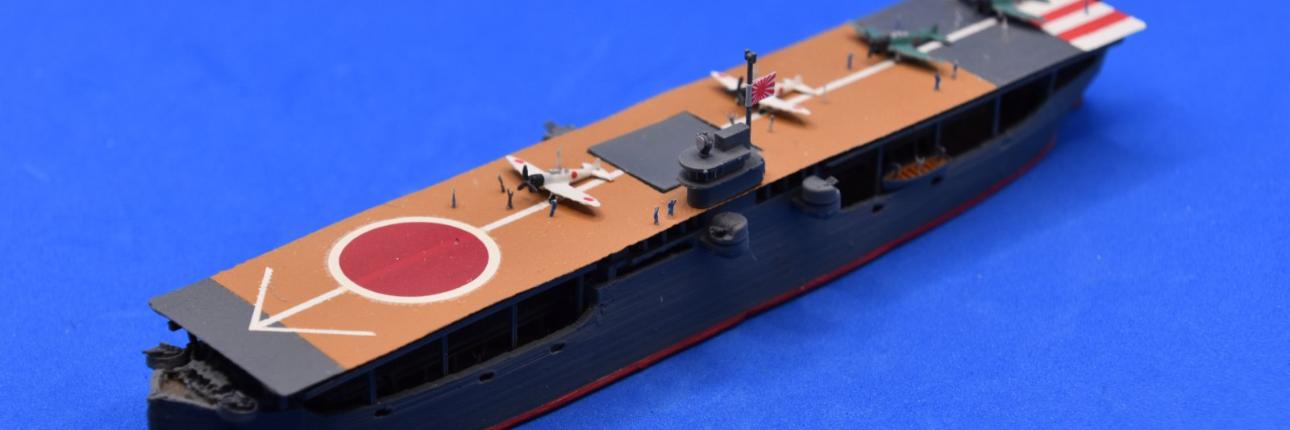
The model shows the Yamakawa Maruin Janaury 1943 at the time when it got lost.
This is the first of my set of three different CVEs. When creating the model, I could not decide which country variant I should choose, so I printed all of them. The model is complete 3D printed in 1/700 scale except a few smaller parts like AA guns.
The hull is base on the 3D model "1/350 WW1 US Cargo ship (EFC 1020) "Laker" by decapod on Thingiverse. I re-scaled the model to 1/700 and removed the superstructure.
The ship hull, hangar deck and flight deck are all printed with a FDM printer, all other parts are made with a Resin printer. The aircraft are 3D printed as well.
Guns and mast are taken from the spare part box, all other parts are designed and printed by me. Additional PE crew was used.
The model is painted with Revell Aqua Color.