Manufacturer: Aurfix
Scale: 1/72
Additional parts: scratch build parts
Model build: Oct - Nov 2016
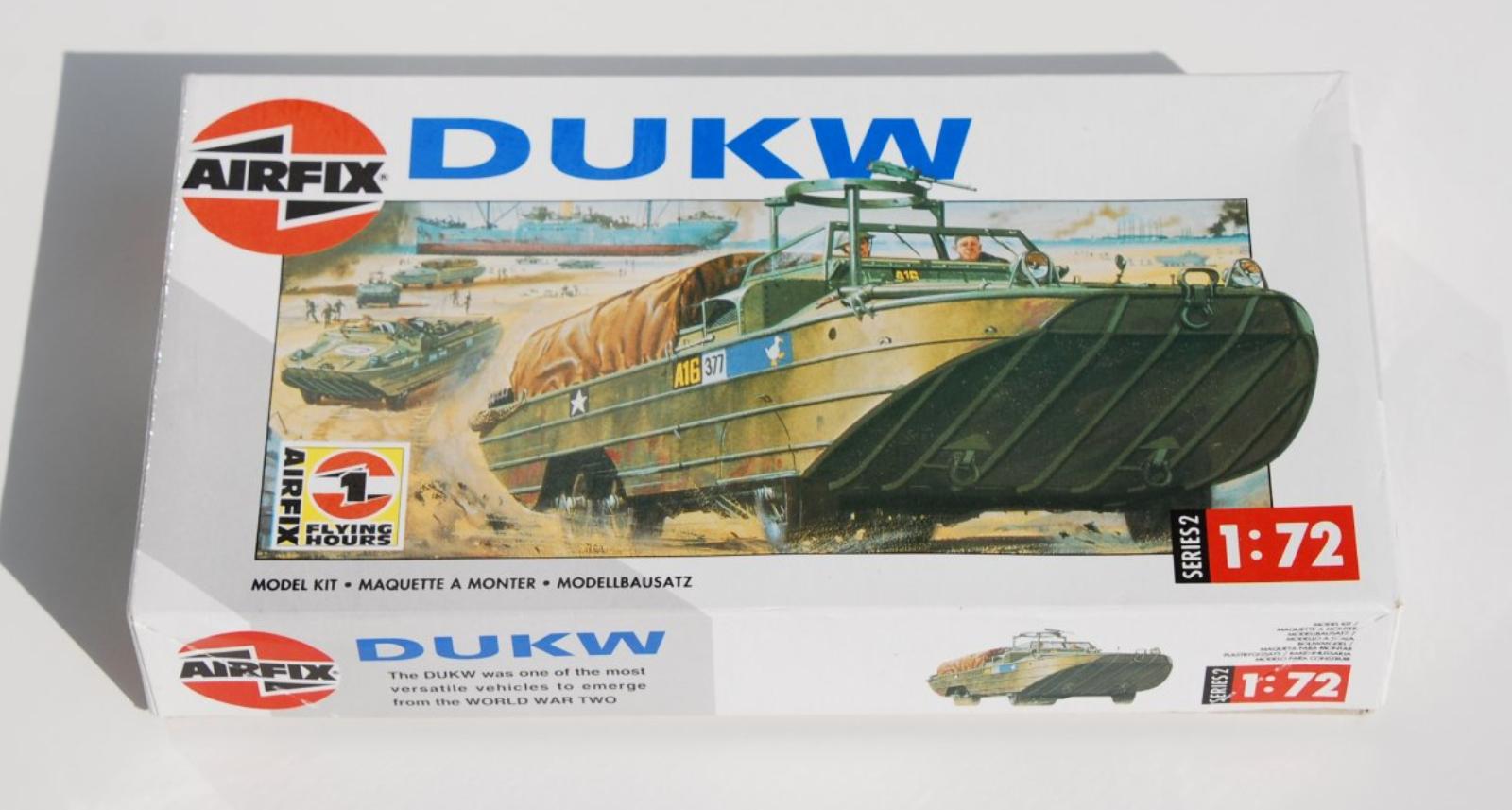
Manufacturer: Aurfix
Scale: 1/72
Additional parts: scratch build parts
Model build: Oct - Nov 2016
The sunshine glinted off the Rhine, a mischievous glint mirroring the twinkle in Gertrude's eye. Today was the day for her Cologne Duck Tour, a dream she'd held since childhood. Unlike the sleek, modern amphibious vehicles she'd seen in travel brochures, Cologne's Duck Tour was a relic from a bygone era. A bright red World War II DUKW, emblazoned with the bold slogan "Kölle Alaaf" (Cologne Above All!), a leftover from Carnival season, rumbled to a stop.
Gertrude hopped in, joining a motley crew of tourists. The driver, Klaus, was a character straight out of a storybook. A shock of white hair escaped his captain's hat, and his handlebar mustache twitched with a permanent grin. "Welcome aboard, landlubbers!" he boomed, his voice seasoned with years of salty tales. "We're about to embark on a Rhine River rhumba, Cologne style!"
The tour rumbled through the city, Klaus peppering the journey with historical anecdotes and hilarious personal stories. They passed by the magnificent Cologne Cathedral, its spires reaching for the sky. Klaus regaled them with tales of its construction, spanning centuries, a testament to human perseverance. Then, with a flourish, he announced, "And now, for the grand splash!"
The DUKW lurched forward, the pavement giving way to a ramp, and with a hearty "Kölle Alaaf!" from the passengers, they plunged into the cool embrace of the Rhine. Laughter erupted as the once land vehicle transformed into a bobbing boat. Cologne unfolded from a new perspective. The majestic Hohenzollern Bridge loomed overhead, a steel sentinel guarding the city. Along the banks, colorful half-timbered houses watched with a timeless gaze.
Suddenly, the engine sputtered and died. A hush fell over the DUKW. But Klaus, unfazed, simply slapped the dashboard and winked. "Don't worry, folks. This old girl just needs a bit of Cologne cheer!" He led them in a rousing rendition of a local carnival song, their voices echoing across the water. As if by magic, the engine coughed back to life, and the tour continued.
The Cologne Duck Tour wasn't just a sightseeing trip; it was an experience. It was a journey through time, a celebration of resilience, and a testament to the enduring spirit of Cologne. And as Gertrude disembarked, a wide grin plastered on her face, she knew this was a memory she'd treasure forever.

By the early 1990s, Duck Tours had become a recognizable curiosity in major coastal cities around the world. From Boston to Dublin, brightly painted amphibious craft—usually aging WWII DUKWs rebuilt for tourism, rumbled through streets before plunging theatrically into harbors. Their loudspeaking, eccentric guides became minor celebrities in their own right.
Germany, however, remained a notable blank spot on the Duck-Tour world map. A combination of strict watercraft permissions, inland environmental laws, and local bureaucratic labyrinths made any such enterprise seem hopeless. Tourism planners often joked that it was “easier to get a permit to sail a U-boat down the Rhine than to launch a DUKW anywhere in Germany.”
After the reunification boom and the expanding Rhine-Harbor redevelopment projects, Cologne’s tourism council began quietly exploring unique attractions that could distinguish the city from competitors like Düsseldorf and Bonn.
A confidential municipal report from 1992 (now declassified) proposed a radical idea:
“If Dublin can let WWII amphibious trucks into the Liffey, surely Cologne can tolerate a few in the Rhine.”
The biggest challenge was that Germany possessed no preserved DUKWs in suitable operational condition. That changed when, in early 1993, a cache of six ex-US Army DUKWs was discovered in a forgotten depot once used by Allied forces near Bad Godesberg. Three hulls were restorable.
In 1994, the newly formed Kölner Amphibien-Flotte GmbH began restoring the vehicles. Large flotation chambers, similar to those required in Dublin, were added to satisfy German stability regulations. Passenger benches were installed, four seats per row, with safety belts and a reinforced canvas roof to meet stricter German norms.
The first prototype was painted in bright red and white city colors. On its side, in large cheerful letters, stood the unofficial slogan of Cologne: “Kölle Alaaf!”
When the vehicle made its inaugural test splash in the Rheinauhafen in September 1995, thousands of curious spectators gathered. Local tabloid headlines that weekend declared:
“Köln erfährt ein Wunder - Ein Bus fährt in den Rhein!”
By mid-1996, the “Kölner Duck Tour” became a fixture of Rhine-side tourism. The 90-minute route became legendary:
Land section:
Starting near the Dom, the DUKW rumbled through the Altstadt, passing Heumarkt, Gürzenich and the historic breweries.
Amphibious entry:
A custom-built slipway near the Severinsbrücke allowed the DUKW to slide dramatically into the Rhine—tourists often applauded or screamed in delight.
River section:
The slow cruise downriver offered rare views of the cathedral, Hohenzollern Bridge, the old harbor cranes, and the WDR buildings.
During Carnival season, guides performed in costume—pirates, princes, medieval clerics, and occasionally a “mobile Köbes”, turning the tour into a floating comedy stage.
The Kölner Duck Tour quickly gained cult status. Backpacker guidebooks in 1998 described it as:
“Half sightseeing, half carnival - 100% Cologne.”
Local folklore grew as well: drivers competing to have the loudest horn, engineers decorating engine bays with tiny Dom figurines for luck, and the famous 1997 incident when a DUKW unexpectedly surfaced in the background of a WDR evening news broadcast, confusing viewers who thought it was a ghost ship.
Although stricter EU regulations in 2001 eventually grounded the last operational DUKW in Cologne, the 1990s remain the city’s uniquely amphibious decade. The “Kölle Alaaf Duck Fleet” is still remembered fondly as one of Cologne’s strangest and most charming experiments in tourism, a fleeting moment when WWII relics, local humor, and Rhineland engineering came together to create something unmistakably, wonderfully kölsch.
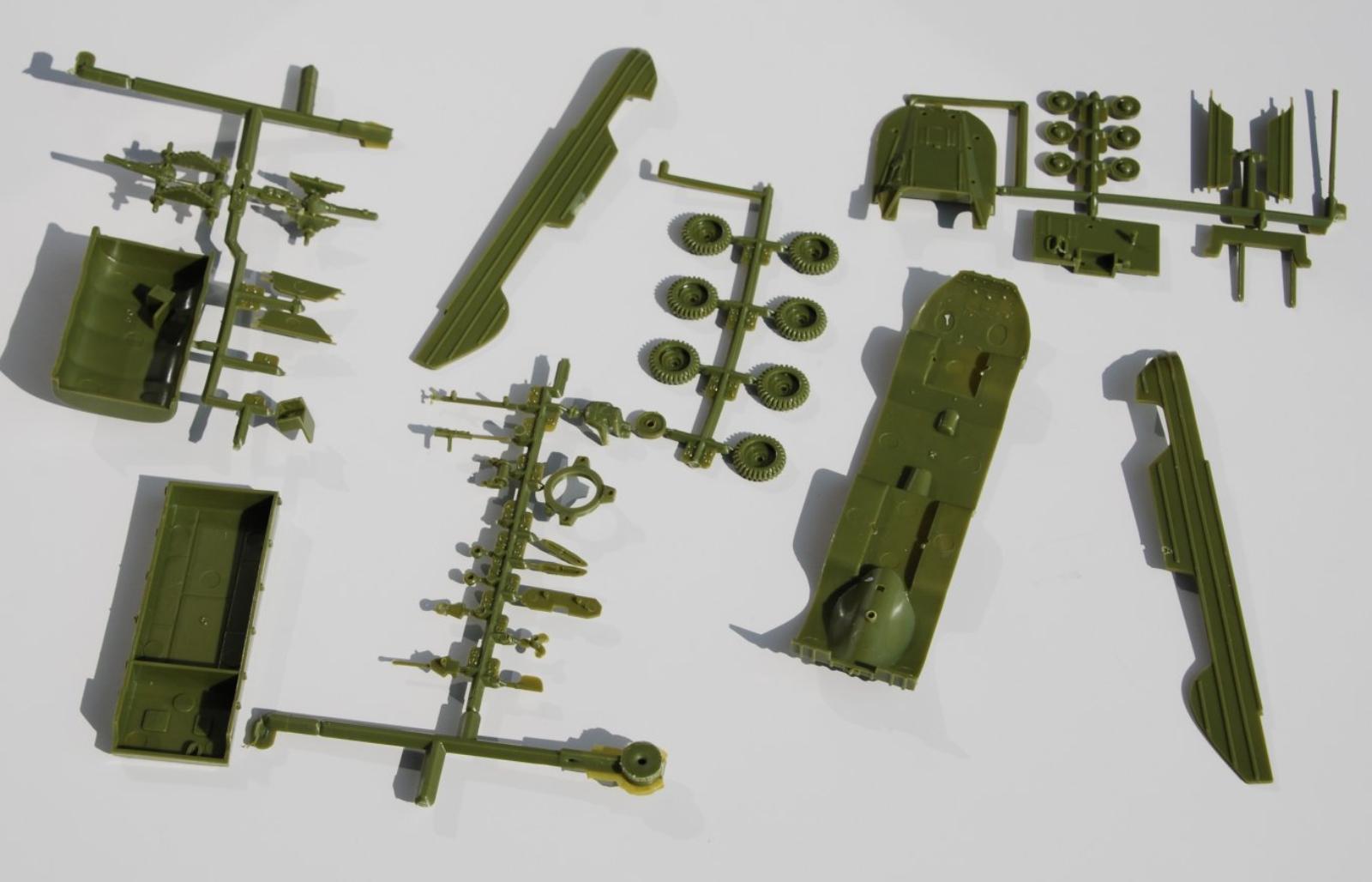
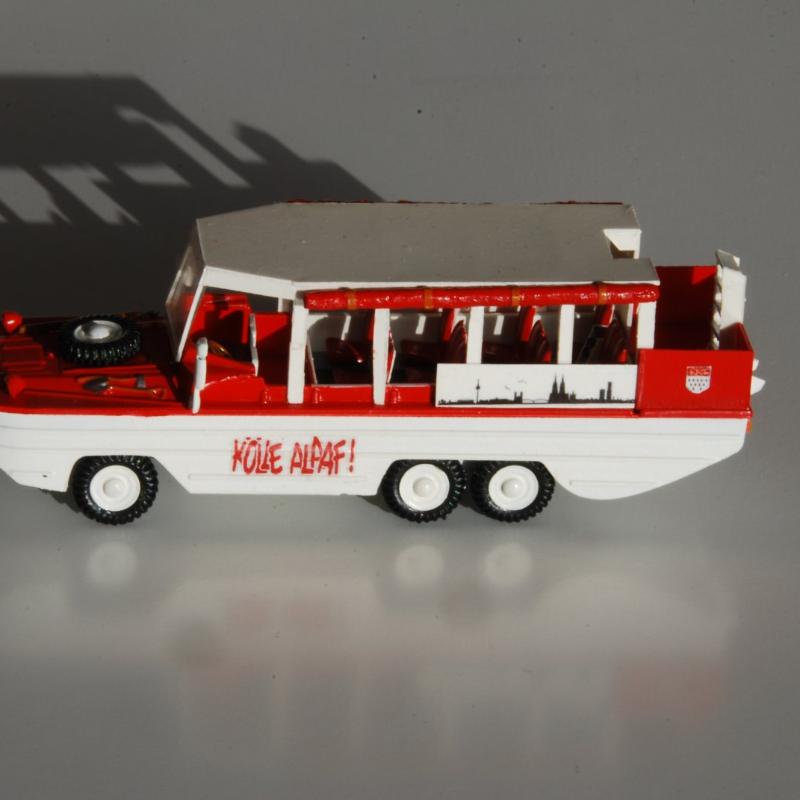
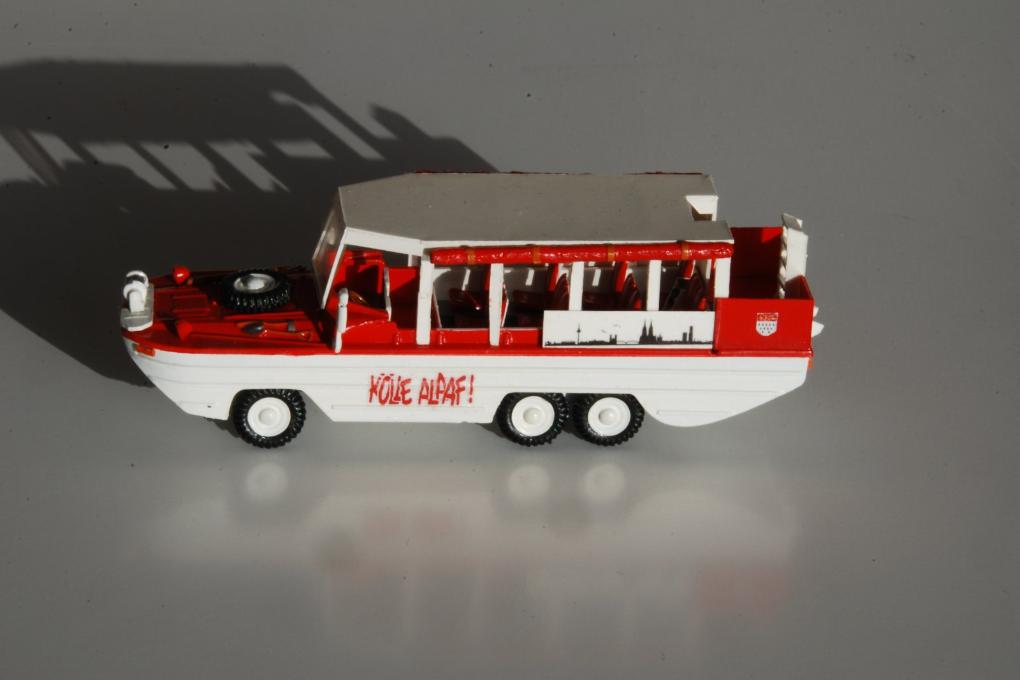
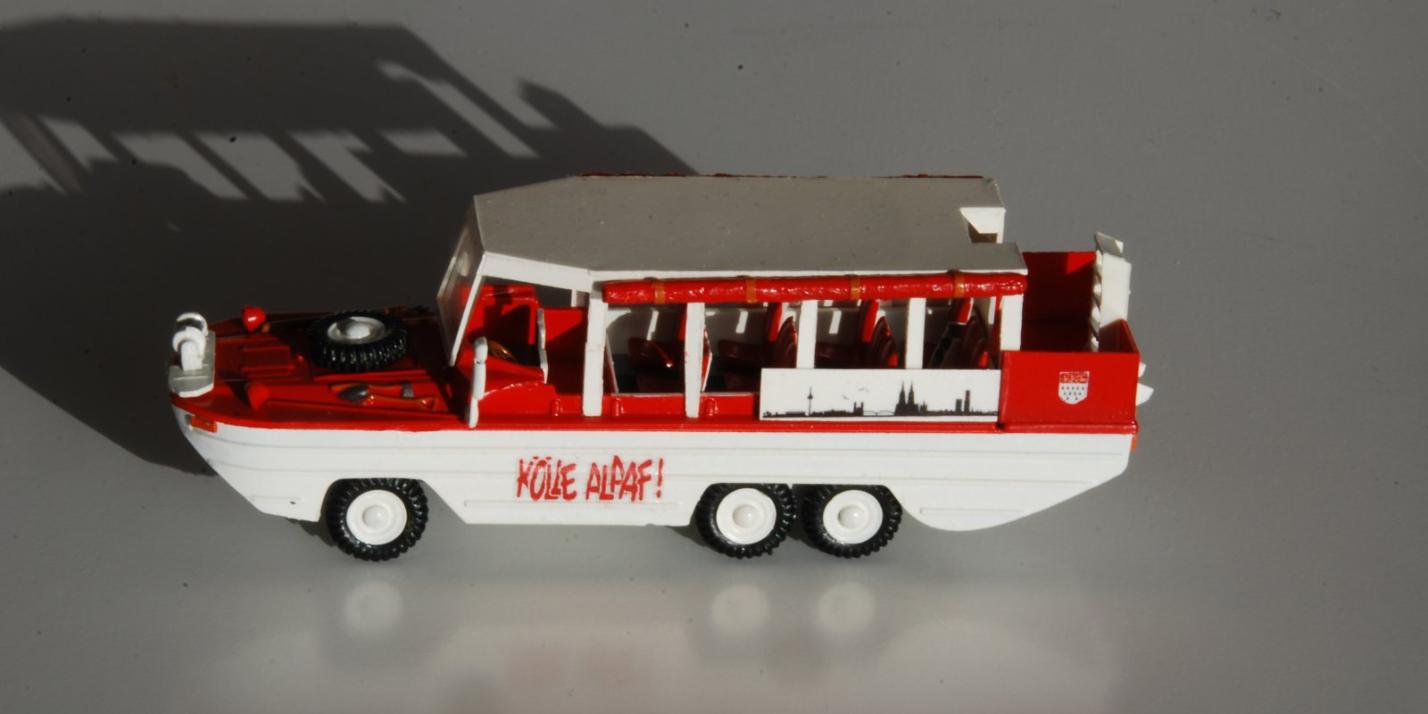
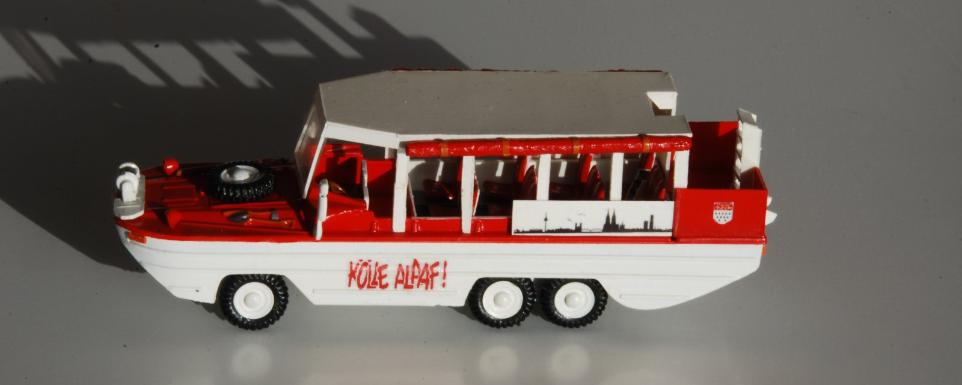
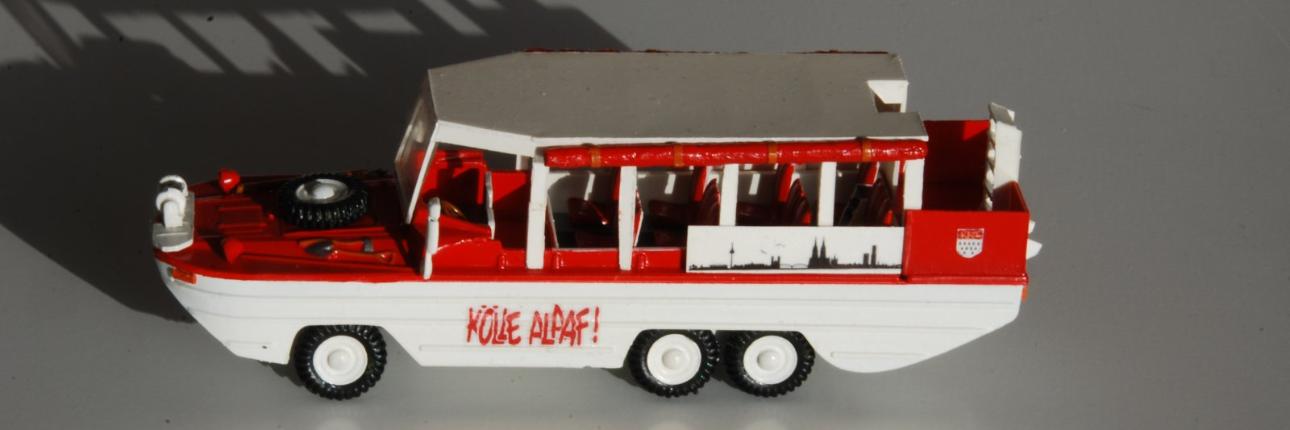
This is the old Airfix 1/76 sclae Dukw kit. The seats inside are taken form an Italieri Ju 52 kit, the 1-2 configuration makes it very comfortable to ride in it.
The roof and entry stairs are made from 0,5mm thick plastic sheets, the windscreen is made of some kind of food package. It was the first model to try to make own decals, so the "Kölle Alaaf", licence plate, the Cologne crest and the skyline are all printed on transparent decal paper and then added to the model.
The rollable side cover at the roof is a toothpick surrounded with a paper handkerchief, and a lot of glue.
Painted with Revell Aqua Color in the traditional red&white Cologne colours.