Manufacturer: 3D print
Scale: 1/72
Additional parts: parts from spare part box
Model build:
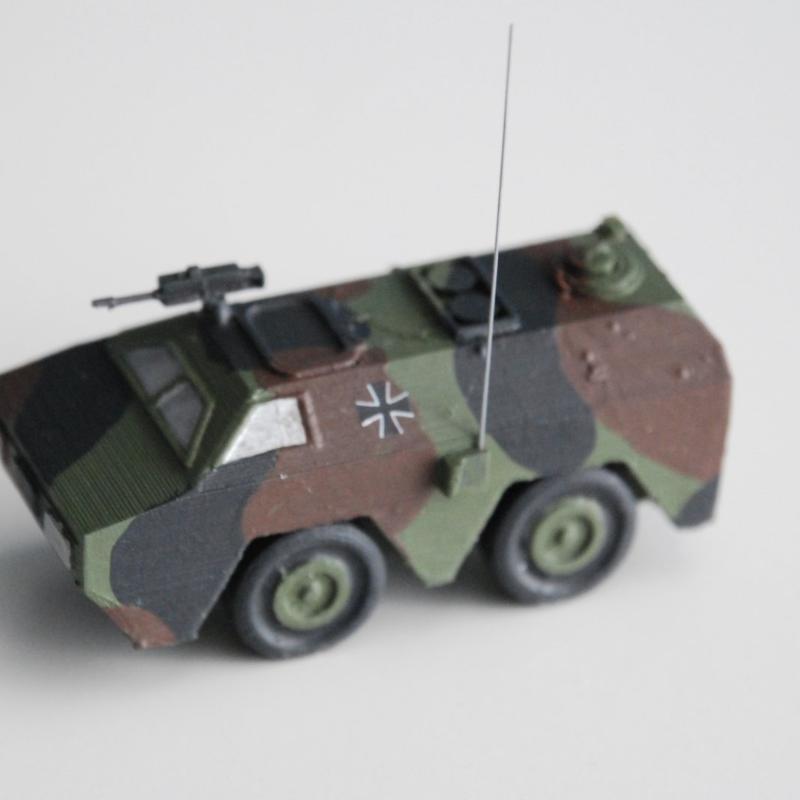
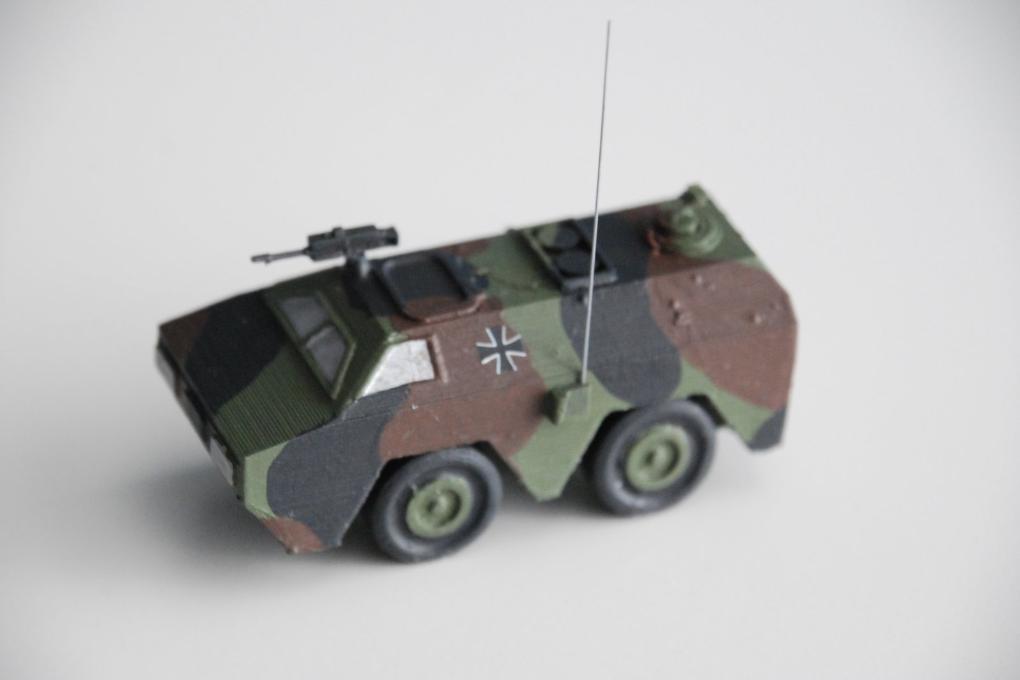
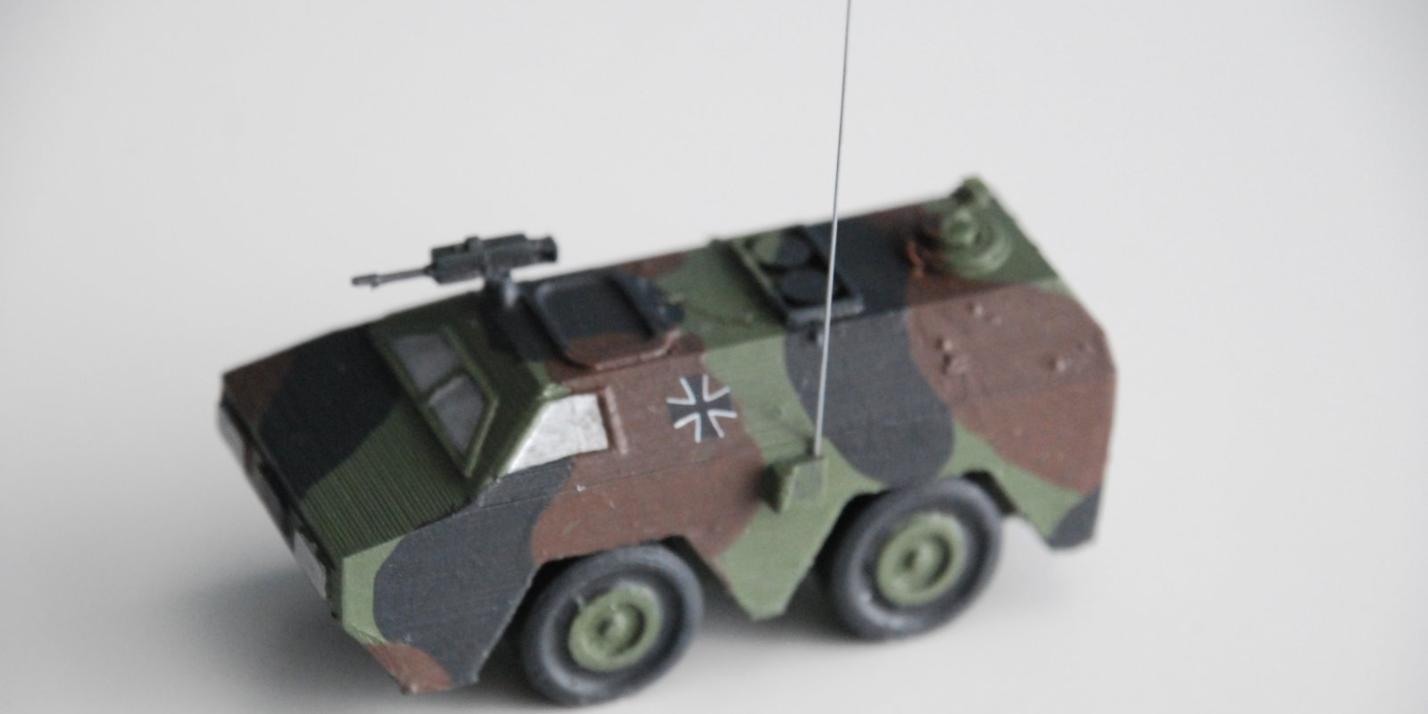
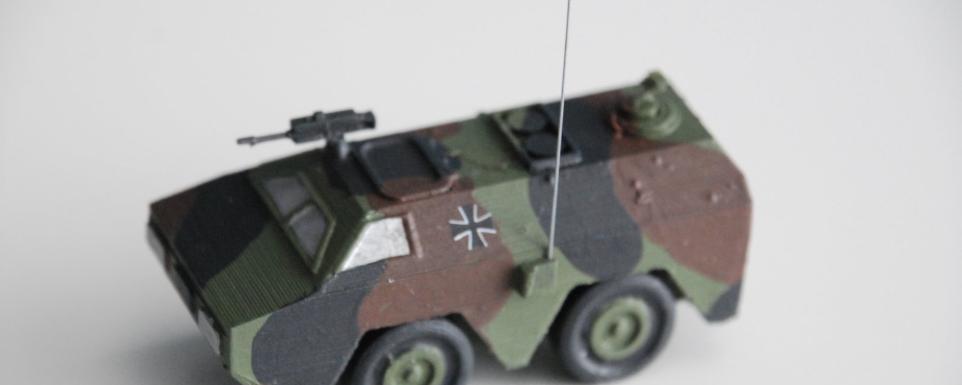
Manufacturer: 3D print
Scale: 1/72
Additional parts: parts from spare part box
Model build:
Cologne, Germany - April 2024
Hauptmann Nadia Jäger slammed her hand down on the table, scattering reports across the polished surface. "That's it! This bureaucratic nightmare is driving me mad!" she growled. Across from her, Oberleutnant Hans Schmidt winced slightly. Nadia was known for her fiery temperament, but this new Boxcat project seemed to be pushing her to the limit.
Five years ago, the idea of a lightweight, tactical vehicle based on the VW Tiguan had been met with excitement. The "Boxcat," as it was nicknamed, had performed admirably in testing. But the whole project went belly-up thanks to the emissions scandal that plagued Volkswagen's diesel engines.
Now, rumors were swirling that VW was back, this time with an electric reincarnation of the Boxcat built on their ID.3 platform. The concept was intriguing: a silent, agile electric vehicle perfect for urban combat or covert operations. But Nadia knew the German military's procurement process was a labyrinthine beast.
"We need this Boxcat, Hans," Nadia said, her voice softening slightly. "Our current vehicles are loud, cumbersome, and outdated. This new one could be a game-changer."
Hans, the team's resident engineer, nodded. "I agree, Hauptmann. The electric drivetrain would offer numerous advantages. But those environmental regulations..." he trailed off, his brow furrowed.
The 2015 debacle was still fresh in everyone's minds. The Bundeswehr, the German Federal Defence Force, had a strict stance on emissions. Approving a military vehicle that didn't meet environmental standards would be a bureaucratic nightmare.
Suddenly, Nadia's eyes lit up. "Hans, what if...?" she began, leaning forward conspiratorially. A mischievous grin spread across her face.
Later that week
Nadia sat across from a stern-faced General Schmidt, no relation to Hans. The General, head of the Bundeswehr's procurement department, was not known for his patience.
"Hauptmann Jäger," he boomed, his voice echoing in the sparsely furnished office. "Explain to me why you're here proposing a project that is demonstrably doomed to fail."
Nadia took a deep breath. "General, with all due respect, the new Boxcat is different. We propose a pilot program. A limited number of vehicles deployed in specific situations, gathering data on their effectiveness and environmental impact."
The General narrowed his eyes. "A pilot program, you say? And what happens after this program?"
Nadia smiled, a hint of triumph in her eyes. "General, if the Boxcat proves its worth, if the data shows a significant tactical advantage and minimal environmental impact, perhaps... perhaps we can revisit the regulations."
The room fell silent. The General steepled his fingers, his expression unreadable. Finally, he spoke. "Hauptmann Jäger, your audacity is astounding. But very well. I will consider your proposal. But be warned, the bar is high."
Nadia stood, a resolute glint in her eyes. "Thank you, General. We won't disappoint you."
As Nadia left the office, a single thought echoed in her mind: The Boxcat is back. And this time, it's electric.

An alternative-history chronicle
When the new decade dawned in 2010, Volkswagen secretly launched one of its most unusual military initiatives since the Cold War. Under internal project name Boxcat, engineers were tasked with creating a lightweight, multi-role ATV for European rapid-response forces, built not on a military chassis, but on the civilian VW Tiguan platform.
The idea came from a belief within parts of the German MoD that future conflicts would be fought by fast-moving, lightly armored units supported by advanced situational-awareness systems. Volkswagen, eager to expand into the defense sector, agreed.
The Boxcat prototypes surprised even skeptics. The vehicle, lightly armored and configured for a crew of four, received an advanced communications suite, encrypted datalinks, and the remarkable addition of 11-inch tactical monitors for every crew member.
A 7.62 mm remote-mount weapon station was designed for self-defense.
Inside VW headquarters, the engineers quietly added a feature no Bundeswehr officer had asked for:
a high-end, car-theatre entertainment system, fully integrated into the tactical screens.
Reports later stated this was installed partly out of habit: “Volkswagen knows infotainment better than warfare.”
Trials officially began in early 2015. Powered by the EA-189 diesel engine, the Boxcat impressed test drivers with its acceleration, reliability, and ability to navigate urban rubble.
Then September 2015 happened.
The revelation that EA-189 engines were equipped with manipulated NOx-emission software, the Dieselgate scandal, hit the Boxcat program like an artillery strike. Suddenly, the core engine of the new military ATV was politically and legally toxic.
By October, the Bundeswehr leadership ordered an immediate freeze on testing.
A spokesman’s infamous statement at the Berlin press conference became a running joke in NATO circles:
“If we allow a vehicle that violates environmental standards, what would be next?
Deploying armor whose TÜV approval has expired?
German bureaucracy does not wage war without proper paperwork!”
The Boxcat was unofficially dead.
After 2016, the Boxcat quietly disappeared from public view.
Foreign militaries, watching the unfolding legal storm around Volkswagen, also withdrew interest.
One of the few prototypes was seen briefly in 2017 at a closed-door NATO exhibition in Norway, its monitor screens still configured to play MP3 files.
But the program remained shelved, a victim not of poor performance, but of emissions law.
By early 2019, whispers began circulating inside Wolfsburg.
VW’s new electric platform, the ID.3 MEB, had sparked an idea:
What if the Boxcat returned, not as a diesel ATV, but as Europe’s first military BEV?
According to internal memos leaked that summer, engineers proposed a silent-running, fully electric reconnaissance vehicle with long-range battery packs and zero emissions—finally immune to the bureaucracy that had strangled the original.
Whether this revived Boxcat will ever reach the battlefield remains unknown.
But in military-history circles, the project has become a symbol of a uniquely German truth:
Sometimes a weapons program doesn’t die because of cost or combat inefficiency - but because it fails its emissions test.
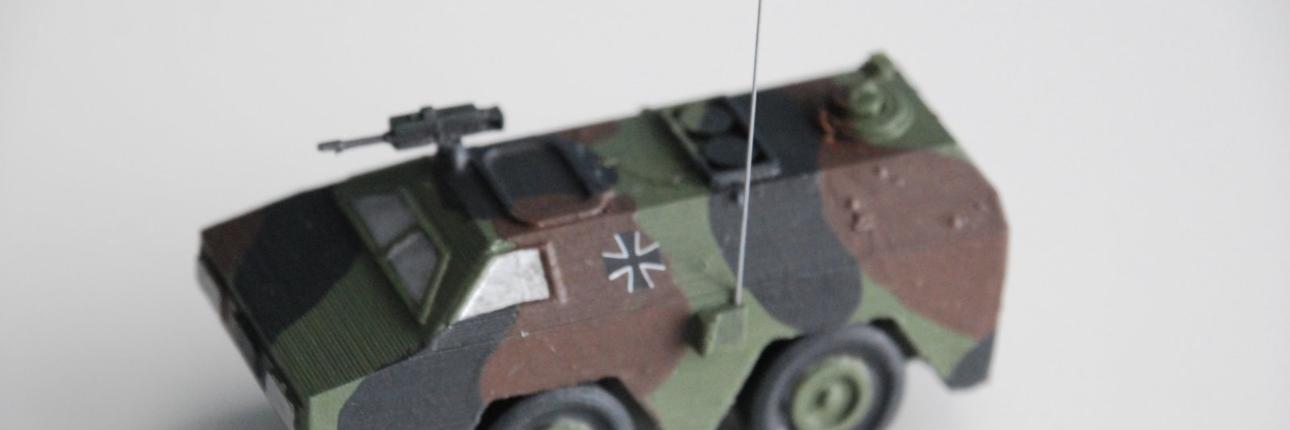
This is a 3D printed model, roughtly in 1/72 scale. Printed on an Ayncubuy Mega S with PLA filament and a layer hight of 0.08 mm. The model was equipped with a few parts from the sparet box and painted with Revell Aqua Colour. Decals are used from the big decal box.