Manufacturer: 3D print, Shapeways
Scale: 1/700
Additional parts: PE parts, small guns form spare part box
Model build: Oct-Nov 2018
Manufacturer: 3D print, Shapeways
Scale: 1/700
Additional parts: PE parts, small guns form spare part box
Model build: Oct-Nov 2018
The icy Baltic wind whipped across the bridge of the Küstenpanzerschiff Adler, biting through Lieutenant Commander Hansen's worn uniform. Below him, the choppy waves churned, their relentless assault testing the limits of the old ship's ailing engines. The Adler, a relic of a bygone era thrust back into service, vibrated with the strain of pushing its maximum of 12 knots.
Hansen adjusted his binoculars, his gaze fixed on the distant Soviet lines snaking along the Latvian coast. He gripped the railing, the weight of responsibility heavy on his shoulders. The Adler, once the Danish pride Peder Skram, was now a Frankenstein's monster of a warship, a cobbled-together weapon in the desperate struggle for the Baltic.
"Captain," the voice of the Gunnery Officer crackled over the intercom, "Targets acquired. Two enemy artillery batteries, grid reference Alpha-Tango-Three and Charlie-Uniform-One."
Hansen barked an acknowledgement, a grim satisfaction settling in his gut. For weeks, Soviet batteries had been pounding German positions with impunity. Today, the Adler, along with the light cruiser Köln accompanying them, would deliver their answer.
"Open fire! Main battery, target Alpha-Tango-Three!"
A deafening roar shattered the air as the Adler's two massive 24 cm guns erupted in a fiery ballet. The entire ship shuddered under the recoil, the echo bouncing back from the grey November sky. Hansen watched, heart hammering in his chest, as the first shells arced towards the distant shore, leaving trails of smoke like angry fingers.
Moments later, the Köln unleashed its own fury, a symphony of smaller caliber guns adding to the cacophony. Flames erupted on the horizon, marking the first Soviet battery succumbing to the bombardment.
But their triumph was short-lived. A hail of return fire rained down on them, the sea blossoming with geysers as shells detonated around the ships. The Adler shuddered violently, alarms blaring. A lucky hit had taken out one of their secondary guns, sending a plume of black smoke billowing into the sky.
Hansen fought to keep his voice steady as he barked orders, directing damage control teams and coordinating fire. The Köln, less fortunate, took a direct hit amidships, its engines sputtering before it began to list heavily.
With a surge of determination, Hansen ordered all remaining firepower directed at the remaining Soviet battery. The Adler, a wounded beast, poured everything it had into the final assault. Finally, after what seemed like an eternity, the enemy fire faltered, then ceased.
Silence descended, broken only by the groans of the wounded ship and the lap of the waves. Hansen surveyed the scene with a mixture of pride and sorrow. The Köln, its decks ablaze, was slowly sinking. The Adler, battered but defiant, had survived.
As they limped back towards port, a single, ragged cheer erupted from the deck. A bittersweet victory, a testament to the resilience of a ship and its crew, fighting a war they never chose, in a vessel that belonged to a bygone era. The Adler, a symbol of a desperate struggle, would continue its fight, for as long as its old heart would keep beating.

When the Danish coast-defence ship Peder Skram, launched in 1908, entered the Second World War, she was already a relic—yet a curiously formidable one. After extensive interwar modernization, she remained Denmark’s only operational heavy-gun warship in April 1940. When German forces occupied the country, the ship was initially left untouched, lying quietly at Holmen as a symbol of a navy forced into passivity.
That changed on 29 August 1943, when the Danish fleet scuttled itself to prevent German seizure. Peder Skram went down at her moorings - briefly. Raised by the Kriegsmarine soon afterward and towed to Kiel, she was at first intended to be converted into a static floating flak battery, a role for which her size and stability seemed ideal.
But by early 1944, the military situation in the East had deteriorated rapidly. The German need for any seaworthy hull capable of firing heavy shells grew desperate. The conversion plans were abruptly altered. Instead of becoming a stationary AA platform, the old Danish ship was refitted for frontline service.
In mid-1944 she re-entered the Kriegsmarine lists under a new name:
an echo of Kaiser-era naming traditions, and a propaganda gesture masking her foreign origins.
Refitted but far from modern, Adler carried an unusually mixed armament for her age:
2 × 24 cm guns
4 × 15 cm guns
10 × 7.5 cm guns
Her engines, never fully restored, imited her to a painfully slow 12 knots, yet she was still valuable in one role: shore bombardment. Assigned to coastal fire support in the Baltic Sea, Adler fought in the chaotic final year of the war, supporting German and auxiliary forces in attempts to blunt the Soviet advance along the Baltic coastline. Alongside other surviving heavy units, she shelled Soviet troop positions near the Courland Pocket and later around the Oder estuary.
By May 1945, retreating German ships crowded the Baltic ports. Adler, worn out and mechanically failing, reached Sassnitz on the island of Rügen, where her fate mirrored her Danish end: to avoid capture, her crew scuttled her once again.
This time there would be no resurrection. The wreck was too old, too damaged, and of no further strategic value. Between 1947 and 1952, the remains of Küstenpanzerschiff Adler were broken up on site
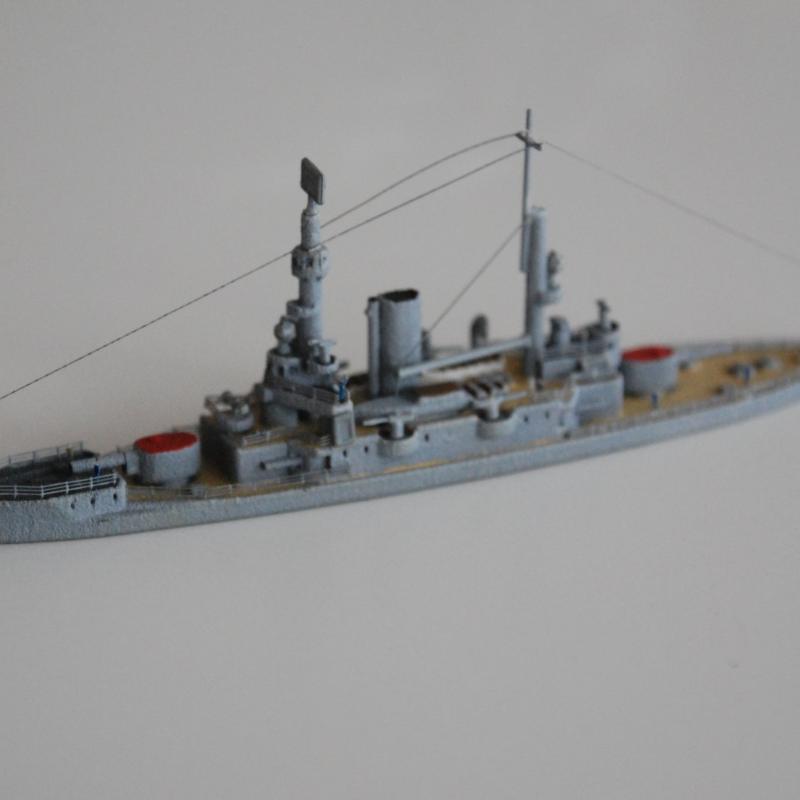
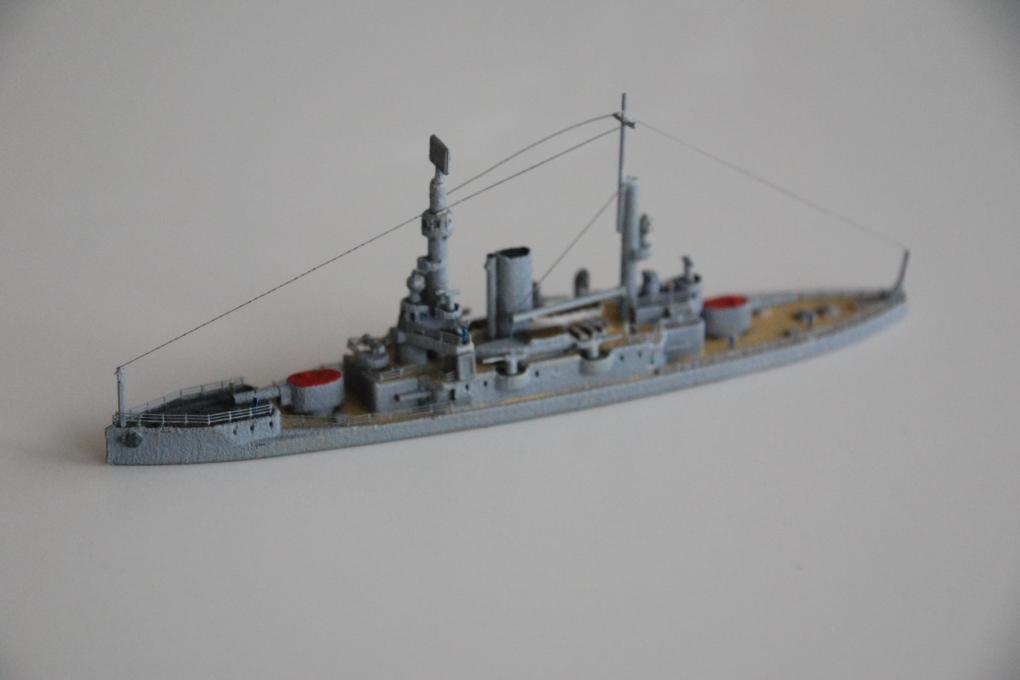
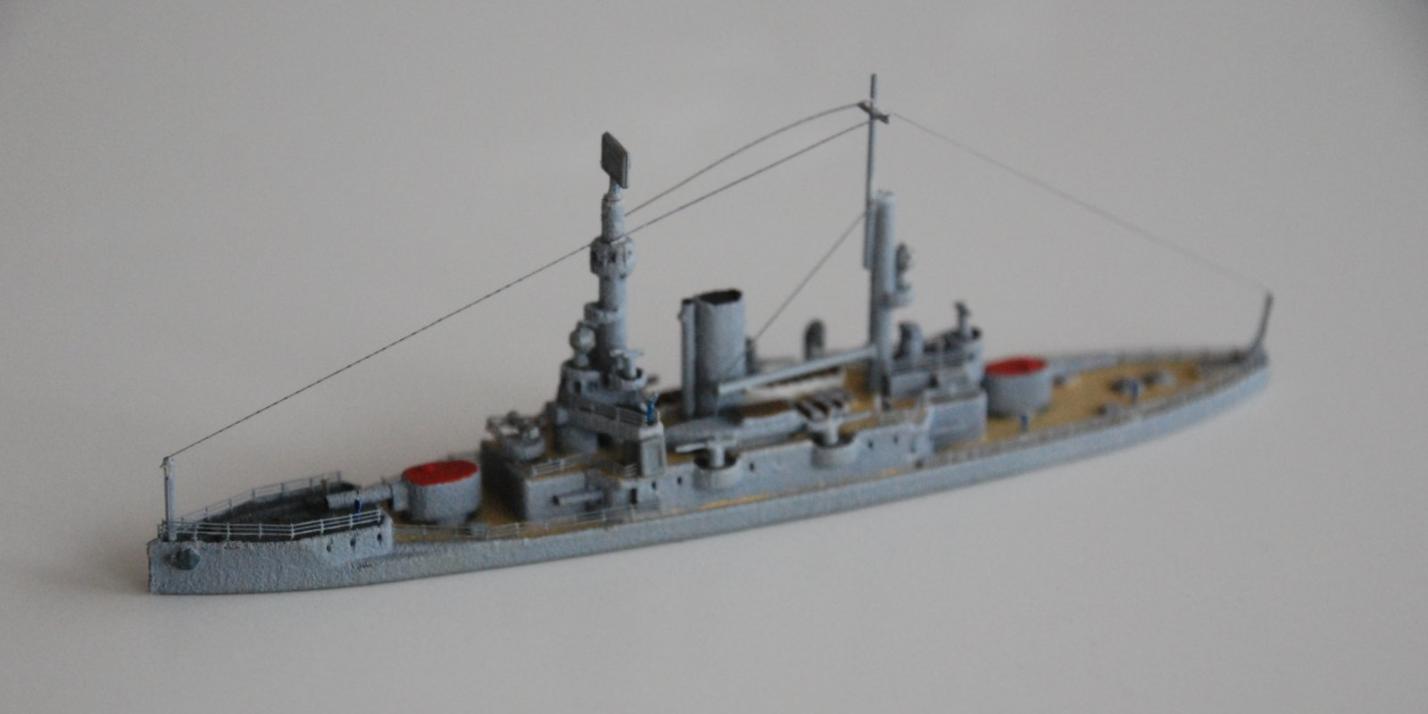
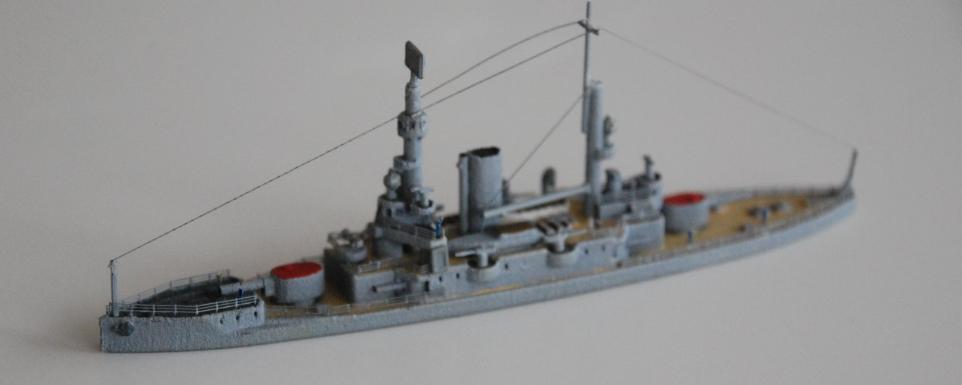
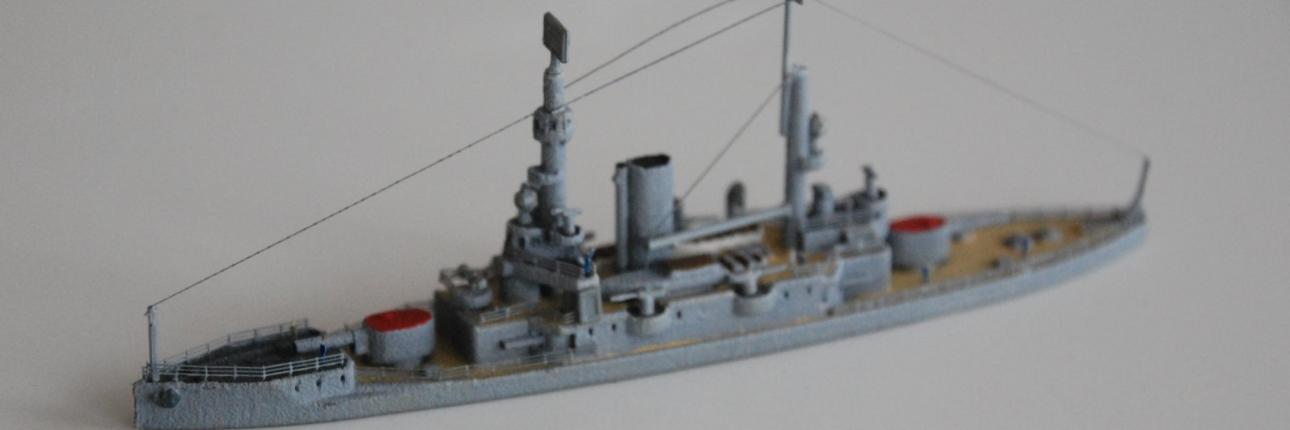
The model shows the Adler in November 1944.
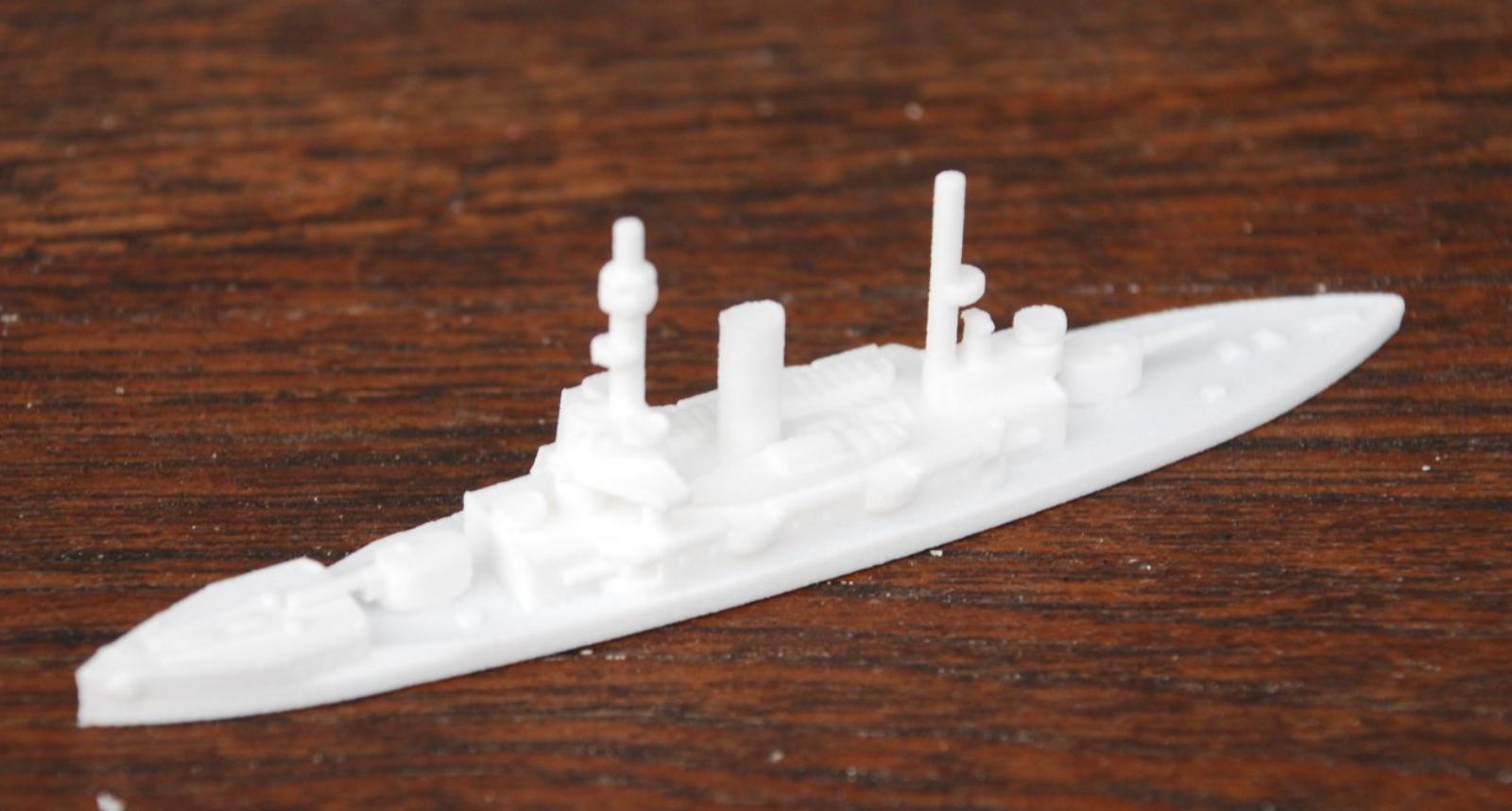
This is a 3D-printed model in 1/700 scale made by Shapeways. It my first attempts to work with 3D printed stuff. The material chosen was "White Natural Versatile Plastic" (3D printed in white nylon plastic with a matte finish and slight grainy feel) which is the cheapest choice to make. Price is about 15€. As seen, this gives the model a slightly rough surface which I kept as it is. I want to try other materials on other 3D printed models in the future.
The ship was enhanced by several parts of the spare parts box: The 7,5cm guns, AA guns, boat davits, searchlights, masts, radar, antennas and additional PE parts. It is painted with Revell Aqua colour.