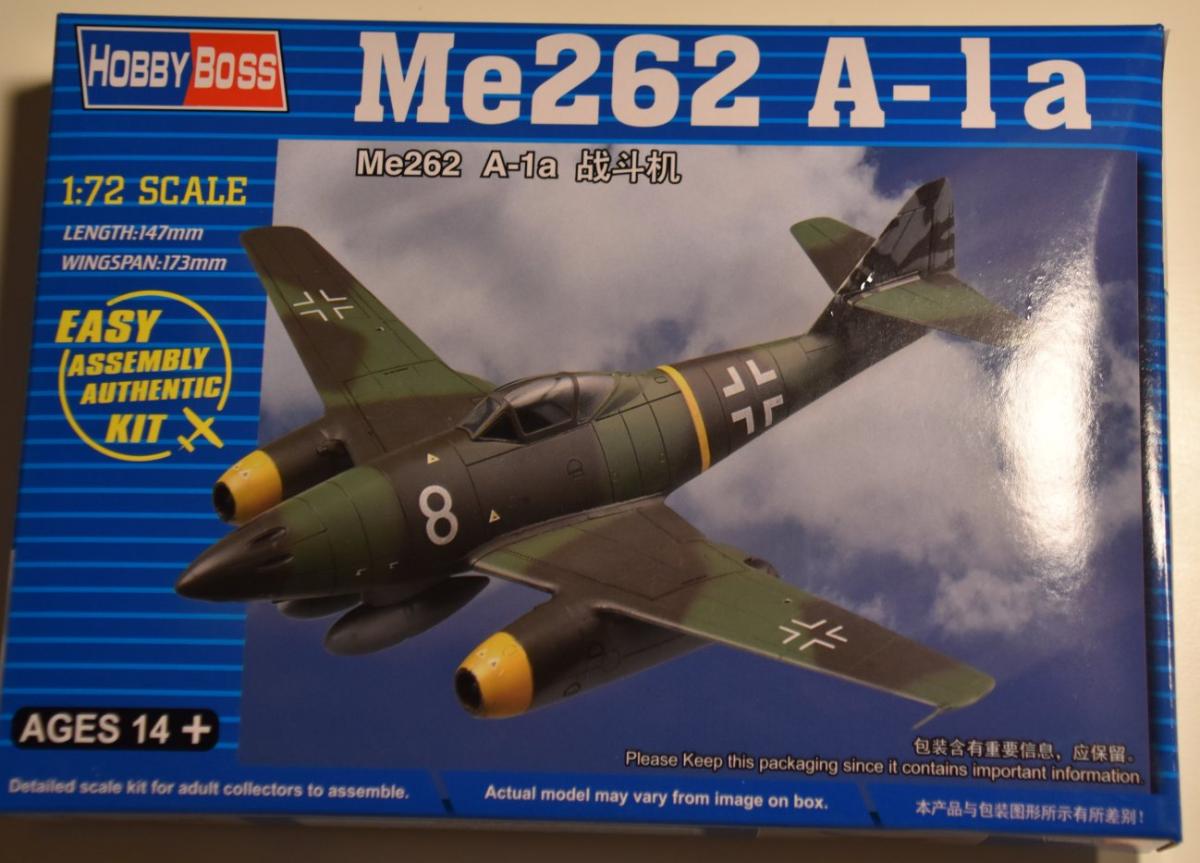
Manufacturer: HobbyBoss
Scale: 1/72
Additional parts: none
Model build: Apr - Jun 2026
Manufacturer: HobbyBoss
Scale: 1/72
Additional parts: none
Model build: Apr - Jun 2026
November 18th, 1945
South of Kyushu
Captain Robert “Hawk” Miller pushed the throttles of his Bell P-262 forward as the twin jets screamed above the invasion fleet below. The Pacific shimmered beneath the formation, broken only by hundreds of ships spread across the horizon. Battleships fired toward the distant coastline while columns of smoke climbed from burning Japanese positions inland.
“Red Leader to all Comets, stay tight on the bombers,” Miller ordered over the radio.
Ahead of them, silver B-29s moved steadily toward targets near Kagoshima. High above the bombers, the P-262s guarded the formation, their swept wings cutting through thin morning clouds at nearly five hundred miles per hour. Even after weeks of flying the captured German jets, Miller still found the speed unsettling. The aircraft felt less like a fighter and more like a bullet with a cockpit.
“Control to Red Flight,” crackled the radio. “Fast movers approaching from north-northeast. Altitude twenty-six thousand feet.”
Miller frowned.
“Piston or jet?”
A short pause followed.
“Unknown… speed indicates jet.”
Every pilot in the squadron stiffened.
The Americans knew Japan had experimented with jets, but intelligence claimed none were operational. Miller scanned the sky ahead. For several seconds he saw nothing.
Then sunlight flashed off metal.
Tiny silver shapes descended toward the bomber stream with terrifying speed.
“There!” shouted Lieutenant Harris. “Ten o’clock high!”
Miller’s stomach tightened.
The aircraft silhouettes were unmistakable.
Twin engines beneath swept wings.
Nose-mounted cannons.
Bubble canopy.
Me 262s.
“Jesus Christ…” Harris whispered. “They’re flying our damn airplanes.”
The formation exploded into motion.
“Break! Break! Break!”
The Japanese jets tore through the bomber escort in head-on passes. Cannon fire flashed between aircraft closing at impossible speed. One B-29 erupted into flames almost instantly, its wing ripped apart by 30mm shells.
Miller hauled his P-262 into a climbing turn, struggling to keep sight of the enemy. The sky became chaos within seconds. Contrails twisted across the clouds while identical jets chased one another in every direction.
He locked onto a Ki-202 climbing away from the bombers.
For a moment the enemy aircraft looked exactly like his own machine.
Only the red Hinomaru on the wings distinguished it.
Miller squeezed the trigger.
His 20mm cannons hammered the air. Tracers streaked past the Japanese jet, missing narrowly. The Ki-202 rolled sharply and accelerated downward.
Fast.
Too fast.
Miller followed.
The altimeter spun downward as both aircraft dove toward the coastline. Below them, anti-aircraft fire burst over burning villages and invasion beaches crowded with American landing craft.
The Japanese pilot suddenly pulled upward into a steep climb.
Miller reacted instantly, pulling hard against the controls. The G-forces crushed him into the seat as the two jets spiraled skyward.
For several seconds they climbed nose-to-nose.
Then both pilots fired.
Shells ripped through the air between them. Miller saw flashes across the enemy fuselage. At the same instant something slammed into his own aircraft.
Warning lights exploded across the cockpit.
Left engine fire.
“Damn it!”
Smoke poured past the canopy. The P-262 shuddered violently.
The Ki-202 flashed by only yards away, trailing flames from its starboard engine. Miller caught a brief glimpse of the Japanese pilot through the canopy before the enemy jet disappeared into cloud.
Neither aircraft had achieved a clean kill.
Both were dying.
Miller fought the controls as the crippled jet descended toward the American fleet offshore. Around him, the battle still raged. Jets screamed through the clouds while burning aircraft fell toward the sea.
“Red Leader hit,” he radioed. “Returning to base.”
Static answered him.
Then Harris’s voice broke through.
“You seeing this, Hawk?”
Miller looked back toward Kyushu.
More jets were climbing from hidden airfields inland.
Not one or two.
Dozens.
And every single one looked exactly like the aircraft he was flying.
Miller wrestled the damaged P-262 through heavy vibration as the coastline of Kyushu disappeared behind smoke and cloud. Warning alarms screamed inside the cockpit. The left engine temperature climbed relentlessly while fuel pressure dropped by the second.
Behind him, the sky still burned.
American carrier fighters and anti-aircraft batteries had expected propeller-driven attacks. Instead, identical jets were tearing through the bomber formations at nearly six hundred miles per hour. Radar operators struggled to distinguish friend from foe. More than once, nervous gunners aboard destroyers opened fire on returning P-262s before recognizing the white star insignia.
“Red Leader, you’re trailing fire!” Harris shouted over the radio.
“I know it!” Miller snapped.
He reached for the extinguisher controls. A sharp metallic bang shook the aircraft. The left engine flamed out completely, leaving only the starboard jet screaming beside the cockpit.
The aircraft lurched violently.
At jet speeds, losing an engine was bad enough. Losing one during combat over an invasion fleet packed with ships and aircraft was something else entirely.
Miller reduced throttle and tried to stabilize the aircraft. Ahead, Okinawa-based rescue destroyers and fleet carriers covered the sea like a floating city. Columns of black smoke rose from several damaged ships. Even from this distance, he could see one destroyer burning heavily near the center of the formation.
“Kamikaze hit?” Miller asked.
Negative,” Harris answered grimly. “Jet attack.”
That chilled him more than the engine fire.
The Ki-202s were not simply defending airspace. They were hunting the fleet itself.
A sudden voice crackled across the radio net.
“Control to all aircraft! Multiple enemy jets descending toward transport zone Baker! Repeat, enemy jets approaching invasion transports!”
Miller looked up instinctively.
Tiny silver streaks dropped from the cloud layer above the fleet.
The Japanese pilots came in fast and low, using the same tactics German Me 262 units had once used against Allied bombers over Europe. At these speeds there would be almost no time to react.
American anti-aircraft guns erupted across the fleet.
The sky filled with black flak bursts and streams of tracer fire. One Ki-202 vanished inside an explosion and spiraled into the ocean trailing debris. Another screamed directly over a cruiser, cannons flashing.
Seconds later the ship exploded.
A transport vessel farther back erupted into flames as shells tore through its loaded fuel stores. Men jumped into the water while nearby landing craft scattered in panic.
“Jesus…” Harris muttered.
Miller’s damaged jet shook violently again. He barely managed to keep the nose level.
Then he saw it.
A lone Ki-202 broke away from the attack and climbed directly toward him.
The Japanese pilot must have seen the smoke from his damaged engine.
Easy prey.
“Bandit on you!” Harris warned.
Miller tried to turn, but the crippled P-262 responded sluggishly. The enemy jet closed rapidly from below, silver nose pointed directly at his cockpit.
For one surreal moment, Miller stared straight into the canopy of the opposing aircraft.
The Japanese pilot looked as exhausted and determined as he felt himself.
Then cannon flashes burst from the Ki-202’s nose.
Miller rolled instinctively. Shells ripped past the canopy, one punching through the right wing root. The aircraft shuddered again.
Too close.
Far too close.
The Ki-202 overshot at tremendous speed, flashing past only yards away. Miller jammed the throttle forward and forced the damaged jet into a shallow dive. The remaining engine screamed in protest.
“Harris, get him off me!”
Two American P-262s dropped out of the clouds behind the Japanese aircraft. Cannon fire streaked across the sky. The Ki-202 rolled hard, evading the first burst, but the second caught the jet near the port engine.
Flames erupted instantly.
The Japanese aircraft continued flying for several seconds, burning brighter and brighter against the dark smoke below. Then the wing tore away.
The Ki-202 vanished into the sea.
Silence filled Miller’s cockpit for a moment except for warning alarms and engine roar.
Then another transmission arrived from fleet command.
“Attention all aircraft. Intelligence confirms enemy jet fighter designation Ki-202. Repeat—Japan possesses operational Me 262 copies in combat numbers.”
Miller stared toward Kyushu.
More contrails climbed into the sky inland.
The invasion had only begun.
And now both sides were fighting the same war with the same aircraft.

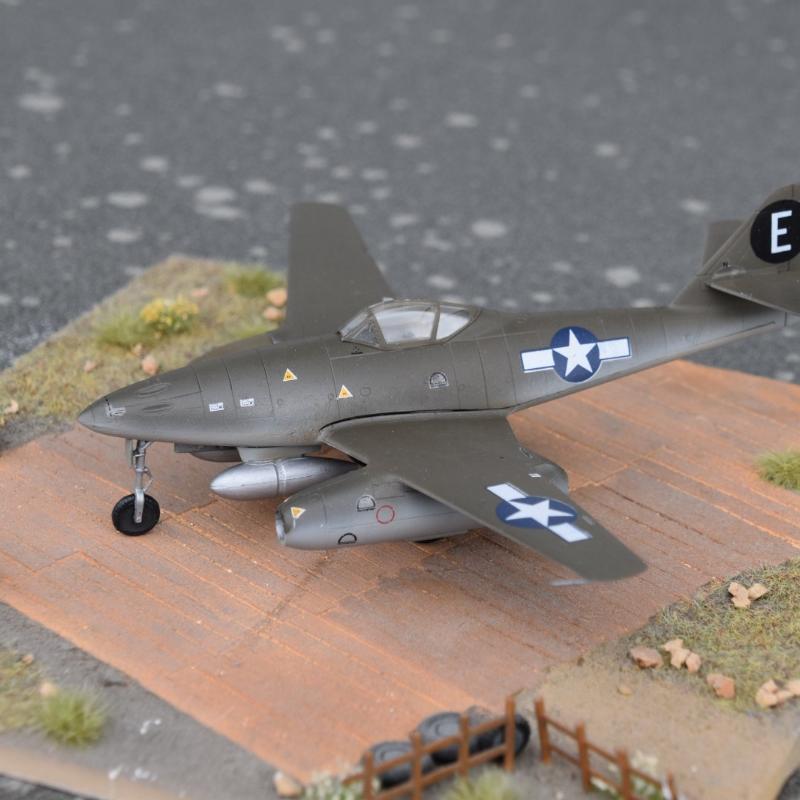
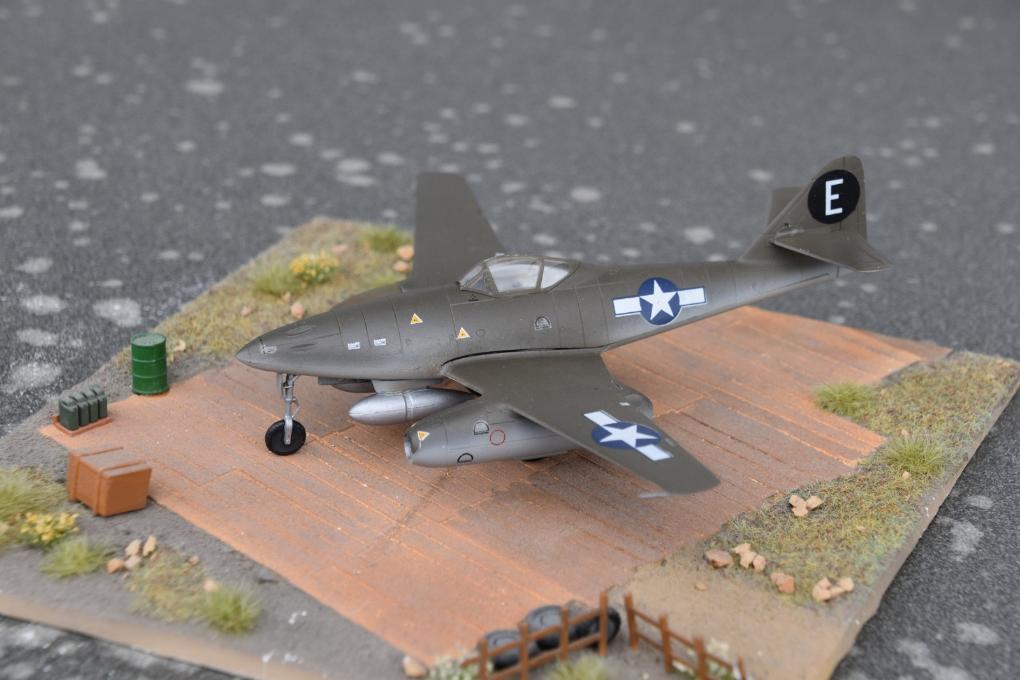
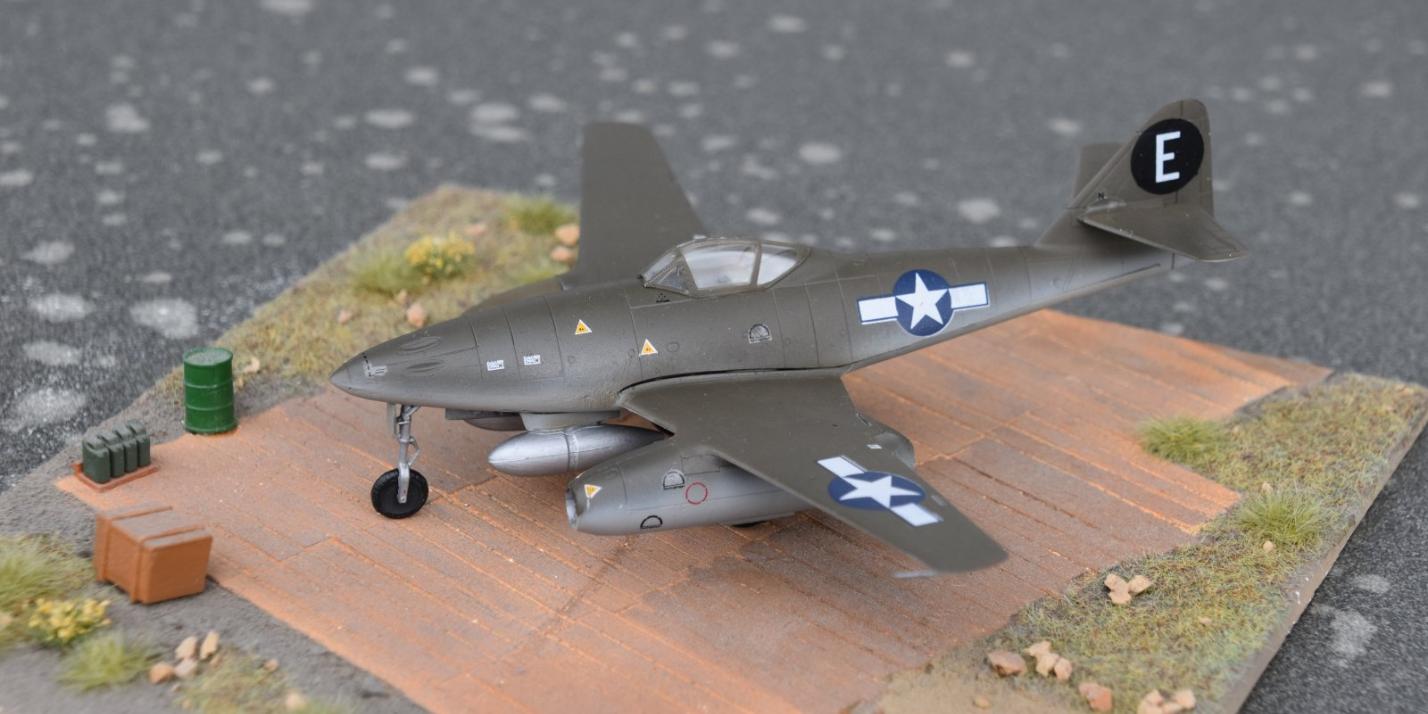
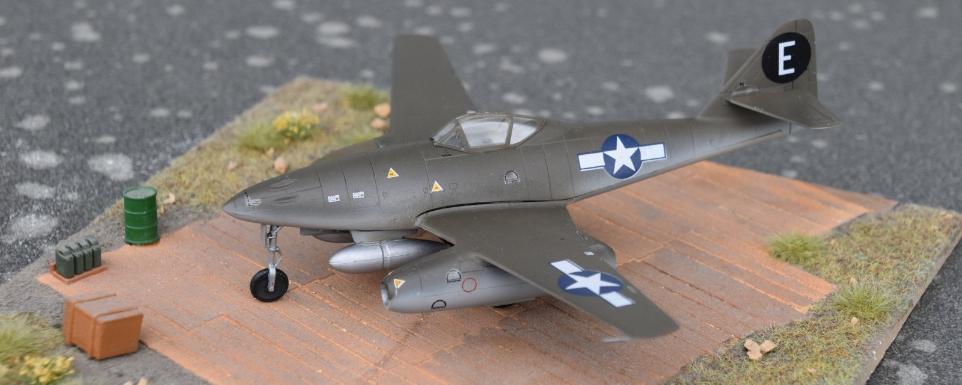
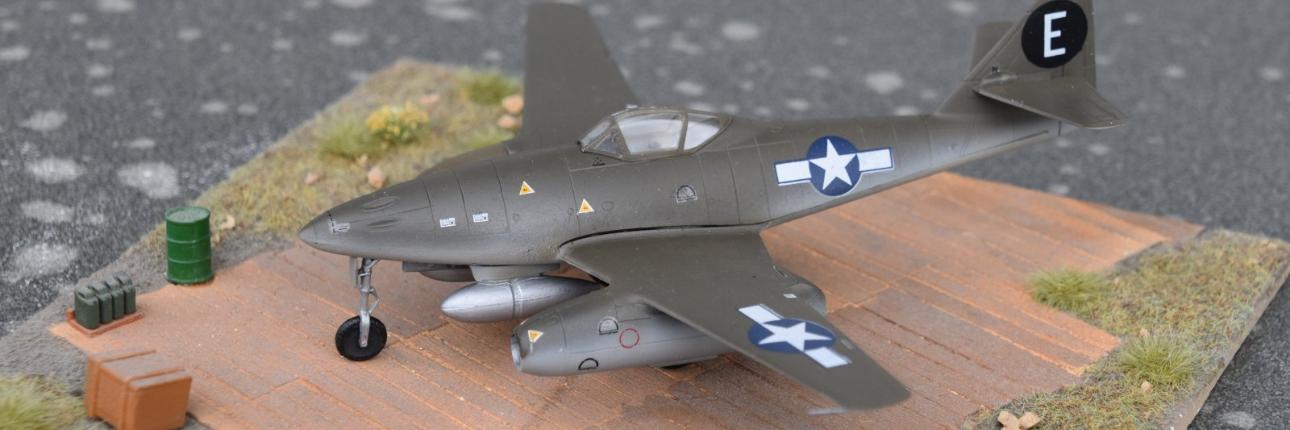
Bell P-262 – America’s Captured Jet
When Allied forces overran German airfields in the spring of 1945, they discovered dozens of intact Messerschmitt Me 262 jet fighters alongside technical manuals, spare parts, and engineering teams. While most aircraft were earmarked for evaluation, a group within the USAAF believed the revolutionary jet could play a direct role in the planned invasion of Japan.
Under an accelerated program led by Bell Aircraft, several Me 262s were refurbished, modified with American radios and navigation equipment, and redesignated as the Bell P-262. Experienced fighter aces transitioning from the P-51 Mustang were selected for the new unit, training at captured airfields in Germany before deployment to the Pacific.
By late 1945, nearly fifty P-262s operated from Okinawa and later Kyushu itself. Their speed made them ideal for bomber escort and interception missions. To many American pilots, the aircraft represented the future of air warfare. Yet during the first weeks of Operation Downfall, P-262 crews encountered an unexpected and deeply unsettling sight: Japanese aircraft that looked exactly like their own.
Operation Downfall – American Perspective
By late 1945, Operation Downfall had become the largest military operation ever attempted by the United States. Following years of brutal fighting across the Pacific, American planners expected the invasion of Japan to be costly beyond anything previously experienced. As troops landed on Kyushu during Operation Olympic, the USAAF worked around the clock to secure air superiority over the invasion beaches and the advancing fleet.
Among the aircraft deployed were the new Bell P-262 jet fighters, rebuilt from captured German Me 262s and rushed into operational service. Their speed and firepower made them ideal for escorting B-29 bombers and intercepting kamikaze formations before they could strike Allied ships.
American pilots initially believed they possessed a decisive technological advantage. That illusion vanished when radar operators reported unidentified jets approaching at impossible speed. Moments later, Bell P-262 pilots found themselves engaged by Japanese Mitsubishi Ki-202 fighters—aircraft visually identical to their own machines.
The resulting battles over Kyushu became some of the most chaotic air engagements of the war. At closing speeds never before experienced in combat aviation, dogfights lasted only seconds. Pilots described the surreal experience of chasing aircraft that looked exactly like their own, distinguished only by the red Hinomaru painted on their wings.
Although American industrial strength and numerical superiority gradually overwhelmed Japanese resistance, the appearance of the Ki-202 proved that Japan could still deliver dangerous technological surprises. For many USAAF veterans, the Mirror War over Kyushu marked the true beginning of the jet age.
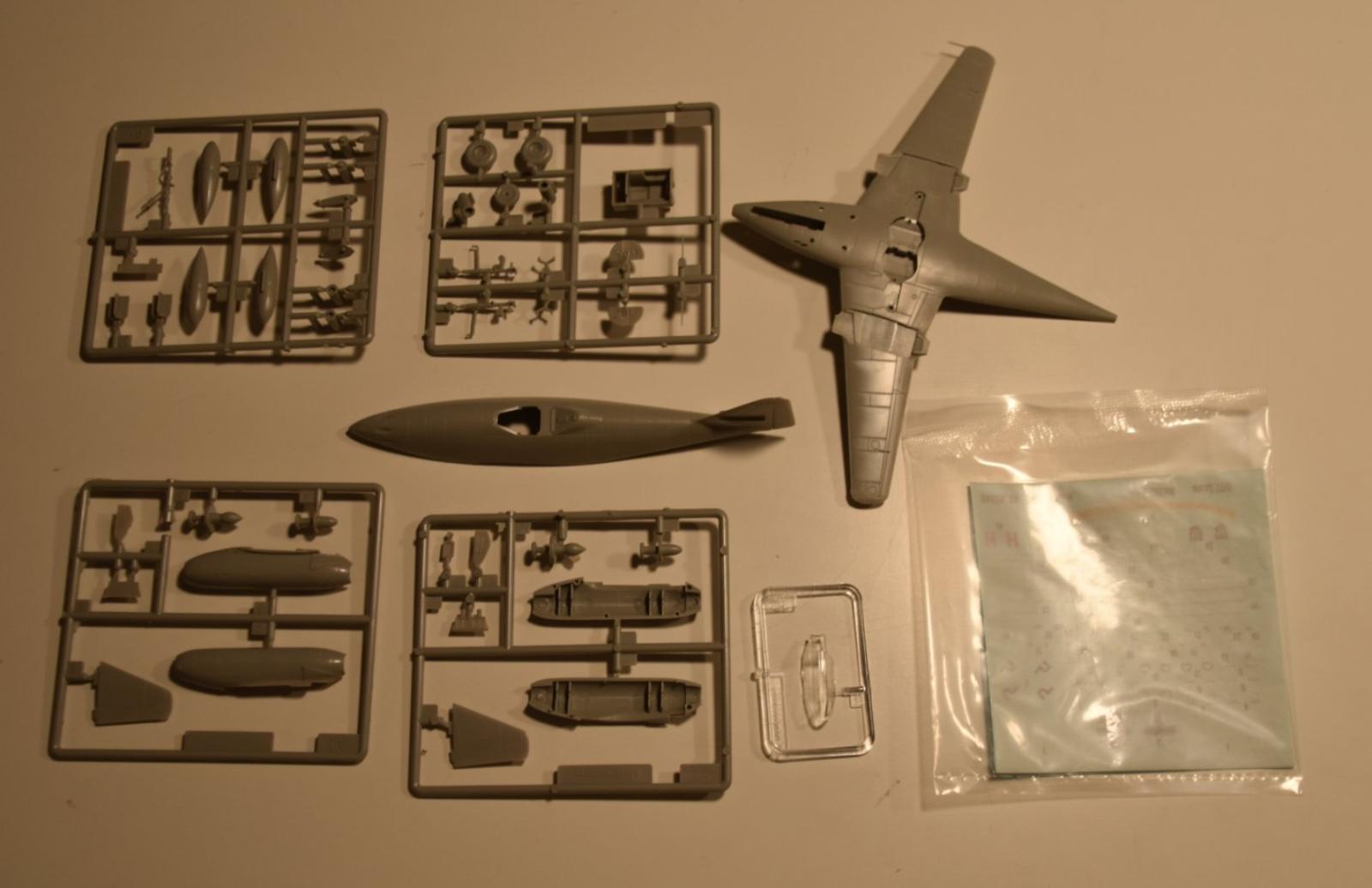
The HobbyBoss 1/72 scale Me 262 is an enjoyable and straightforward kit to build. While it is relatively simple in terms of detail, it offers excellent fit throughout the assembly process and represents very good value for money.
The model was painted using Revell Aqua Color paints. Markings were created using a combination of the kit's original decals and additional decals from the spare decal box.